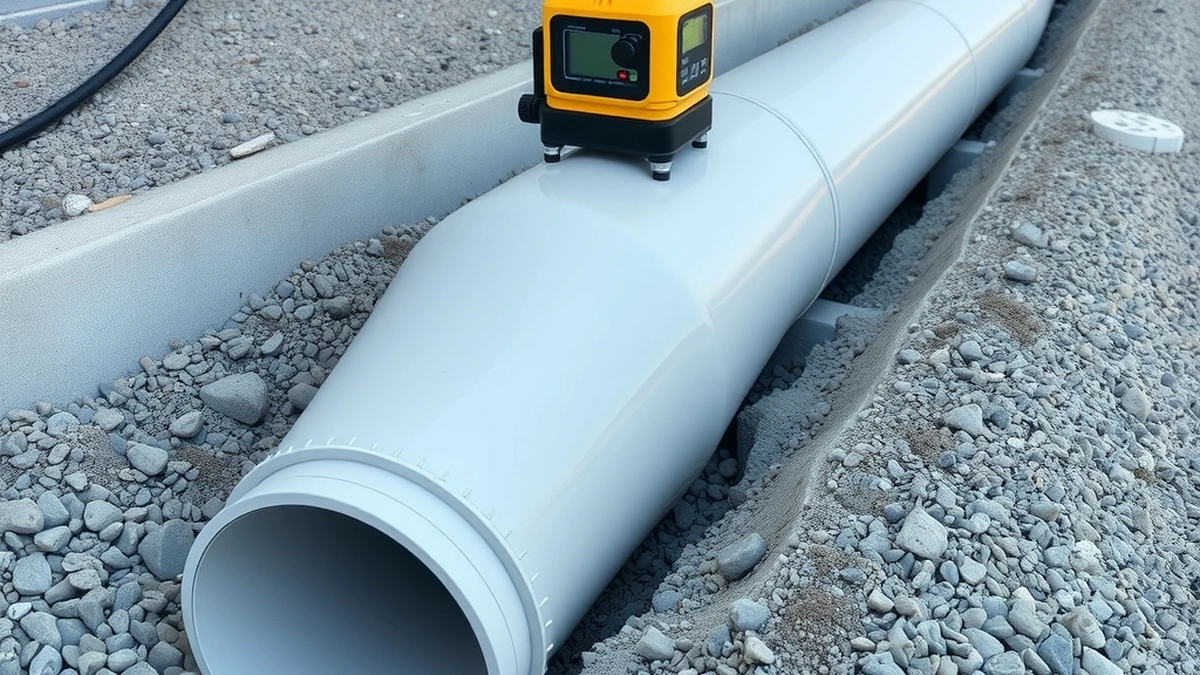
Bellied pipe: warning signs
A bellied sewer pipe shows as a backup that returns to the same spot, standing water in the cleanout, and a drain that slows after heavy water use.
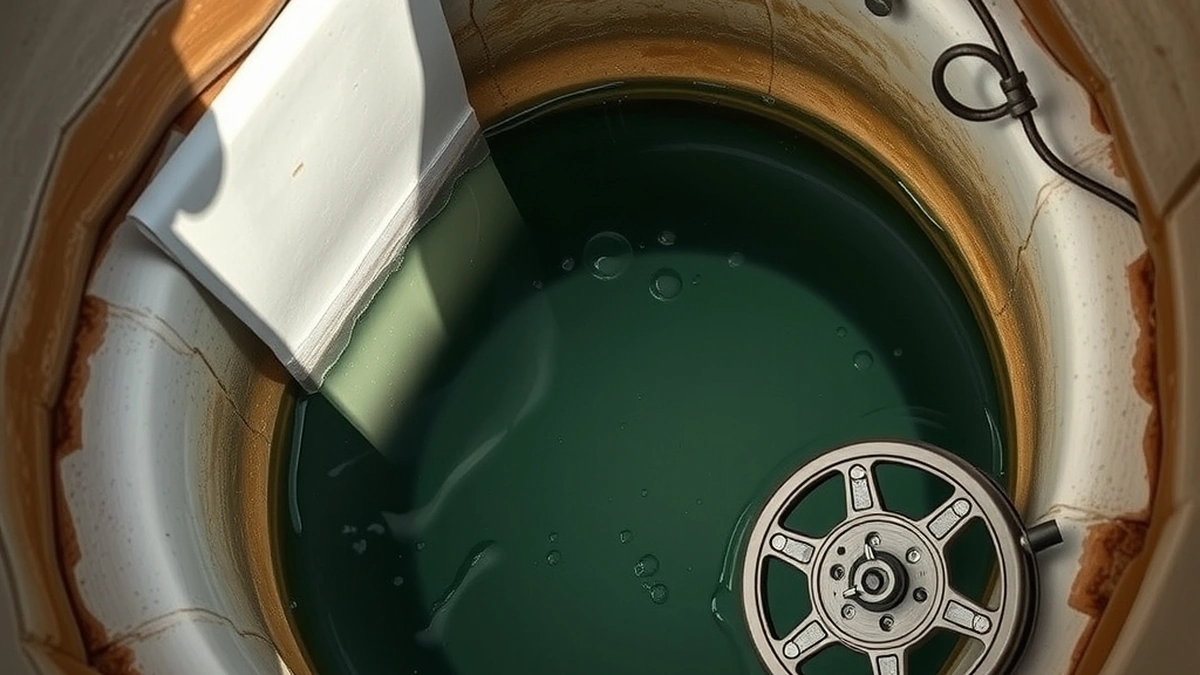
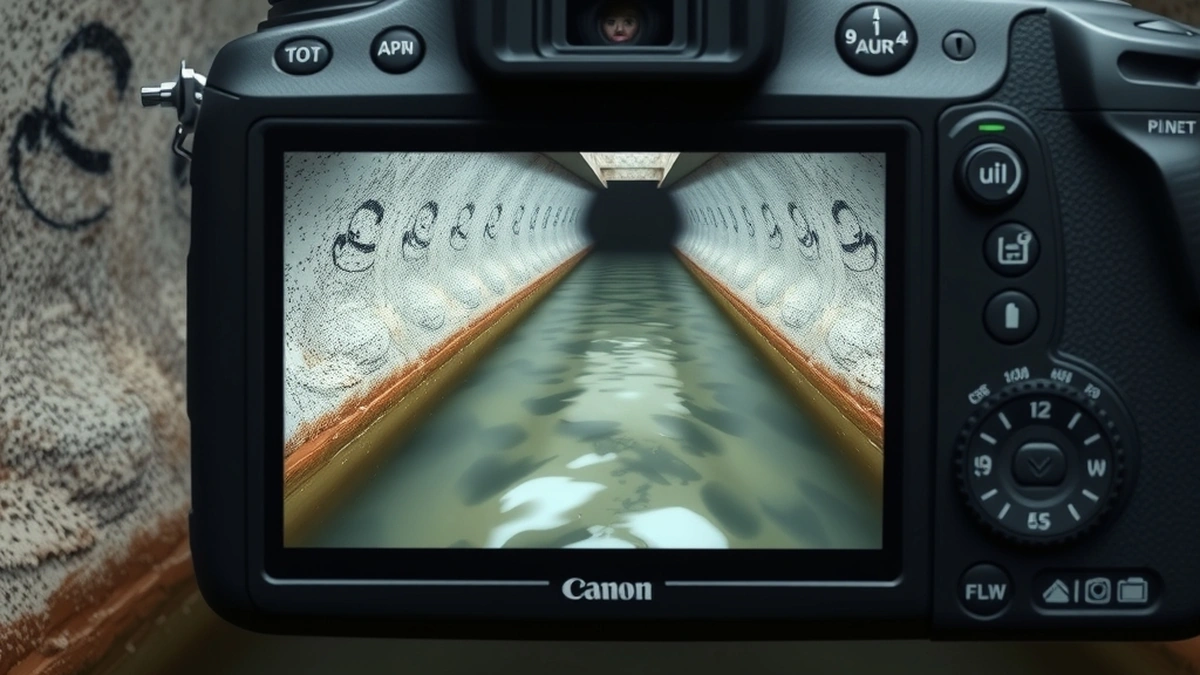
A bellied pipe shows as a backup that returns to the same fixture, standing water in the cleanout, slow drains after heavy water use, and a septic smell near the low spot. A $200 to $500 camera pass shows the pool that confirms it.
- Camera inspection
- $200–$500
- Hydro jetting
- $300–$800
- Spot re-lay
- $1,500–$5,000
- Full replacement
- $5,000–$15,000
Some links on this page are affiliate links.If you buy through them we may earn a commission at no extra cost to you. We do not accept payment for rankings. Read the full disclosure.
A bellied pipe warns you in a pattern rather than a single symptom: the same drain backs up on a repeating cycle, water stands in the cleanout, and the line drains slowly after heavy water use. Each sign on its own means little. Three together, on a line older than 30 years, are enough to justify a $200 to $500 camera inspection.
What a belly is and why it holds water
A bellied pipe is a section of sewer line that has lost its fall and sagged into a low point, so wastewater collects there instead of draining to the main. Sewer pipe is laid at roughly a quarter inch per foot, and a belly is where that slope flattens or reverses.
The physics is simple. In a dip, velocity drops, and anything heavy in the flow settles. Grease, grit, paper, and wipes accumulate at exactly the same place every time, which is why the symptom repeats at the same footage instead of moving around.
The dip also leaks. Standing water finds the joints, escapes into the soil, and carries fine material with it. The void under the pipe grows, and the belly deepens. That is the reason a shallow sag is worth fixing at $1,500 to $5,000 rather than tolerating until it needs $5,000 to $15,000 of replacement.
The signs, ranked by how much they tell you
A repeat backup at the same fixture. This is the strongest signal. Once a line is snaked and clears, then backs up again months later at the same drain, the obstruction is a place where debris accumulates, not a one-off clog.
Standing water in the cleanout. Pop the cap on the cleanout and look. Water sitting in the pipe when nothing is running means the line downstream cannot carry it away.
Slow drainage after heavy use. Laundry day, a long shower, or a dishwasher cycle that leaves the floor drain gurgling points to a restriction that only shows under volume.
Gurgling at the lowest fixture. Air pulled through a trap means the pipe downstream is partly full.
A damp or odorous patch over the line. Water escaping at the dip keeps the soil wet, and the spot often stays green through a dry spell.
What each sign points to
| Sign | What it suggests | Cost to confirm |
|---|---|---|
| Repeat backup at one drain | Accumulation point, likely a belly | Camera at $200–$500 |
| Water standing in cleanout | Downstream restriction or sag | Camera with flow |
| Slow drains after laundry | Partial blockage under volume | Camera after jetting at $300–$800 |
| Gurgling at floor drain | Air trapped by a full pipe | Camera plus flow test |
| Damp patch over line | Leak at a joint or dip | Camera plus locator |
| Sewage odour outdoors | Escaping water at a defect | Camera plus dye test |
Note that every route in that table ends at a camera. There is no household test that distinguishes a belly from grease, roots, or a collapsed wall, and the price gap between those repairs is large. A camera pass at $200 to $500 is the cheapest way to stop guessing.
Belly versus clog versus collapse
The comparison that decides the repair budget has three outcomes.
A clog is a filled pipe with an intact wall. It clears fully with jetting at $300 to $800 and stays clear. Symptoms are sudden and resolve completely.
A belly is a low point with an intact wall. It clears and then returns on a cycle, because the geometry still catches solids. The fix is a spot re-lay at $1,500 to $5,000, or lining at $4,000 to $12,000 if the dip is shallow and the joints leak.
A collapse is a deformed wall. Snaking may punch through once and fail the second time, and the camera cannot pass. The fix starts at $1,500 to $5,000 for a spot repair and reaches $5,000 to $15,000 for a run.
If you have snaked the same line twice in a year, you are almost certainly in the belly or collapse column, and the next dollar should go to diagnosis rather than another clearing.
What to do when you see the signs
- Stop heavy water use and hold off on laundry and dishwashing until the line is looked at.
- Do not use caustic drain chemicals. They will not clear a dip and they make the camera view worse.
- Book a camera inspection at $200 to $500 and ask the operator to run water during the pass so a pool is visible.
- Request the footage mark of the low point and a locator mark on the surface so you know what sits above it.
- Jet the line at $300 to $800 if grease or roots are blocking the view, then re-inspect the same footage.
- Price a spot re-lay at $1,500 to $5,000 against lining at $4,000 to $12,000 before approving either.
What the camera report should say
A useful report names the pipe material, the diameter, the footage of each defect, and the depth of standing water at the low point. “Possible belly at approximately 32 feet” is not enough to price a job. You want a number, a photo, and a statement of whether the pipe is still round.
If the report says the run has more than one low point, treat the whole run as the unit of repair. Two spot re-lays at $3,500 each plus two restorations at $1,000 each is $9,000, and a burst replacement at $12,000 for the same run carries one warranty instead of two. That comparison belongs in the conversation before the first shovel goes in.
The repair ladder by method is in bellied pipe repair options, and the line-item pricing is in bellied pipe cost. For the routine that keeps a repaired line from sagging again, see bellied pipe prevention. If the camera cannot pass the defect, read collapsed pipe warning signs instead, because a fold changes the repair path.
One practical note on timing: a belly found in autumn, before the holiday season, is a scheduled job at scheduled prices. The same belly found on a Sunday in December is an emergency call at $500 to $1,500 before any repair is quoted. The camera pass is the thing that moves you from the second column to the first.
Frequently asked questions
What are the warning signs of a bellied sewer pipe?
A backup that returns to the same drain months apart, standing water visible in the cleanout, slow drainage after heavy water use such as laundry day, gurgling at the lowest fixture, and a damp or odorous patch over the low point.
How is a belly different from a clog?
A clog blocks the whole pipe and clears completely when snaked. A belly is a low spot that catches debris, so the line clears and then slows again at the same point, usually on a repeating cycle rather than at random.
Can a belly show up on a camera inspection only sometimes?
A camera run on a dry line after a long dry spell can miss a shallow belly because there is no water to pool. Ask the operator to run water while the camera passes and to note any place where the flow stops moving.
Why does my basement floor drain back up first?
It is the lowest fixture on the system, so it is where a restricted main overflows first. That points to a problem downstream of the house rather than in the fixture itself.
How much does it cost to confirm a belly?
A camera inspection runs $200 to $500, including a recorded video and footage marks. Jetting at $300 to $800 may be needed first if grease or roots are hiding the pipe invert.
Do bellies get worse on their own?
Yes. Standing water escapes at the joints and carries soil with it, so the support under the dip erodes further. A shallow belly treated as maintenance becomes a deep one that needs a re-lay at $1,500 to $5,000.
Sources
Some links are affiliate links.If you buy through them we may earn a commission at no extra cost to you. We do not accept payment for rankings. Read the full disclosure.