Bellied pipe: repair options
A bellied sewer pipe can be spot re-laid, lined, burst, or fully replaced. What each costs, when it works, and why lining cannot fix a sag on its own.
A bellied pipe is fixed by re-laying the sagging section at grade for $1,500 to $5,000, by pipe bursting or replacement at $5,000 to $15,000, or by lining at $4,000 to $12,000 where the sag is shallow. Lining does not restore fall.
- Spot re-lay
- $1,500–$5,000
- Trenchless lining
- $4,000–$12,000
- Full replacement
- $5,000–$15,000
- Camera inspection
- $200–$500
Some links on this page are affiliate links.If you buy through them we may earn a commission at no extra cost to you. We do not accept payment for rankings. Read the full disclosure.
A bellied pipe is repaired in one of four ways: re-lay the sagging section at correct grade for $1,500 to $5,000, line the run for $4,000 to $12,000 if the belly is shallow, pipe burst or fully replace at $5,000 to $15,000, or manage it with periodic jetting at $300 to $800. The choice comes down to how deep the sag is and whether the rest of the run is sound.
What a belly is, and why it holds water
A bellied pipe is a section of sewer line that has lost its fall and sagged into a low point, so wastewater stands there instead of draining away. Sewers are built to flow by gravity at a slope of roughly one quarter inch per foot, and a belly is any place where that slope reverses or flattens to nothing.
In the dip, flow slows and solids drop out. Grease, grit, paper, and wipes settle, the standing water turns septic, and the line eventually blocks. Above the pipe, the cause is usually a void: bedding washed out by a leaking joint, soil that settled after backfill, or a load placed on the ground after the pipe went in.
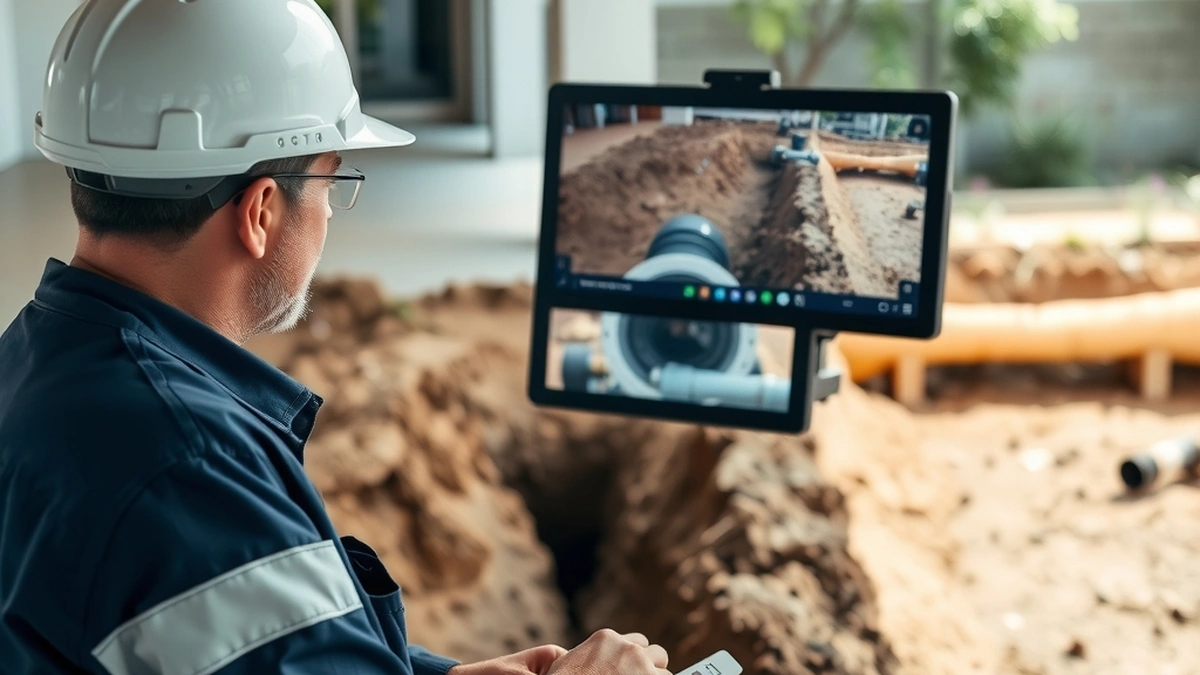
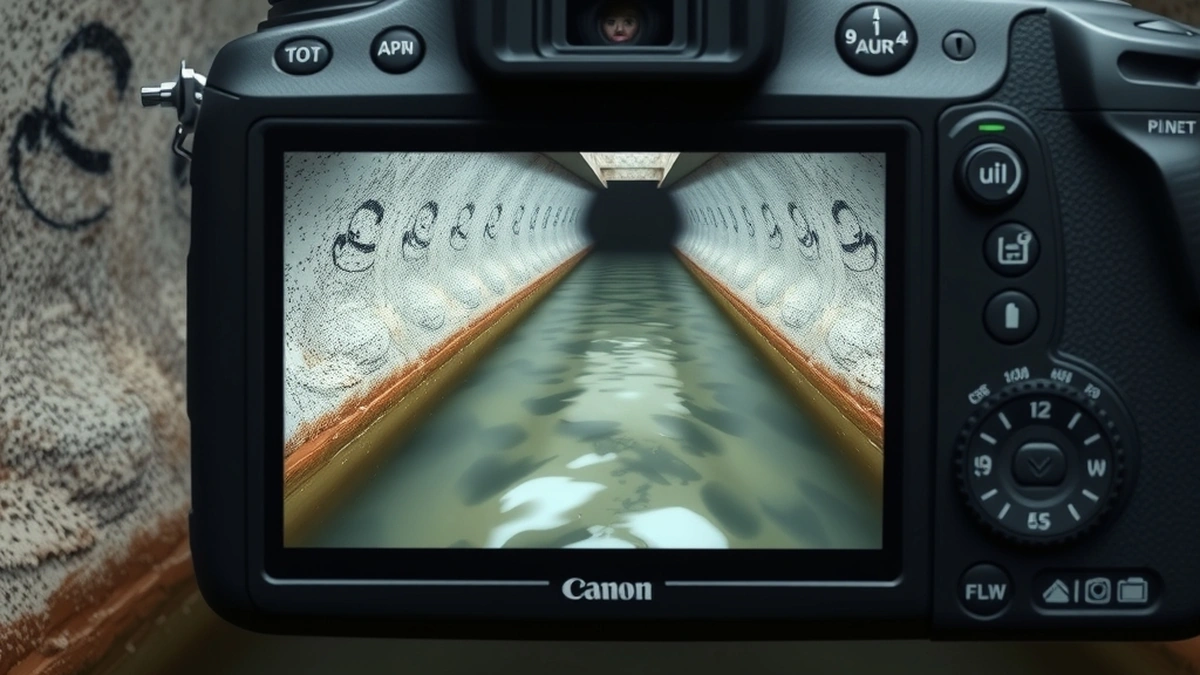
The camera makes the diagnosis. A camera inspection at $200 to $500 shows a pool of water where the rest of the pipe is dry, and the operator notes the footage. A locator then marks that footage on the surface so the repair crew digs at one spot instead of exploring.
The four repair options, side by side
| Option | Typical cost | What it does | Best when |
|---|---|---|---|
| Monitor and jet | $300–$800 per visit | Clears solids, leaves the sag | Belly is shallow and backs up less than yearly |
| Spot re-lay | $1,500–$5,000 | Cut out the dip, re-bed at correct grade | One short belly in otherwise sound pipe |
| Trenchless lining | $4,000–$12,000 | Smooths the bore across the dip | Belly is shallow, pipe is round, and joints leak |
| Pipe bursting or replacement | $5,000–$15,000 | New pipe at controlled grade for the run | Multiple bellies or a run at the end of its life |
The important line in that table is the lining one. Lining is a method that cures a resin tube against the inside of the existing pipe. It cannot lift the pipe, so the low point stays low. What it does is remove the rough joints and cracks that catch solids, which makes a shallow belly behave much better while a deep one still fills.
Spot re-lay: when one dip is the whole problem
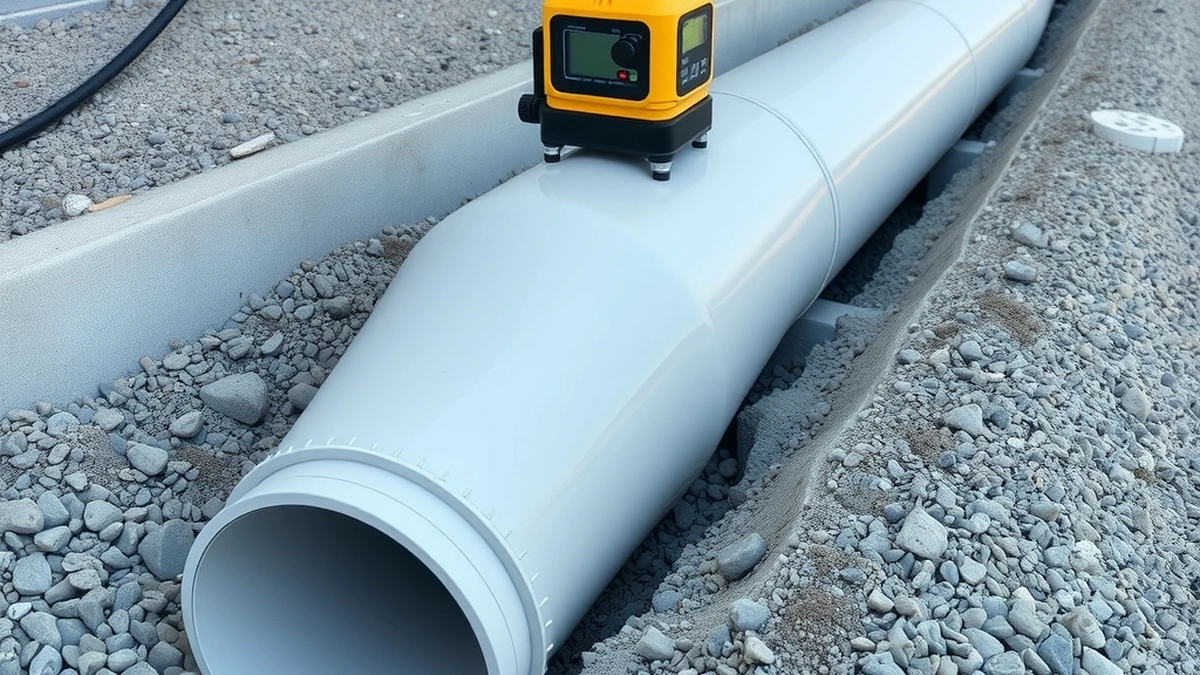
A spot re-lay is the most direct fix. The crew excavates over the marked footage, cuts out the sagging length, re-beds the new section on compacted gravel at the correct fall, and couples it to the sound pipe on both sides.
At $1,500 to $5,000 the price moves with depth and surface. A belly two feet down under a lawn sits near the bottom of that band. A belly six feet down under a concrete walk sits near the top, because the excavation is shored, the concrete is sawed and repoured, and the spoil has to be hauled.
The arithmetic on a mid-range job: $3,500 of re-lay plus a $350 camera inspection plus $400 of concrete restoration is $4,250 for a 10-foot repair, or $425 per foot. Per-foot comparison is only useful against another quote for the same footage, since the crew and equipment charges do not scale down with a short run.
Lining: what it can and cannot do
Lining at $4,000 to $12,000 is often quoted for a bellied line and often mis-sold. It works when the belly is shallow enough that a smooth bore keeps solids moving, and when the pipe is still round enough to receive a liner.
It does not work when the dip is deep, when the pipe has lost its profile, or when the sag continues to deepen. A liner is rigid once cured but it follows the host pipe’s shape, so a two-inch pool in the old pipe becomes a two-inch pool in the new one.
Ask the contractor to state the depth of standing water in the camera report and to say in writing whether lining will eliminate it or only reduce it. That single sentence separates a fair lining quote from an expensive one.
Replacement and pipe bursting
When the run has more than one belly, or the pipe is clay with open joints throughout, replacing the run costs less than fixing it in pieces.
Open-trench replacement at $5,000 to $15,000 lays new pipe at surveyed grade. Pipe bursting uses the same band and pulls new high-density polyethylene through the old pipe while breaking it outward, which keeps the surface intact except at two access pits. Bursting is usually the better choice under a finished driveway, because restoration is limited to the pits.
A worked comparison: an 80-foot run with two bellies quoted at two spot re-lays of $4,000 each is $8,000, plus two restorations at $1,200 each, for $10,400. A burst replacement of the same 80 feet at $12,000 includes one new pipe with no joints to sag. The gap is $1,600, and the burst job comes with a single warranty rather than two.
How to choose, in order
- Get a camera inspection at $200 to $500 and ask for the footage mark and the standing water depth at each low point.
- Ask a locator to mark the belly on the surface, so you know whether it sits under lawn, driveway, or a structure.
- Get a quote for a spot re-lay at $1,500 to $5,000 and a quote for lining at $4,000 to $12,000, then compare what each promises about the standing water.
- If the run has more than one belly, price a full replacement at $5,000 to $15,000 before approving two separate spot repairs.
- Check what restoration each quote includes, since concrete and landscaping can add more than the pipe work itself.
- Confirm the warranty length and what voids it, and ask for a post-repair camera pass in writing.
The routine that keeps a repaired line from sagging again is covered in bellied pipe prevention, and the price breakdown by line item is in bellied pipe cost. If the camera shows a fold rather than a dip, read collapsed pipe repair signs instead, since the repair path is different. The wider method comparison sits in types of sewer line repair.
Frequently asked questions
What are the repair options for a bellied sewer pipe?
Four: spot re-lay the sagging section at $1,500 to $5,000, line the run at $4,000 to $12,000 if the belly is shallow, pipe burst it at the replacement band of $5,000 to $15,000, or leave it and manage with periodic jetting.
Can you fix a belly without digging?
Only partly. A shallow belly can be lined so the bore is smooth and debris slides through, but the low spot remains and water will still stand in it. A deep belly needs the pipe re-laid at grade, which means excavation at that section.
Does a belly always need repair?
No. A shallow belly that holds an inch of water and clears with routine jetting at $300 to $800 can be monitored for years. A belly that backs up more than once a year or holds several inches is worth repairing.
How is a belly located?
With a camera inspection at $200 to $500. The operator marks where water pools and solids settle, reads the footage, and a locator pinpoints the spot on the surface so the excavation is the size of a small patch, not the whole yard.
Is pipe bursting a good option for a sagging line?
Yes when the whole run is suspect. Bursting pulls new high-density polyethylene through the old pipe at a controlled grade, so the sag is eliminated along with the old material, inside the $5,000 to $15,000 replacement band.
What happens if a belly is left alone?
Solids settle in the low spot and the line backs up on a repeating cycle, usually yearly at first and more often as the belly deepens. The soil under the pipe keeps washing away, so the sag gets worse rather than stabilising.
Sources
Some links are affiliate links.If you buy through them we may earn a commission at no extra cost to you. We do not accept payment for rankings. Read the full disclosure.