Collapsed pipe: warning signs
Sinkholes, gurgling fixtures, and backups that return after snaking are the pattern of a collapsed sewer pipe. How to read each sign.
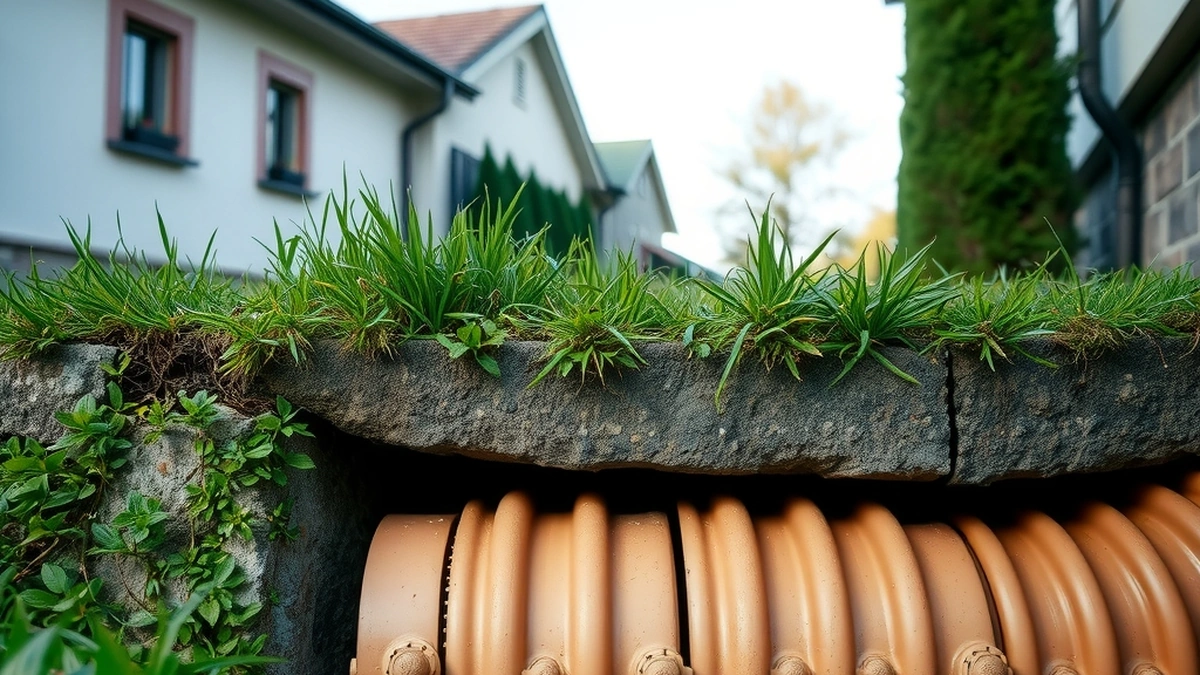
A collapsed pipe shows as a sinkhole or soft patch over the line, sewage smell in the yard, gurgling drains, and a backup that returns within days of snaking. A $200 to $500 camera pass confirms the wall has folded.
- Camera inspection
- $200–$500
- Emergency backup call
- $500–$1,500
- Spot repair
- $1,500–$5,000
- Full replacement
- $5,000–$15,000
Some links on this page are affiliate links.If you buy through them we may earn a commission at no extra cost to you. We do not accept payment for rankings. Read the full disclosure.
A collapsed pipe announces itself in a fairly fixed order: ground settles over the line, then drains slow down, then fixtures gurgle, then sewage backs up and returns within days of being snaked. If you have two or more of those, stop snaking and book a camera inspection at $200 to $500. Only the camera can tell a folded wall from a stubborn clog.
The signs, in the order they usually appear
The sequence matters more than any single symptom, because each stage is a different physical failure.
Ground settlement. The first stage is a soft or sunken strip in the lawn, a dip in a driveway, or a patch of unusually green grass along the line. Soil is washing into the pipe through a joint or crack, and the void that forms is what eventually takes the pipe’s support away.
Slow drains across the house. When the main is restricted, every fixture drains slowly, not just one. A single slow sink is a trap or branch problem.
Gurgling and bubbling. Air pulled through a trap on an unrelated fixture, or bubbles rising in a toilet bowl when the washer drains, means the line downstream is partly blocked.
Repeat backups. Wastewater comes back through the lowest drain, usually a basement floor drain or a first-floor tub, and returns within days of being augered. That return is the strongest single signal of a structural failure.
Sewage smell outdoors. Raw sewage in the soil around a break produces an odour that does not go away after rain.
What each sign actually tells you
| Sign | Most likely cause | How it is confirmed |
|---|---|---|
| Sunken lawn strip | Soil loss through a joint or break | Camera pass at $200–$500 |
| Slow drains everywhere | Restriction in the main | Camera after jetting at $300–$800 |
| Gurgling at one fixture | Partial blockage downstream | Camera with flow test |
| Backup returning after snaking | Folded wall or heavy root mass | Camera, since an auger cannot pass |
| Sewage odour in yard | Crack, break, or loose cleanout | Camera plus a smoke or dye test |
| Water pooling in the cleanout | Surcharge or a sagging low spot | Camera plus a grade check |
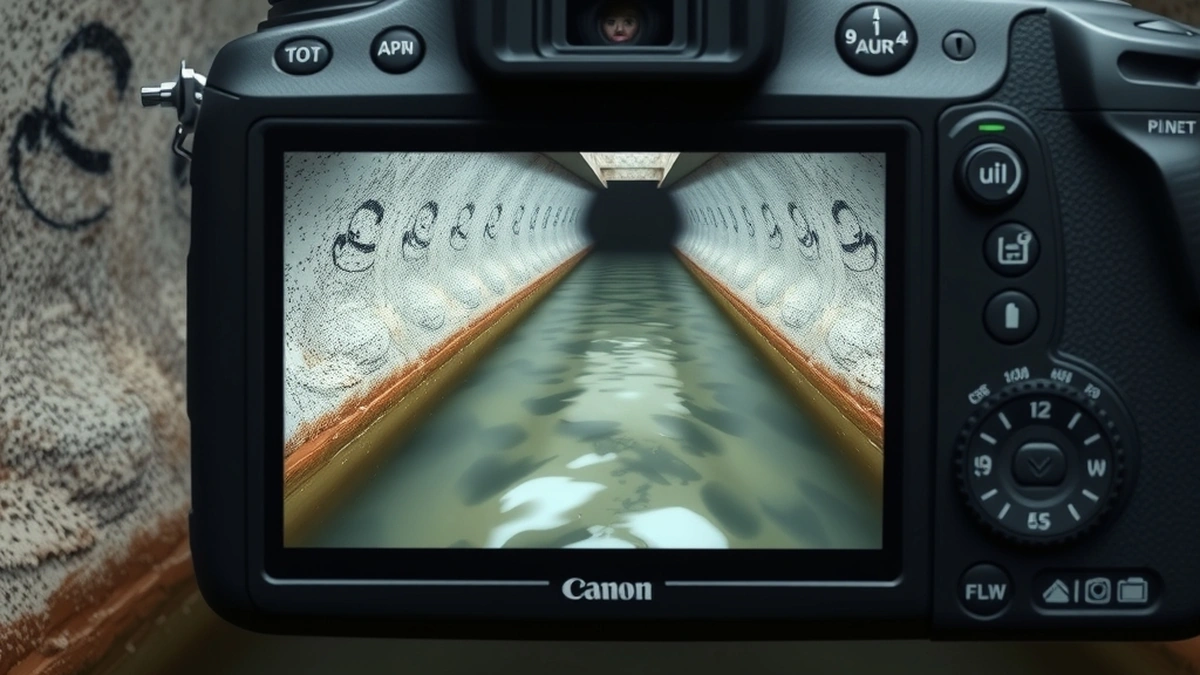
A camera inspection is a diagnostic that pushes a lighted head through the line and records what it passes. It costs $200 to $500 and it produces the footage number where the defect sits, which is what every contractor will price from. Ask for the recording, not a verbal description.
Reading a camera report
A camera report that says “collapse” should show four things: the footage mark, the pipe material, a visible loss of the round profile, and the presence of soil or debris inside the bore. If the head cannot pass the point at all, that is also evidence, provided the operator shows the attempt and the obstruction.
What the report should not rely on is a single still image. A fold, a heavy root ball, and a mass of grease can all stop the camera, and the difference between a $300 to $800 jetting job and a $5,000 to $15,000 replacement is entirely in that distinction.
What to do the day you see the signs
- Stop using water heavily in the house, and do not run a washing machine or dishwasher while the line is backed up.
- Do not pour chemical drain cleaner into the line. It will not clear a folded pipe and it makes the camera pass harder.
- Call for a camera inspection at $200 to $500 rather than an emergency clearing call at $500 to $1,500, unless sewage is already entering living space.
- Ask for the footage mark, the pipe material, and the recorded video file before agreeing to any repair.
- Get the line jetted at $300 to $800 first if the camera is blocked by grease or roots, then re-inspect.
- Price both a spot repair at $1,500 to $5,000 and a full replacement at $5,000 to $15,000 so you can see the gap.
Collapse versus a bad clog
The comparison that decides most of these calls is structural failure against blockage.
A blockage is a filled pipe: grease, roots, wipes, or grit. The wall is intact, and clearing restores full flow. Snaking or jetting at $300 to $800 resolves it, and the drain stays clear for months or years.
A collapse is a deformed pipe: the wall has folded, the bore is a slit, and clearing buys days at most. Jetting may restore partial flow and even make things briefly worse as water finds the soil around the break. The repair is a spot replacement at $1,500 to $5,000 for one short section, or full replacement at $5,000 to $15,000 when the damage runs.
A useful arithmetic check: an emergency clearing at $600 plus a camera at $350 is $950 spent, and if the line backs up again in a week you have paid $950 for a diagnosis you could have had for $350. On a line with any of the ground symptoms above, buy the camera first.
What the repair decision looks like from there
A single short failure with sound pipe on both sides is a spot repair. The crew excavates at the defect, cuts out the damaged section, and couples in new pipe, typically $1,500 to $5,000 depending on depth and surface.
A run with several defects, or a long deformed stretch, is priced as replacement at $5,000 to $15,000. Between those poles sits lining at $4,000 to $12,000, which is only possible if the pipe still has a round bore to cure against, so a collapse usually rules it out.
The prevention routine that keeps a line out of this category is covered in collapsed pipe prevention. For the diagnostic basics, see sewer line repair near me and the wider cost picture. If the camera shows a sag rather than a fold, the symptoms overlap heavily with bellied pipe warning signs.
Frequently asked questions
What is the first sign of a collapsed sewer pipe?
Usually a soft or sunken patch in the lawn directly over the line. The pipe loses its bedding before the wall folds, so the ground settles first and the backup follows weeks or months later.
Does a collapsed sewer always back up into the house?
No. A partial collapse narrows the bore and drains slowly, while a full collapse blocks it and sends sewage back through the lowest fixture. A line can also leak into the soil for a long time before it backs up at all.
Why does my drain gurgle after I use another fixture?
Gurgling means air is being pulled through a trap because the line downstream is partly blocked. A deformed pipe acts as a restriction in the same way a grease clog does, so gurgling alone cannot separate the two.
Will a plumber's snake fix a collapsed pipe?
No. A snake or auger may punch through soft debris and restore flow for a few days, but it cannot reopen a folded wall. A backup that returns within a week of snaking is the classic collapse pattern.
How much does it cost to confirm a collapse?
A camera inspection runs $200 to $500 and includes a recorded video with footage marks. That is cheaper than an emergency call at $500 to $1,500, and it tells you whether you are pricing a spot repair or a replacement.
Can I smell sewage in the yard without a collapse?
Yes. A cracked pipe, a loose cleanout cap, or a dry trap can all produce odour. Smell plus a sunken patch plus a repeat backup together is what points to a structural failure rather than a loose fitting.
Sources
Some links are affiliate links.If you buy through them we may earn a commission at no extra cost to you. We do not accept payment for rankings. Read the full disclosure.