DIY sewer line repair: what you can and cannot do
A realistic split between homeowner sewer tasks and work that needs a licensed crew, plus tools, costs, and the safety lines that are not negotiable.
You can clear a branch drain, snake a short run from a cleanout, and keep grease out of the line. You cannot safely excavate a main, enter a sewer vault, or install a liner, and those jobs start around $1,500 and run to $15,000.
- Auger rental
- $60–$120
- Camera inspection
- $200–$500
- Spot repair
- $1,500–$5,000
- Full replacement
- $5,000–$15,000
Some links on this page are affiliate links.If you buy through them we may earn a commission at no extra cost to you. We do not accept payment for rankings. Read the full disclosure.
DIY sewer line repair covers more than most contractors will admit and less than most homeowners hope. You can clear a branch drain, snake a short run from a cleanout, and prevent most clogs with better habits. You cannot safely dig up a main line, enter a sewer structure, or install a liner, and those jobs start at $1,500 and climb to $15,000.
The honest boundary
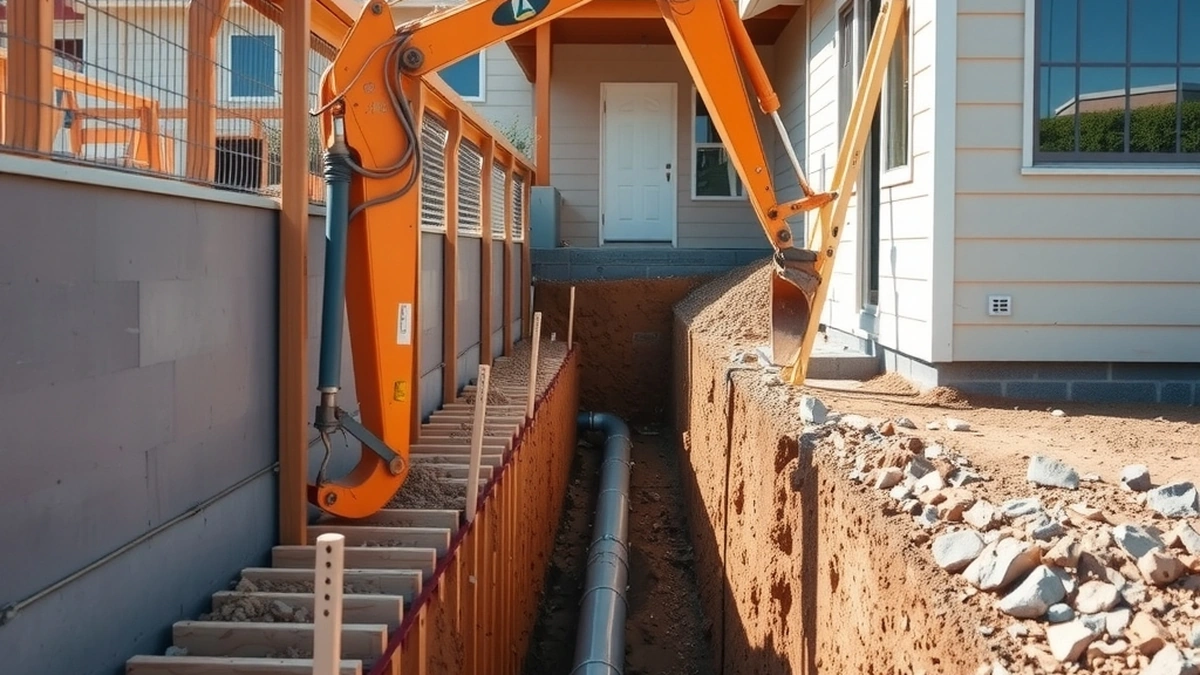
Sewer work divides at the cleanout. Upstream of it, inside the house, the pipe is small, shallow, and accessible. Downstream, the lateral runs under the yard, often 2 to 8 feet down, and connects to a municipal main or septic tank. The first is homeowner territory. The second is licensed-contractor territory, and the dividing line is not skill, it is risk.
The risks are specific: trench collapse, sewer gas, biological contamination, damage to buried utilities, and failed inspection on permitted work. None of those improve with confidence.
What you can do yourself
These tasks are genuinely within reach and cost little:
- Clear a slow bathroom or kitchen sink with a hand auger and a bucket.
- Remove and clean a P-trap, replacing the slip washers if they leak.
- Snake a branch line through a fixture or a branch cleanout with a rented auger.
- Flush the line monthly with hot water to keep grease moving.
- Replace a worn wax ring or a cracked toilet flange, which is a common source of “sewer smell.”
- Keep strainers in every drain and a grease can on the counter.
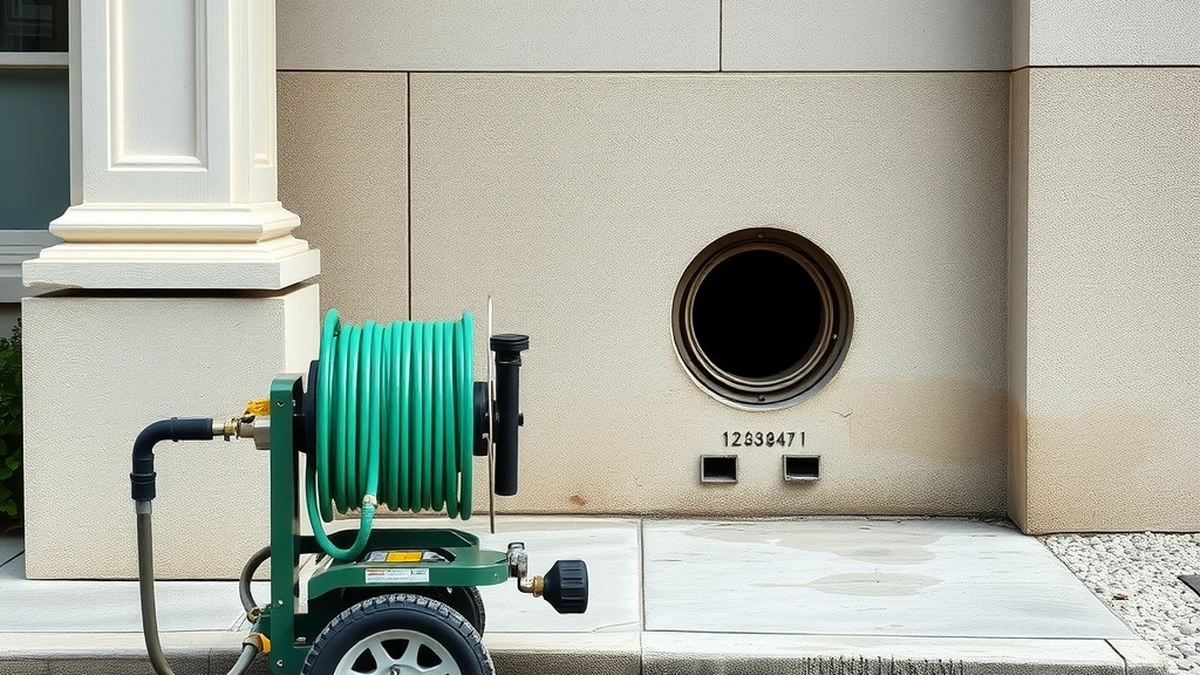
- Open a cleanout cap to check for standing water, with gloves and eye protection.
A hand auger costs $25 to $50 and a rented power snake runs $60 to $120 per day. Those are reasonable spends for a single slow fixture with an obvious cause.
What you cannot safely do
| Task | Why it is not a DIY job | Professional cost |
|---|---|---|
| Excavating the lateral | Trench collapse risk above 4 to 5 feet, buried utilities | Part of $1,500–$15,000 |
| Diagnosing the main with a camera | Equipment plus interpretation, locating defects in feet | $200–$500 |
| Hydro jetting | High pressure can injure and can destroy old pipe | $300–$800 |
| Installing a liner | Resin handling, calibration, cure, certification | $4,000–$12,000 |
| Connecting to the municipal main | Permit, inspection, municipal rules | Included in replacement |
| Working inside a sewer vault | Confined space entry, atmospheric hazards | Not offered to homeowners |
| Replacing a collapsed section | Shoring, pipe matching, bedding, compaction | $1,500–$5,000 |
The pattern is that each of these either puts a person in a hole, puts high pressure or chemicals in play, or creates work that must pass inspection. Those are the three categories where the professional cost is buying safety and compliance, not just labor.
Tools: buy, rent, or skip
| Item | Buy | Rent | Skip |
|---|---|---|---|
| Hand auger | $25–$50 | Not worth it | — |
| Power snake | $300+ | $60–$120/day | Buy only if you own rental property |
| Sewer camera | — | $250–$400/day | Buy is $3,000+ |
| Jetting machine | — | Not usually rented to homeowners | Yes |
| Drain bladder | $15–$30 | — | Useful for a garden hose flush |
| Wet/dry vacuum | $80–$150 | $30/day | Buy if you own the house |
The camera rental deserves a caveat. Renting one for $250 to $400 per day gives you pictures, not a diagnosis. Knowing that a crack at 34 feet is superficial rather than structural, and whether the pipe can host a liner, is the part that takes years. Paying $200 to $500 for an inspection that includes an opinion is usually the better trade.
Sewer gas, confined spaces, and the rules that are not optional
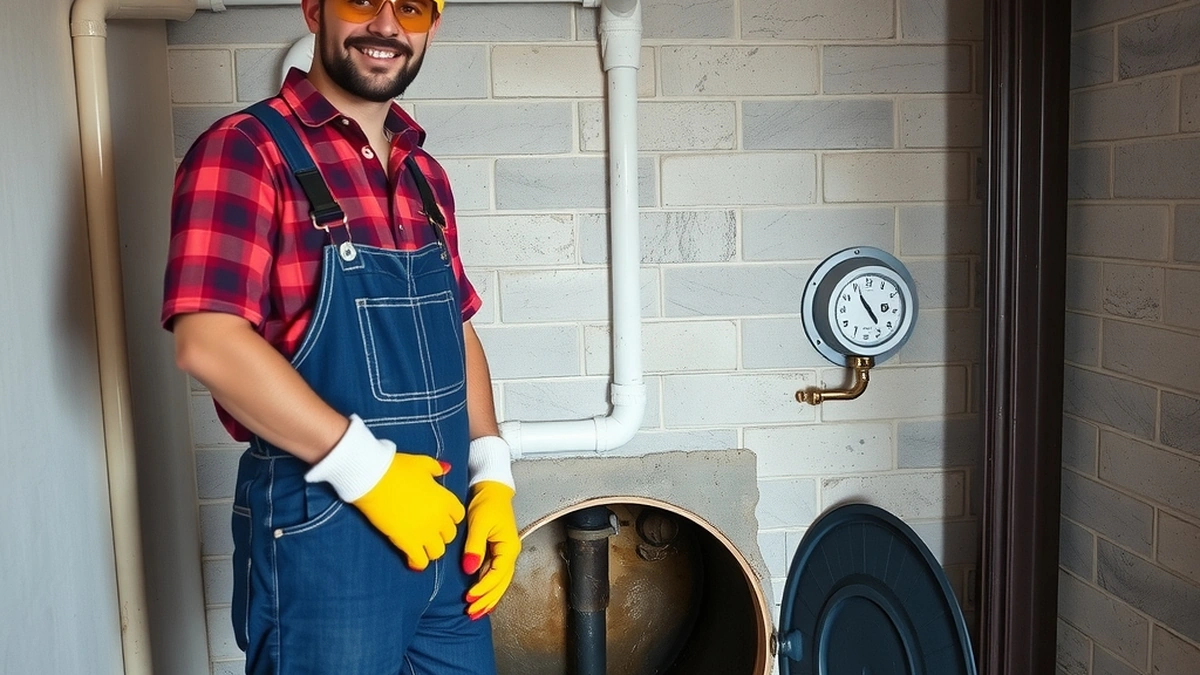
Sewer gas is mostly methane and hydrogen sulfide, and it is both flammable and an asphyxiant. It collects in basements, pits, and vaults. Never lean into a cleanout pit, never lower your head into a vault, and never use an open flame to check for gas.
Confined space rules exist because people die in these spaces in ones and twos, trying to rescue each other. OSHA requires atmospheric testing, ventilation, a attendant, and rescue provisions for permit-required confined spaces. A homeowner with a flashlight has none of those.
The practical version: if the work requires your body below grade in an enclosed space, stop. If it requires a hole deeper than about knee height, stop. Those two rules prevent nearly every serious DIY sewer injury.
Where DIY turns into a repair bill
The expensive mistakes are predictable. Rodding a clay pipe with a powered auger can crack it at a joint, turning a $300 cleaning into a $2,000 repair. Jetting an old line at full pressure can blow out a deteriorated wall. Digging by hand and striking the pipe with a shovel is common, and a cracked lateral under a driveway is an $8,000 problem.
There is also the inspection problem. Work on the lateral usually needs a permit, and unpermitted work surfaces at resale. A buyer’s inspector who finds an unpermitted repair can stall a closing or force a price reduction larger than the original job.
When to stop and call
- Stop if the clog is in the main rather than one fixture, which you can test by checking whether several drains are slow.
- Stop if the same drain has blocked twice in two years; that is a structural signal, not a habit problem.
- Stop if you see sewage or a wet, sunken patch in the yard.
- Stop before any excavation deeper than knee height, and before any enclosed-space entry.
- Call for a camera inspection at $200 to $500, then decide between cleaning and repair with actual footage.
For what the professional version looks like, see sewer line repair vs drain cleaning and broken sewer line repair. If you would rather prevent the call entirely, the intervals in sewer line repair maintenance are all homeowner-level tasks.
DIY is worth it right up to the cleanout. Past that, the money buys shoring, permits, and a warranty, and those are not things a weekend can supply.
Frequently asked questions
Can I repair a sewer line myself?
You can handle blockages in branch drains with a hand auger or rented snake. Main line excavation, camera diagnosis of the lateral, lining, and connection to the municipal main require a licensed contractor.
Is it safe to open a sewer cleanout?
Yes with precautions. Wear gloves and eye protection, stand to the side of the cap, expect pressure, and never enter a pit or vault. Sewer gas can displace oxygen in enclosed spaces.
Can I rent a sewer camera?
Some rental yards offer them for $250 to $400 per day with a reel and monitor. The equipment is available, but interpreting footage and choosing a repair method is the part that needs experience.
How deep is a sewer line usually buried?
Residential laterals commonly sit 2 to 8 feet below grade, deeper where frost or grade requires. Any excavation deeper than about 4 to 5 feet needs shoring to be safe.
What happens if I dig up the sewer line myself?
You risk trench collapse, striking gas or electrical lines, breaking the pipe further, and failing inspection. Damage to a municipal main connection can also carry fines.
When should I stop DIY and call a professional?
When the clog is in the main, when the same drain blocks twice, when you see sewage in the yard, or when any excavation goes deeper than knee height.
Sources
Some links are affiliate links.If you buy through them we may earn a commission at no extra cost to you. We do not accept payment for rankings. Read the full disclosure.