Hydro jetting installation: what happens on site
What a hydro jetting setup involves on a residential job: equipment, access points, pressures, and the cleanout you should install to make it easier next time.
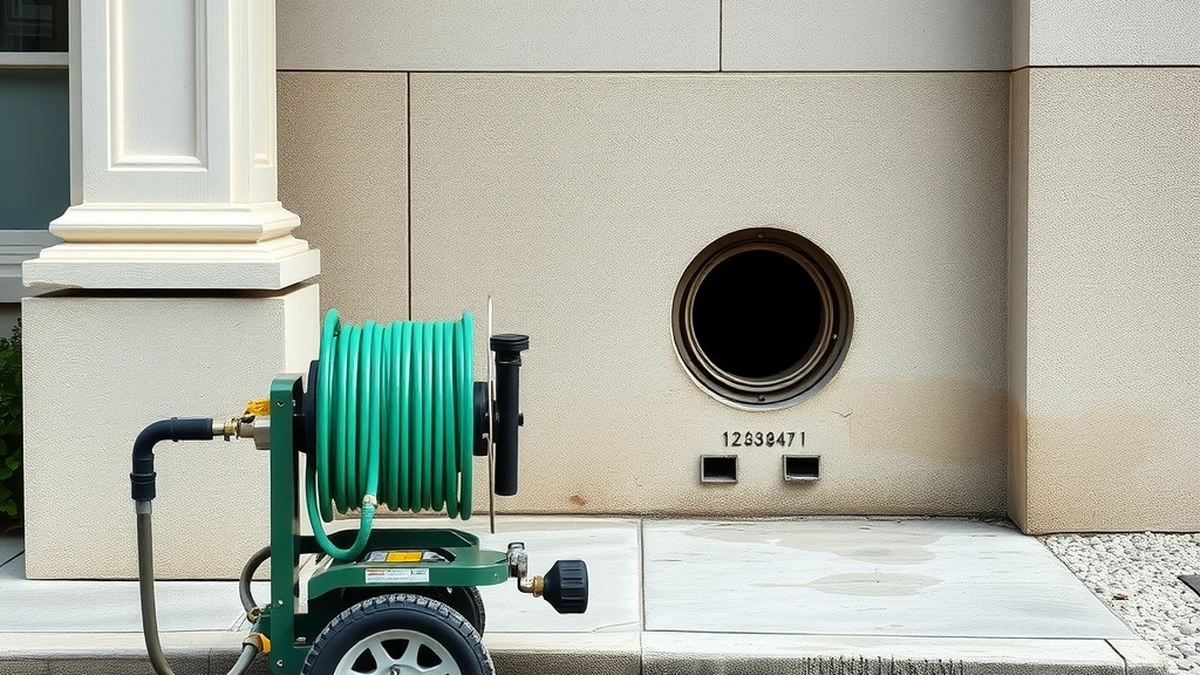
Hydro jetting installation is the setup of a pressure washer, hose reel and nozzle at a cleanout, not a permanent appliance. The visit costs $300 to $800 and needs an accessible cleanout; adding one runs $500 to $1,500 depending on depth and surface.
- Jetting visit
- $300 - $800
- New cleanout installed
- $500 - $1,500
- Camera inspection
- $200 - $500
- Operating pressure
- 3,000 - 4,000 psi
Some links on this page are affiliate links.If you buy through them we may earn a commission at no extra cost to you. We do not accept payment for rankings. Read the full disclosure.
Hydro jetting installation is not a fixture or an appliance you keep. It is the same-day setup of a pressure pump, hose reel and cutting nozzle at a sewer cleanout, followed by a scouring pass through the line and a teardown. The visit costs $300 to $800. If your house has no usable cleanout, installing one adds $500 to $1,500 and is the single upgrade that makes every future cleaning cheaper.
What “installation” means for a jetting job
The word gets used two ways, and they are different purchases.
The first is the temporary rig: the crew backs a trailer or van-mounted jetter to the curb, runs a hose to the cleanout, feeds a nozzle into the pipe, and works the line at 3,000 to 4,000 psi. Nothing is fastened to the house. When the job ends, the equipment leaves.
The second is the permanent cleanout: a wye fitting and a capped riser brought to grade so the drain can be accessed without pulling a toilet or climbing onto the roof. That is a small plumbing installation, and it is what most homeowners actually need.
A jetting visit without a good access point is where prices climb. A cleanout at grade might take five minutes to hook up. The same line accessed through a roof vent means ladders, a spotter, and a slower feed, and the bill reflects it.
The equipment, and what each part does
| Component | Function | Why it matters to the bill |
|---|---|---|
| Pump and engine | Builds 3,000 - 4,000 psi | Larger units cost more per hour to run |
| Hose reel | 100 - 200 ft of high-pressure hose | Longer runs need a second reel or a splice |
| Nozzle | Penetrating or flushing head | Root-cutting heads are slower and priced higher |
| Water supply | Onboard tank or customer tap | A tank removes the need for a hose bib |
| Camera (optional) | Verifies the result | $200 - $500 when not bundled |
The nozzle choice is the part homeowners never see and always pay for. A penetrating nozzle with a forward jet opens a path. A flushing nozzle with rear-facing jets scours the wall. A chain or root cutter head grinds through roots. Each is a different tool, and the root cutter takes more passes.
Installing a cleanout: the job that pays for itself
A two-way cleanout at the property line is the standard recommendation. It gives a straight shot toward the house and toward the municipal main, so the crew can work in either direction without disassembling a fixture.
Cost depends on three things:
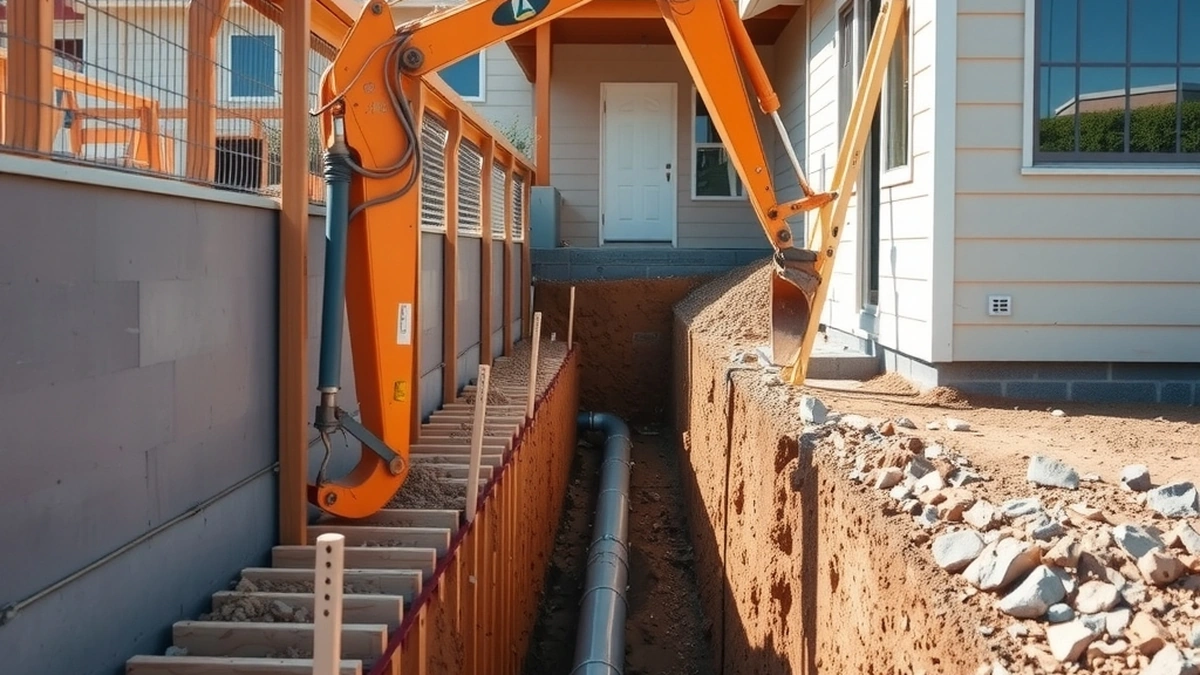
- Depth. A cleanout 18 inches down is a short hand dig. One six feet down needs shoring.
- Pipe material. Cutting into clay tile takes longer and may need a transition coupling to plastic.
- Surface. Lawn and soil restore with sod. Asphalt or concrete adds sawing and patching.
A typical installed price is $500 to $1,500. Set that against the arithmetic of not having one. Pulling and resetting a toilet runs $75 to $150 per visit, and roof access adds $100 to $250. Three visits over five years at $150 extra is $450, which is most of the way to a cleanout that lasts the life of the house.
Add the permit, usually $50 to $300, and the total still lands inside the same band.
What the visit looks like, step by step
- Locate and open the cleanout. The crew confirms which direction the line runs and removes the cap.
- Start at low pressure and short distance. This clears the immediate blockage before the hose is fed further.
- Work the full run in passes. Forward and back, usually two to four passes depending on what comes out.
- Change nozzles if needed. Grease responds to a flushing head; roots need a cutter.
- Flow test. Water is run at a fixture and watched at the cleanout.
- Camera pass if booked. This is the step that turns a cleaning into information.
If the line is jetted and never inspected, you know it drained afterwards but not why it blocked. On a first-time blockage that is acceptable. On a repeat, the camera is worth the $200 to $500.
Where installation goes wrong
Most complaints about jetting trace back to setup rather than the machine.
Wrong access point. Jetting from a fixture drain instead of a cleanout puts pressure on traps and branch fittings that were never designed for it.
Too much pressure on old pipe. Clay tile with offset joints, Orangeburg, and heavily scaled cast iron can be damaged by a full-pressure pass. A camera first, then a reduced pressure, is the careful order.
No water supply plan. A jetter needs a steady supply. If the crew is filling a tank from a hose bib, that bib has to be within reach and working.
No documentation. Ask for the footage cleaned and the nozzle used. Without those two lines, a repeat visit cannot be compared to the first.
The safety and clearance requirements for working in a confined space or an excavation are covered by OSHA trenching guidance, and the general standards for drain and vent installation are in the International Residential Code.
Installation versus repair, in dollars
| Purchase | Cost | What it changes |
|---|---|---|
| Jetting visit | $300 - $800 | Clears the bore today |
| Cleanout installed | $500 - $1,500 | Makes every future visit faster |
| Camera inspection | $200 - $500 | Tells you what the pipe looks like |
| Spot repair | $1,500 - $5,000 | Fixes one defect |
| Trenchless lining | $4,000 - $12,000 | Rehabilitates the run |
A cleanout is the cheapest item on that list and the only one that reduces the cost of everything below it. If a contractor quotes a jetting visit and a cleanout together, that is usually a fair package rather than an upsell.
For the pricing side of the visit itself, see hydro jetting cost. If the camera turns up a defect, the options are set out in collapsed pipe repair and spot repair installation. The broader comparison between cleaning and rebuilding a line is in sewer line repair vs drain cleaning.
What to ask before the truck arrives
- Which cleanout will you use, and is it accessible without pulling a fixture?
- What pressure and what nozzle?
- How many feet will you clean, and will that be on the invoice?
- Is a camera pass included, and if not, what does it add?
- If the line will not clear, is the visit still billable?
Answers to those five questions separate a quoted $450 from a surprise $780. They also tell you whether the crew intends to inspect the result or simply declare success when the water goes down.
Frequently asked questions
Does hydro jetting require any installation?
No permanent equipment goes into the house. The crew sets up a jetting machine, hose reel and nozzle at an existing cleanout, does the work and packs up the same day.
What is the most important thing to install first?
A two-way cleanout at the property line. It gives the crew a straight shot both ways and usually removes the need to pull a toilet or climb to a roof vent.
How much does a new cleanout cost?
Roughly $500 to $1,500 installed, depending on depth, whether the pipe is clay or plastic, and whether the surface is lawn, asphalt or concrete.
What pressure is used on a residential sewer line?
Typically 3,000 to 4,000 psi at the nozzle, with flow around 4 to 8 gallons per minute. Old clay or cast iron may be run at lower pressure.
Can jetting be done through a roof vent?
Yes, but it costs more. Roof access adds ladder work, a second technician on some crews, and $100 to $250 to the visit compared with a grade-level cleanout.
Do I need a permit for a cleanout?
Often yes, because the cleanout ties into the building drain. Permit fees run $50 to $300 by municipality, and the contractor usually pulls it.
Sources
Some links are affiliate links.If you buy through them we may earn a commission at no extra cost to you. We do not accept payment for rankings. Read the full disclosure.