Main Sewage Line Replacement: Costs and Methods
Compare trenchless and open-trench main sewage line replacement costs, permits, and what to expect.
A full main sewage line replacement typically costs $5,000–$15,000 and takes 2–5 days, depending on pipe length, depth, and method.
- Typical cost
- $5,000–$15,000
- Camera inspection
- $200–$500
- Trenchless lining
- $4,000–$12,000
- Open trench
- $5,000–$15,000
- Timeline
- 2–5 days
Some links on this page are affiliate links.If you buy through them we may earn a commission at no extra cost to you. We do not accept payment for rankings. Read the full disclosure.
Main sewage line replacement is the process of removing the failed primary drain pipe and installing a new line from the house to the municipal connection or septic tank. Costs typically run from $5,000 to $15,000 for open-trench replacement, while trenchless lining ranges from $4,000 to $12,000. The right method depends on pipe depth, length, soil conditions, and whether the damage is isolated or runs the full length of the line.
Start With a Camera Inspection
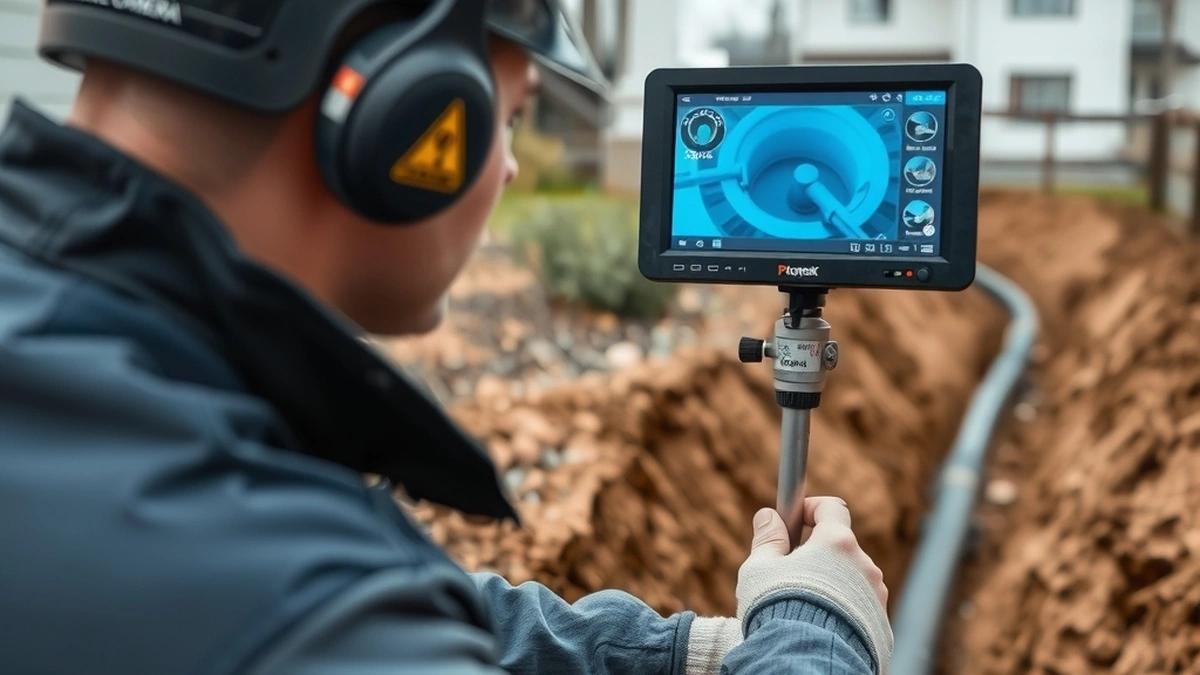
Before any replacement work begins, a sewer camera inspection should be performed. This step costs $200–$500 and shows the condition of the pipe interior, the location of breaks or offsets, and whether roots have entered the line. Without this inspection, contractors may excavate the wrong section or recommend full replacement when a spot repair would suffice.
A camera inspection also helps determine pipe material and diameter. Older homes often have clay, cast iron, or Orangeburg pipe, while newer construction typically uses PVC or ABS. Knowing the material matters because it affects how the new line connects to the existing system and whether trenchless lining is structurally viable.
Spot Repair vs. Full Replacement
Not every damaged sewer line needs to be replaced entirely. If the camera shows a single crack, offset joint, or localized root intrusion, a spot repair may cost $1,500–$5,000. This approach targets only the failed section and leaves the rest of the pipe in place.
Full replacement is warranted when the line has multiple failures, severe bellies, widespread corrosion, or collapsed segments. The canonical cost range for full main sewage line replacement is $5,000–$15,000. For example, if a contractor quotes $8,500 for 60 feet of 4-inch PVC at 5 feet deep, that breaks down to roughly $142 per linear foot, including excavation, backfill, and restoration.
Property owners should weigh the age of the remaining pipe against the cost of repeated spot repairs. If the line is more than 50 years old and has already had one repair, full replacement often costs less over time than continuing to patch sections.
Trenchless Lining
Trenchless lining, also called cured-in-place pipe (CIPP), installs a new pipe inside the old one without digging a long trench. Costs range from $4,000–$12,000 for a typical residential main line. The process begins with cleaning the existing pipe, often with hydro jetting at $300–$800, followed by inserting a resin-saturated liner and curing it in place.
This method works well when the existing pipe has the correct grade and no major collapses. It is not suitable for pipe that has completely lost its shape or for sections where the pipe has separated entirely. Access is usually gained through cleanouts or small pits, which limits landscape disruption.
Arithmetic example: lining 60 feet at $100 per linear foot equals $6,000. Adding hydro jetting at $500 brings the total to $6,500, which falls inside the $4,000–$12,000 range. Property owners should request a written scope that specifies liner thickness, warranty length, and whether the lateral connection to the house is included.
Open-Trench Replacement
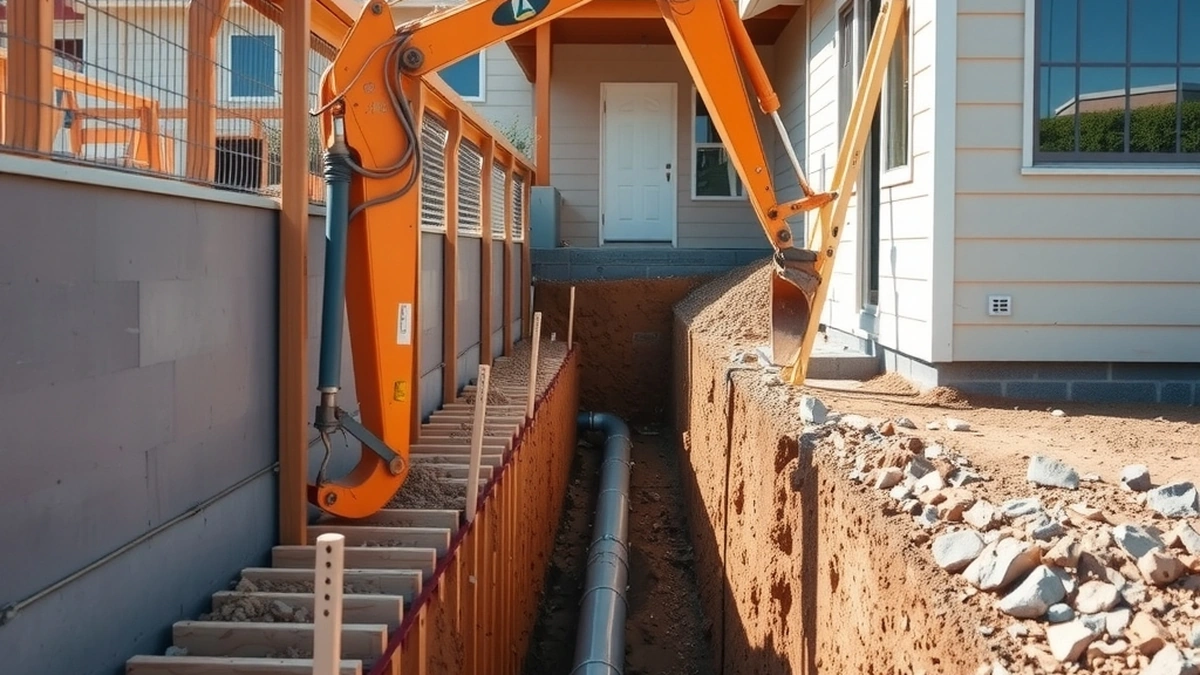
Open-trench replacement involves excavating a trench along the full length of the sewer line, removing the old pipe, and installing new pipe. Costs fall in the $5,000–$15,000 range. This method is necessary when the pipe has collapsed, when the grade must be corrected, or when trenchless lining cannot be used.
Depth drives cost. A line buried at 3 feet is easier and cheaper to reach than one at 8 feet. Deeper trenches require shoring or sloping for worker safety, more backfill material, and additional labor hours. If the line runs under a driveway, sidewalk, or slab, surface restoration adds to the total.
A rough cost breakdown for a 60-foot replacement at 5 feet deep might look like this:
| Item | Estimated Cost |
|---|---|
| Camera inspection | $200–$500 |
| Excavation and hauling | $1,500–$3,000 |
| New 4-inch PVC pipe and fittings | $800–$1,500 |
| Labor (2–3 workers, 2–4 days) | $2,000–$4,000 |
| Backfill and compaction | $500–$1,000 |
| Surface restoration (lawn or concrete) | $500–$2,000 |
| Permits and fees | $200–$800 |
| Total | $5,700–$12,800 |
These figures are estimates. Actual quotes vary by region, contractor, and site conditions.
Permits and Code Compliance
Most municipalities require a permit for sewer line replacement. Permit fees typically range from $200 to $800, depending on the jurisdiction. The work must meet local plumbing code, which often follows the International Plumbing Code published by the International Code Council. Inspections are usually required at key stages, such as before backfill and after final connection.
Property owners are generally responsible for the line from the house to the connection point at the street or septic tank. The municipal connection itself may be the city’s responsibility, but the tap and any work on private property usually falls to the homeowner. Confirming responsibility before signing a contract avoids surprise bills.
Emergency Backups and Hydro Jetting
If the main line is completely blocked and sewage is backing into the home, an emergency call may cost $500–$1,500. Hydro jetting at $300–$800 can clear grease, sludge, and roots, but it does not repair a broken or collapsed pipe. Jetting is best used as a diagnostic and clearing step before replacement, not as a substitute for structural repair.
Repeated backups after jetting indicate a structural problem that requires replacement. Continuing to jet a broken line can push debris further downstream or worsen a belly where waste accumulates.
Choosing a Contractor
Request at least three written estimates. Each should specify the method, pipe material, depth assumptions, permit handling, and restoration scope. Ask whether the price includes camera inspection, hydro jetting, and final testing. A low quote that excludes restoration or permits can end up costing more than a higher, all-inclusive bid.
Verify that the contractor is licensed and insured where required. Sewer work involves excavation near utilities and potential exposure to wastewater, so proper coverage protects both the worker and the property owner.
For related guidance, see our pages on broken sewer line repair, how much sewer line repair costs, and sewer line repair versus drain cleaning. These resources cover spot repairs, full cost breakdowns, and when cleaning is enough versus when replacement is necessary.
Frequently asked questions
What is main sewage line replacement?
It is the removal and installation of the primary pipe that carries wastewater from your home to the municipal connection or septic system.
How much does replacement cost?
Full replacement averages $5,000–$15,000, while trenchless lining ranges from $4,000–$12,000 depending on length and depth.
Is a camera inspection required first?
Yes. A camera inspection costs $200–$500 and identifies the exact location and severity of damage before any digging or lining begins.
How long does the job take?
Most replacements finish in 2–5 days. Open-trench work may take longer if the pipe is deep or runs beneath a driveway or slab.
Can I repair only a damaged section?
Spot repairs cost $1,500–$5,000 and make sense when damage is isolated, but widespread corrosion or bellied pipe usually requires full replacement.
Will my yard be dug up?
Trenchless lining limits excavation to small access pits, while open-trench replacement requires a trench along the full pipe path.
Sources
Some links are affiliate links.If you buy through them we may earn a commission at no extra cost to you. We do not accept payment for rankings. Read the full disclosure.