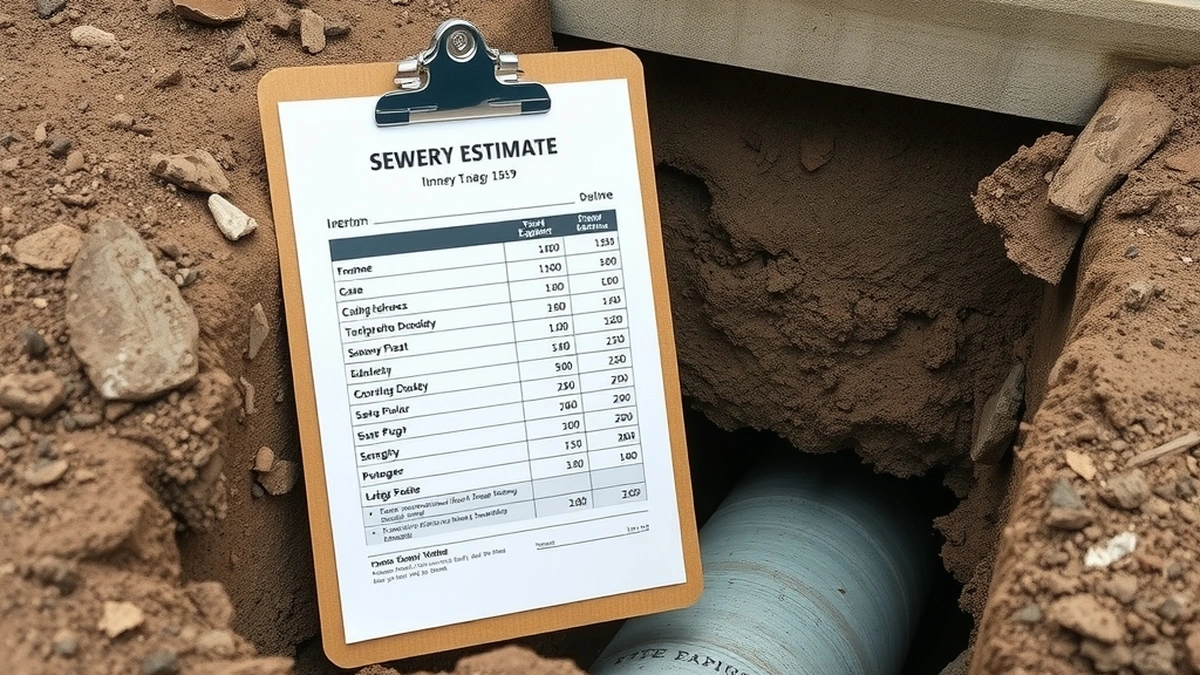
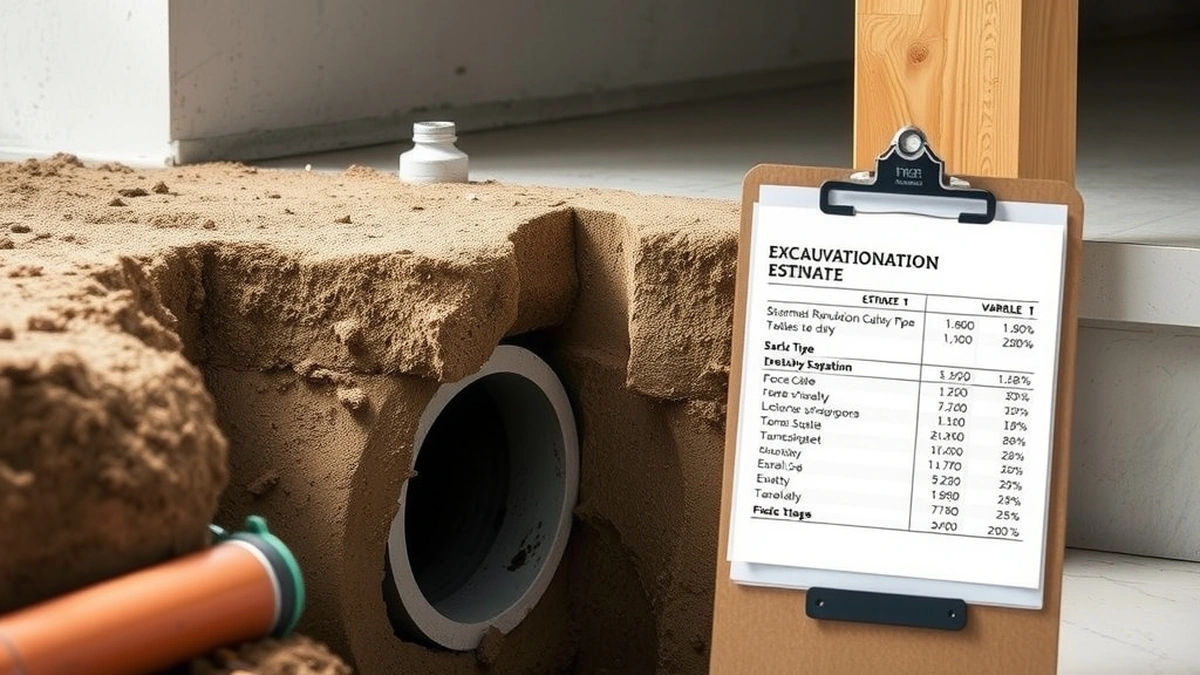
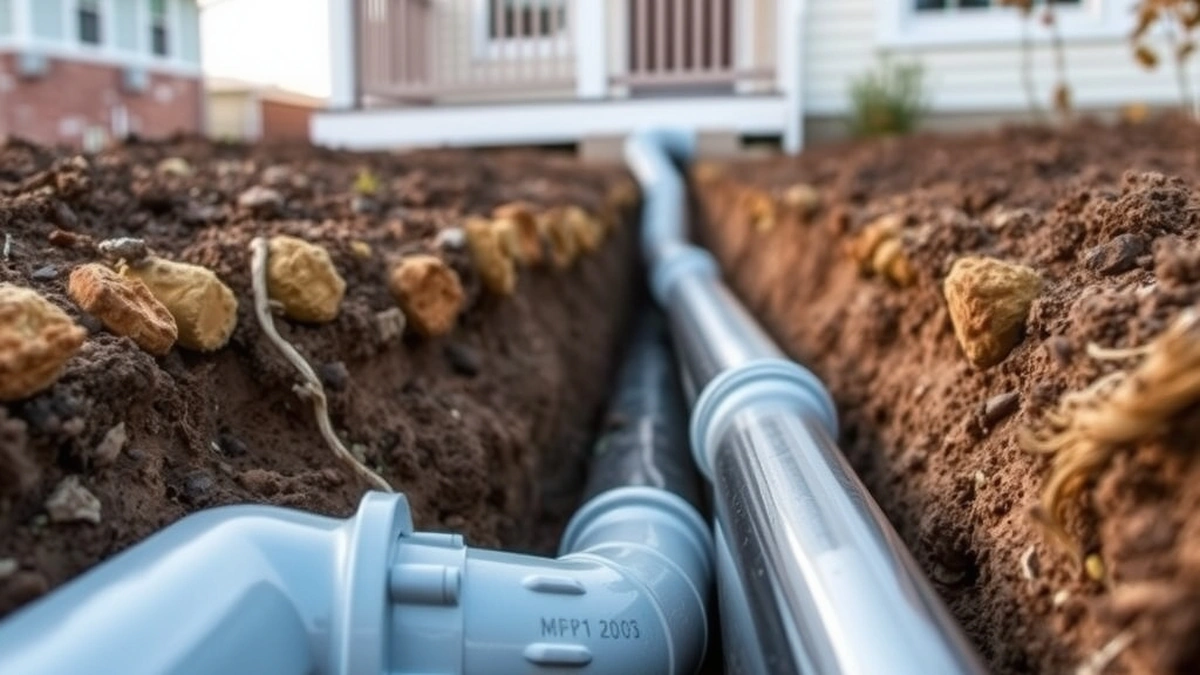
How much does sewer line repair cost?
Sewer line repair costs $1,500 to $15,000 for most US homes in 2026, starting with a $200 to $500 camera inspection. Here is what drives each quote.
Sewer line repair costs $1,500 to $5,000 for a spot fix, $4,000 to $12,000 for trenchless lining, and $5,000 to $15,000 for full replacement. A camera inspection at $200 to $500 comes first and decides which of those you actually need.
- Spot repair
- $1,500–$5,000
- Trenchless lining
- $4,000–$12,000
- Full replacement
- $5,000–$15,000
- Camera inspection
- $200–$500
Some links on this page are affiliate links.If you buy through them we may earn a commission at no extra cost to you. We do not accept payment for rankings. Read the full disclosure.
Sewer line repair costs between $1,500 and $15,000 for most US homes, and the spread is not random noise. A spot repair on one damaged section runs $1,500 to $5,000, trenchless lining runs $4,000 to $12,000, and full replacement runs $5,000 to $15,000. What decides which number applies is the camera inspection, which costs $200 to $500 and comes before any quote worth signing.
What the numbers actually buy
Sewer line repair cost is the total price of restoring a failing pipe between the house and the municipal main, including diagnosis, labor, materials, permits, and restoration of whatever had to be opened. The word “repair” hides four different jobs with four different price bands.
| Service | Typical range | What it covers |
|---|---|---|
| Camera inspection | $200–$500 | Locating the defect, identifying pipe material, measuring depth and length |
| Hydro jetting | $300–$800 | Clearing grease, roots, and debris when the pipe itself is sound |
| Spot repair | $1,500–$5,000 | Replacing one short damaged section, usually 3 to 10 feet |
| Trenchless lining | $4,000–$12,000 | A resin liner cured inside the existing pipe |
| Full replacement | $5,000–$15,000 | New pipe along the whole run, open trench or pipe bursting |
| Emergency backup service | $500–$1,500 | After-hours response to an active sewage backup |
The arithmetic is simple once the scope is known. A $3,000 spot repair plus a $350 inspection totals $3,350. An $8,000 lining plus the same $350 inspection totals $8,350. A $10,000 replacement plus a $400 inspection plus $1,200 of driveway restoration totals $11,600. Every one of those is an estimate; the point is that the inspection is a fixed, small line item next to a variable, large one.
Why two quotes for the same house differ by $6,000
Depth is the biggest lever. A line 3 feet down can be reached with a mini-excavator and hand tools. A line 8 feet down needs shoring, a larger machine, and more backfill, and labor hours climb with every foot. Length is the second lever: a 25-foot run from house to main and a 90-foot rural run are not the same job even when the defect looks identical on camera.
Pipe material changes the method. Clay tile cracks at joints, cast iron corrodes from the inside until it flakes, Orangeburg collapses under load, and PVC usually survives everything except a backhoe. Material determines whether a liner can bond, whether pipe bursting is viable, and how much cutting the crew faces.
Access and restoration close the gap. Tearing out a lawn is cheap. Cutting a concrete driveway, sawing a sidewalk, or working under a finished basement slab adds thousands and often requires a separate concrete contractor. Permits and traffic control matter in some municipalities, and emergency scheduling adds a premium on top of the $500 to $1,500 emergency range.
Spot repair, lining, or replacement
The decision comes down to how much good pipe surrounds the bad section. Spot repair wins when the camera shows one fracture, one root intrusion at a joint, or one offset in an otherwise sound line. It is the cheapest correct answer at $1,500 to $5,000.
Trenchless lining wins when the pipe is cracked or leaking along much of its length but still holds its round shape. At $4,000 to $12,000 it avoids most excavation and keeps mature landscaping intact.
Full replacement wins when the pipe has lost its shape, has multiple failures, or is made of a material at the end of its life. At $5,000 to $15,000 it is the most expensive option, but it is also the only one that resets the clock on the whole run. Our guide to broken sewer line repair walks through how the camera findings map onto each of these three choices.
What a written estimate should itemize
A quote that arrives as one number is not an estimate, it is a guess with a signature line. Ask for these lines separately:
- Camera inspection fee, and whether the recording is yours to keep
- Pipe material, diameter, depth, and linear footage
- Method proposed, and why the alternatives were ruled out
- Permit costs and who pulls them
- Excavation, backfill, and compaction
- Restoration of lawn, driveway, or sidewalk
- Disposal of old pipe and spoil
- Warranty terms in years, and what voids them
Two contractors quoting $9,000 can be $4,000 apart in real value if one includes restoration and the other bills it later.
Reading three quotes side by side
Put the three quotes in columns and compare the same lines. If quote A is $7,500 with restoration included and quote B is $6,200 with restoration billed separately at an estimated $2,400, quote B is the $8,600 job. If quote C is $5,900 but excludes the $450 permit and $800 of concrete, it is a $7,150 job.
Divide by linear feet to compare unlike scopes. A $9,000 replacement over 60 feet is $150 per foot. A $12,000 replacement over 60 feet is $200 per foot. That per-foot view is the honest way to see whether the difference is method, market, or markup, and it is the basis of our guide to sewer line repair cost per square foot.
When the cheap quote is the expensive one
The lowest bid usually removes something. Common omissions are restoration, permit fees, compaction of backfill, and a post-repair camera pass. A line that is backfilled without compaction settles, and the driveway above it cracks within a season.
The other red flag is a price given before inspection. Nobody can know whether a line needs a $2,000 spot repair or a $12,000 replacement without seeing inside it. A contractor who quotes blind is either planning to upsell on site or planning to do the minimum and leave.
What to do next
- Stop using water heavily if sewage is backing up, and call for emergency service in the $500 to $1,500 range.
- Book a camera inspection at $200 to $500 and ask for the video file.
- Get the inspection report in writing with footage, material, depth, and defect locations.
- Request three written estimates that itemize the lines above, one of them for a trenchless option if the pipe qualifies.
- Compare total cost including restoration and permits, then check the warranty before signing.
If the choice is between fixing the line and living with a slow drain, our article on whether sewer line repair is worth it runs the break-even math. If the confusion is about scope rather than price, sewer line repair vs drain cleaning explains why a $300 to $800 cleaning sometimes solves what looks like a $10,000 problem.
Frequently asked questions
How much does sewer line repair cost?
Most US homeowners pay $1,500 to $5,000 for a spot repair, $4,000 to $12,000 for trenchless lining, or $5,000 to $15,000 for full replacement, plus a $200 to $500 camera inspection.
Is a camera inspection worth the extra cost?
Yes. A $200 to $500 camera inspection prevents a $5,000 to $15,000 replacement on a line that only needed a $300 to $800 hydro jet cleaning, and it tells the contractor the pipe material and depth.
Why is my quote higher than the typical range?
Deep excavation, driveway or sidewalk restoration, long pipe runs, and emergency scheduling all push a job above $15,000. Ask for the line items that account for the difference.
Can sewer repair cost be covered by insurance?
Homeowners insurance usually excludes the pipe itself but may cover resulting damage such as flooded flooring. Some policies sell a sewer backup endorsement that pays for cleanup and access.
Does trenchless lining always cost less than replacement?
No. Lining at $4,000 to $12,000 can beat replacement at $5,000 to $15,000 on a short urban lot, but a long rural run or a collapsed pipe can make lining the more expensive option.
How long does a sewer repair estimate take?
A camera inspection plus a written estimate usually takes 60 to 90 minutes on site. Avoid any contractor who prices the job by phone before seeing the line.
Sources
Some links are affiliate links.If you buy through them we may earn a commission at no extra cost to you. We do not accept payment for rankings. Read the full disclosure.