Full replacement cost: what a new sewer line runs
A full sewer replacement costs $5,000 to $15,000 in the US. Here is the per-foot math, what pushes a job to the top of the band, and what the quote leaves out.
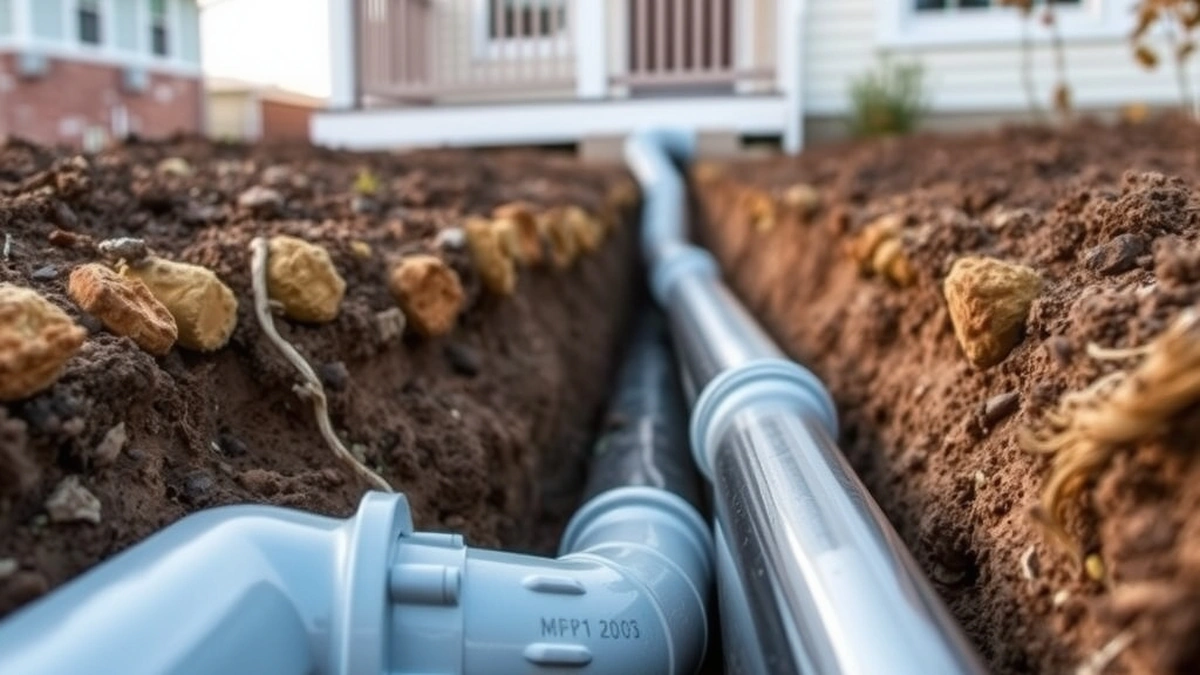
Full replacement costs $5,000 to $15,000 for a typical US house, which works out to roughly $50 to $375 per foot depending on length. Length, depth, surface restoration, and whether the line is replaced by open trench or pipe bursting set where in that band the job lands.
- Full replacement
- $5,000 - $15,000
- Per-foot range
- $50 - $375
- Camera inspection
- $200 - $500
- Trenchless lining, for comparison
- $4,000 - $12,000
Some links on this page are affiliate links.If you buy through them we may earn a commission at no extra cost to you. We do not accept payment for rankings. Read the full disclosure.
Full replacement costs $5,000 to $15,000 for a typical US house, and that price buys a new pipe from the house to the municipal main, not a patch. The band is wide because the pipe is the cheap part: excavation, depth, and what sits on top of the line do most of the work. Understanding those three is how you read a quote.
What the price covers
Full replacement is the removal of the entire sewer line and installation of a new one along the same route, by open trench or by a trenchless method. Every line on the invoice follows from that scope, and every one of them can be itemized.
| Line item | Typical range | What it pays for |
|---|---|---|
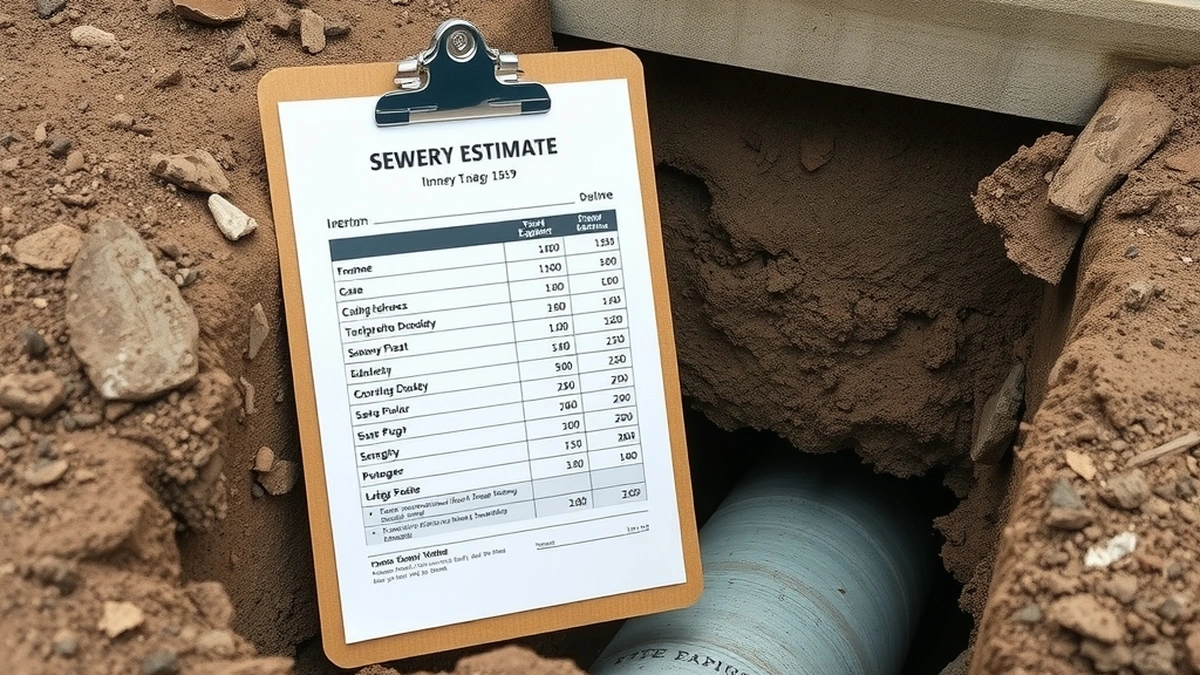
| Camera inspection and locate | $200 - $500 | Confirming the route, depth, and connection points |
| Pipe and fittings | $400 - $1,200 | PVC, fittings, wyes, and connections for a typical run |
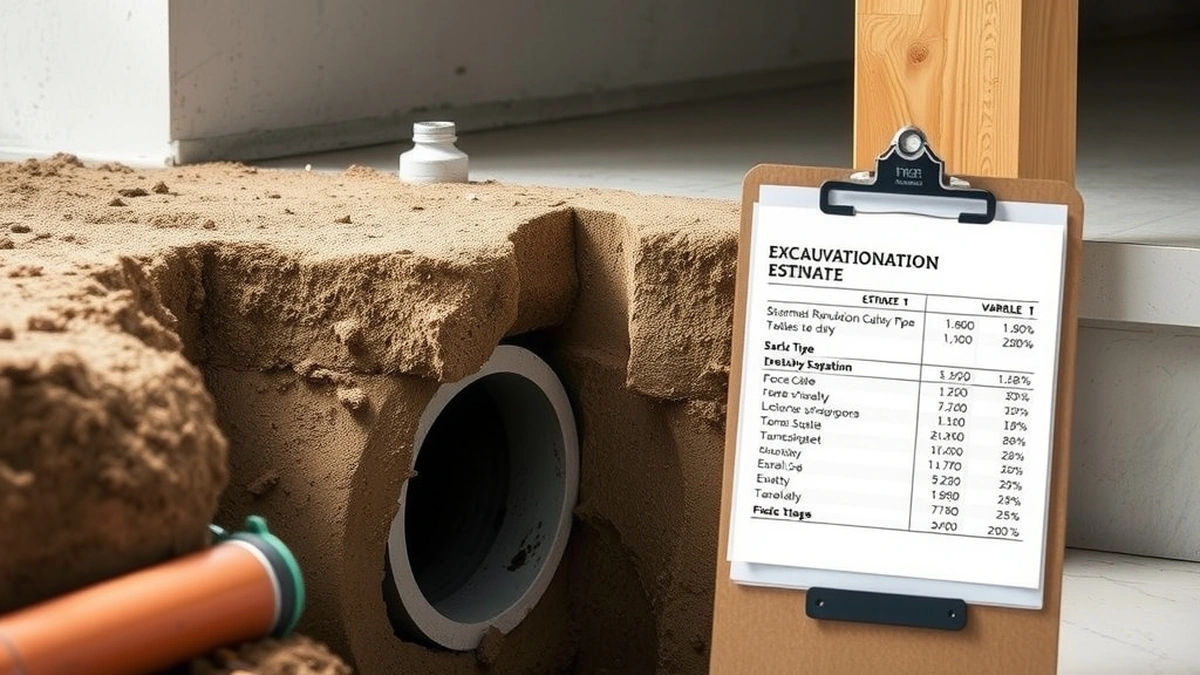
| Excavation and labor | $2,500 - $8,000 | Machine time, hand digging near utilities, shoring |
| Backfill, bedding, compaction | $600 - $2,000 | Sand bedding and compacted lifts |
| Permit and inspection | $100 - $600 | Municipal sewer permit and inspector visits |
| Surface restoration | $0 - $3,000 | Sod, pavers, concrete, or driveway replacement |
Add a mid-range job: $350 inspection plus $800 of pipe and fittings plus $4,600 of excavation plus $1,100 of bedding and backfill plus $250 permit is $7,100. Put the route under a 10-foot-wide concrete driveway and add $2,200 to saw, break, haul, and repour: $9,300. The pipe did not change. The access did.
Three routes and what they cost
The method decides more of the price than the pipe material does.
| Route | Cost band | When it fits |
|---|---|---|
| Open trench | $5,000 - $15,000 | Any condition, any depth, any pipe |
| Pipe bursting | $5,000 - $15,000 | Sound host pipe, same route, few fittings |
| Trenchless lining | $4,000 - $12,000 | Host pipe intact, not a replacement at all |
Open trench is the baseline. Everything is visible, the slope can be set precisely, and there is no dependence on the old pipe. It is also the most disruptive route, because it opens the full run.
Pipe bursting pulls a bursting head through the old line and tows new polyethylene behind it. It replaces the pipe without a continuous trench, but it needs entry and exit pits and it needs the old pipe to be burstable rather than collapsed.
Lining is not replacement, and it is worth saying plainly. A liner leaves the old pipe in the ground and gives it a new interior surface. It costs less and it depends on the host pipe staying sound.
The per-foot arithmetic
Per-foot pricing is the only figure that compares across quotes of different lengths, and it is also the figure most often quoted carelessly.
- $5,000 for 40 feet is $125 per foot.
- $15,000 for 40 feet is $375 per foot.
- $5,000 for 100 feet is $50 per foot.
- $15,000 for 100 feet is $150 per foot.
The same $5,000 to $15,000 envelope produces a per-foot spread of $50 to $375 purely from length. A $12,000 quote on 45 feet is $267 per foot; a $12,000 quote on 90 feet is $133 per foot. Same total, very different value.
Ask for footage measured on camera, and ask whether the figure includes the connection to the municipal main. A run measured to the property line and a run measured to the main can differ by 10 to 20 feet on a corner lot.
What pushes a job to $15,000
Five conditions explain almost every quote at the top of the band.
Depth is the first. A line 4 feet down can be opened with a mini-excavator and backfilled in a day. A line 10 feet down needs shoring, and shoring plus the extra spoil handling is billed by the hour.
Surface is the second. A lawn is cheap. A stamped concrete driveway, a paver patio, or a mature hedge row is not, and the contractor prices the risk of not being able to match it.
Utilities are the third. Gas, water, electric, and fiber cross the route, and hand digging near them is slow. A route that crosses three utilities can add a day of labor.
Route length and fittings are the fourth. Every wye, bend, and cleanout is a fitting and a joint. A straight 60-foot run is a different job from a 60-foot run that serves two bathrooms and turns twice.
Access is the fifth. A rear-lot line behind a fence, a detached garage, or a finished basement wall adds handling time that never appears on a rate card.
What the quote often leaves out
Three lines are commonly missing and commonly expensive.
Driveway and hardscape replacement is the big one. Some quotes include a rough patch and some include nothing. Ask for the square footage and the finish specified.
Permit fees vary widely by municipality and are sometimes passed through at cost. Ask whether the number on the quote is the fee or an estimate of it.
Lawn restoration is usually excluded beyond rough grading. Sod, topsoil, and seeding can add a few hundred to a few thousand dollars depending on the run.
Repair or replace
The comparison is not this year’s invoice against this year’s invoice. It is the number of repairs over the life of the pipe.
A house facing three spot repairs at $3,000 each will spend $9,000 and still have the original pipe. A full replacement at $9,500 ends the sequence and carries a 50-year material life. The repairs are not wrong; they are a bridge. The question is how long the bridge needs to hold.
If the camera shows a run with several defects, a sag, and joint separation in old clay, the spot repair cost arithmetic stops working and replacement becomes the cheaper total. If the pipe is sound except for one spot, a patch is still correct.
What to do next
- Get a full-run camera inspection at $200 to $500 and keep the recording.
- Ask for the footage measured from cleanout to main, not to the property line.
- Request three quotes, at least one open trench and one trenchless, itemized on the same lines.
- Confirm in writing who restores the driveway, the lawn, and the sidewalk, and to what finish.
- Ask what the permit covers and who schedules the municipal inspection.
- Compare totals including restoration, then compare warranty length and exclusions.
The installation sequence explains what the work involves day by day, and full replacement vs trenchless lining covers the choice between the two routes. For the wider price picture, how much sewer line repair costs puts every option in one frame.
Frequently asked questions
How much does it cost to replace a sewer line?
Most US homeowners pay $5,000 to $15,000 for a full replacement from the house to the municipal main, including excavation, new pipe, backfill, and rough restoration. Permits and driveway replacement can add to that.
How much is sewer replacement per foot?
Roughly $50 to $375 per foot, which is a wide band because the crew and equipment are close to fixed while the pipe is not. A short 40-foot run carries a much higher per-foot price than a 100-foot run.
Is full replacement cheaper than lining?
No on the invoice, yes on the lifetime. Replacement runs $5,000 to $15,000 against $4,000 to $12,000 for lining, but it removes the old pipe entirely and does not depend on the host pipe staying sound.
Does homeowners insurance pay for sewer replacement?
Usually not the pipe itself, which is treated as maintenance. Damage from a backup into the home may be covered, and many carriers sell a sewer backup endorsement that is worth pricing separately.
How long does a new sewer line last?
PVC installed to code commonly lasts 50 years or more. Cast iron and clay have shorter service lives, and the backfill and bedding matter as much as the pipe material for how long the line stays in alignment.
Can I finance a sewer replacement?
Many contractors offer payment plans, and some municipalities run low-interest programs for sewer lateral replacement. Ask both before putting the job on a credit card at a retail rate.
Sources
Some links are affiliate links.If you buy through them we may earn a commission at no extra cost to you. We do not accept payment for rankings. Read the full disclosure.