Full replacement vs trenchless lining: the real gap
Replacement costs $5,000 to $15,000 and lining $4,000 to $12,000. The gap is smaller than it looks, and the host pipe decides which one you can actually buy.
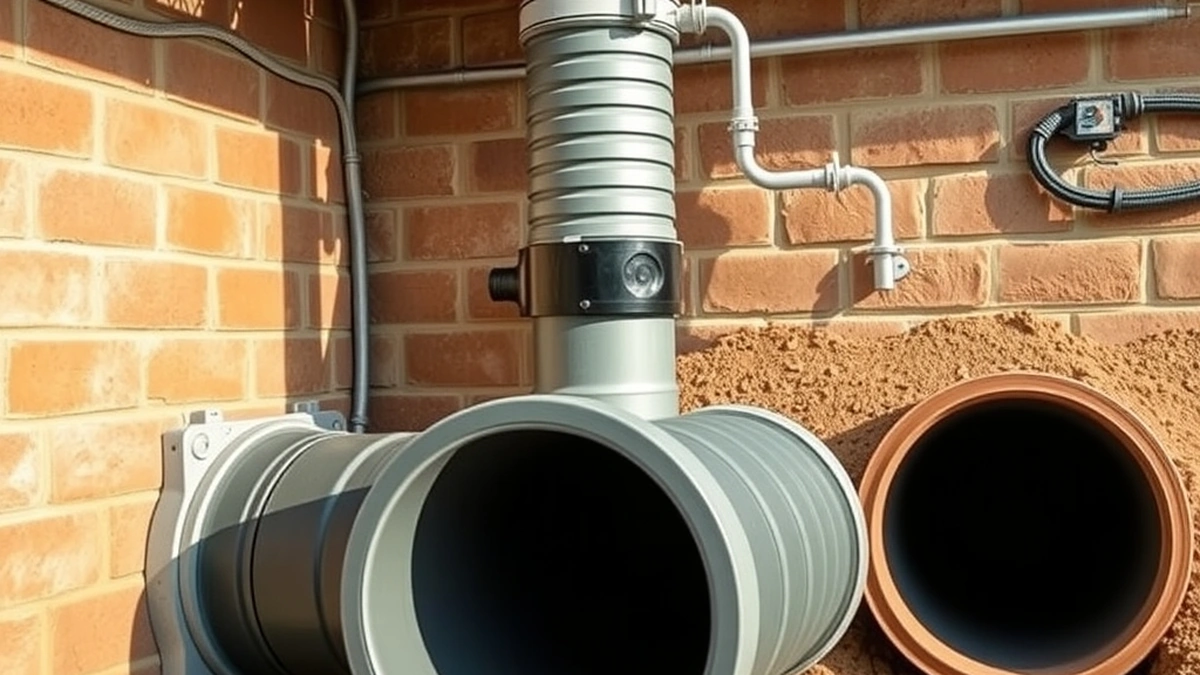
Full replacement installs new pipe for $5,000 to $15,000 and removes the old line. Trenchless lining renews the existing pipe for $4,000 to $12,000 and depends on that pipe staying sound. The gap is often under $2,000, so the host pipe condition decides more than the price.
- Full replacement
- $5,000 - $15,000
- Trenchless lining
- $4,000 - $12,000
- Typical gap
- $1,000 - $3,000
- Lining requires
- Sound host pipe
Some links on this page are affiliate links.If you buy through them we may earn a commission at no extra cost to you. We do not accept payment for rankings. Read the full disclosure.
Full replacement installs a new pipe for $5,000 to $15,000. Trenchless lining renews the old one for $4,000 to $12,000. The difference in price is smaller than most homeowners expect, and the difference in what you own afterward is larger: one is a new line, the other is a new surface inside an old one.
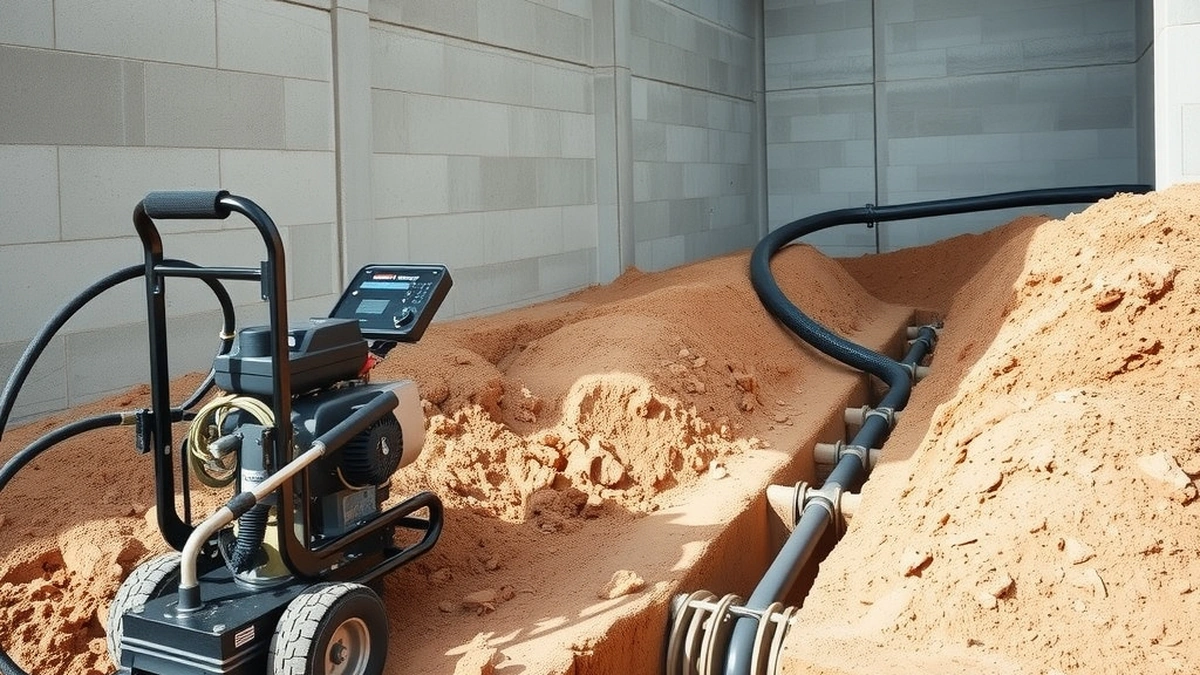
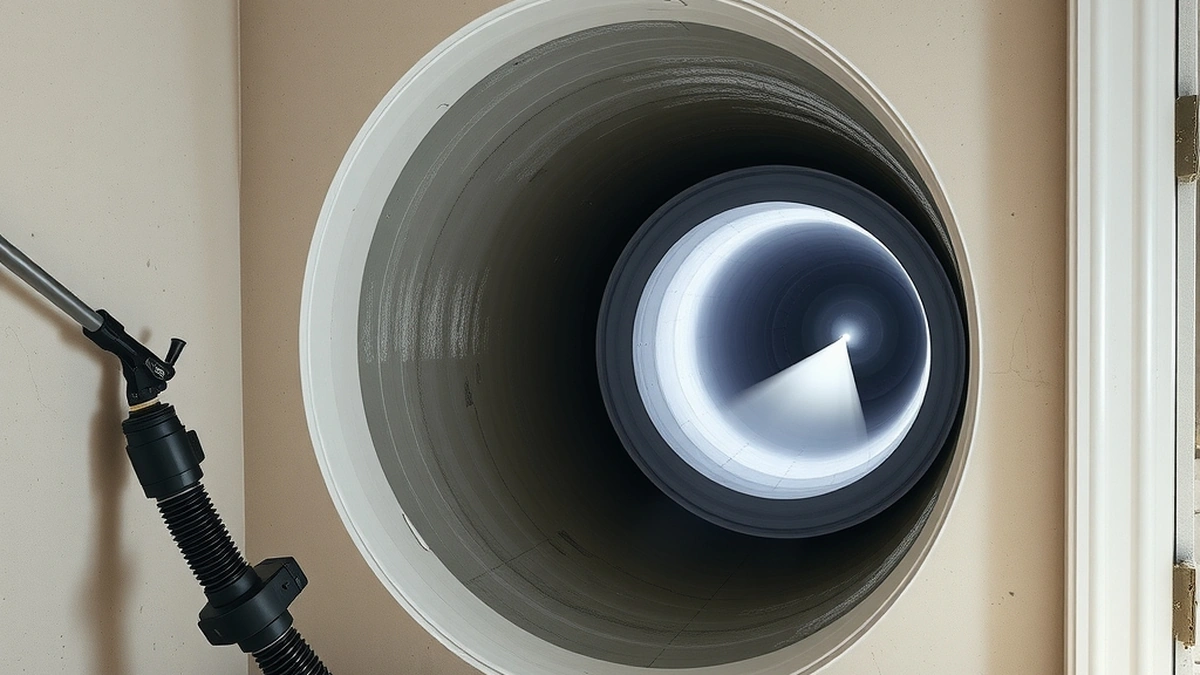
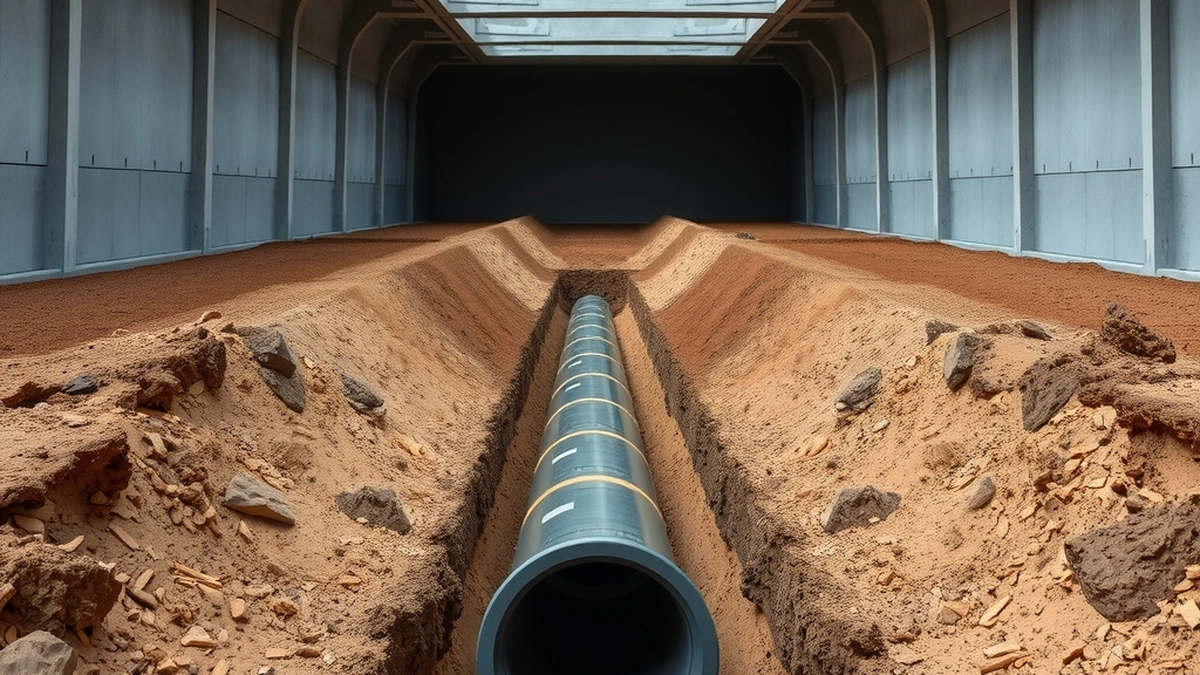
Full replacement removes the existing lateral and installs new pipe from the house to the municipal main. The old pipe leaves the ground. Trenchless lining leaves the old pipe in place and cures a resin liner against its inner wall, creating a continuous new bore. Nothing is excavated except at the cleanout, and sometimes one access pit.
That is the whole distinction. Everything else, cost, lifespan, risk, resale, follows from whether the old pipe stays or goes.
Side by side
| Full replacement | Trenchless lining | |
|---|---|---|
| Cost | $5,000 - $15,000 | $4,000 - $12,000 |
| What you own afterward | New pipe | New interior surface in old pipe |
| Excavation | Full route or two pits | Cleanout only, sometimes one pit |
| Duration | 2 to 5 days | 1 to 2 days plus cure |
| Host pipe condition | Irrelevant, it is removed | Must be round and structurally sound |
| Inside diameter | Full, or upsized | Reduced by the liner thickness |
| Warranty | 1 to 5 years workmanship, 50-year material | 25 to 50 years on the liner |
| Fixes a sag | Yes, by re-grading | No, a liner follows the sag |
| Fixes a collapse | Yes | No |
Two rows do most of the work. Lining cannot fix a sag because the liner takes the shape of the pipe it is pressed into, and it cannot fix a collapse because there is nothing to press against. Replacement fixes both by removing the problem.
The cost gap is smaller than it looks
Homeowners often assume lining is roughly half the price of replacement. On a typical residential run it is not.
A mid-range lining job on 55 feet, with a $350 inspection and $450 of jetting, lands near $8,300. A mid-range replacement on the same 55 feet, with the same inspection and $2,200 of driveway restoration, lands near $11,700.
The gap is $3,400, or about 29 percent. On a route through open lawn with no hardscape, the replacement can come in at $9,500 and the gap shrinks to $1,200.
Now spread the gap over the life of the asset. At $1,200 over 40 years, the difference is $30 a year. At that point the decision is not financial, it is about which method the pipe can support.
Why lining depends on the host pipe
A liner is a structural skin, not a replacement structure. It carries some load, but the old pipe still carries the soil around it and still defines the shape.
That dependency produces the failure modes listed in trenchless lining problems: debonding where the host was not clean, wrinkles where the liner was oversized, and failures at service connections that were not reopened correctly.
It also produces a constraint that matters on older lines. Lining reduces the inside diameter by roughly a quarter to half an inch. On a 4-inch line that is usually fine. On a line that is already undersized, or on a long run with multiple bends, the reduction can affect flow.
When replacement is the only real option
Five conditions rule lining out, and a contractor who proposes it anyway is either not looking or not telling you.
The pipe has collapsed or partially collapsed. A liner needs a round host.
The line has a significant sag or back-pitch. Lining follows the sag, so the low spot remains a low spot.
Offset joints are wider than the liner can bridge. A liner bridges small offsets; a half-inch step is a different problem.
The pipe has lost most of its round profile, which happens in old clay and in Orangeburg.
The route needs to be upsized, for example when a basement bathroom is added and the existing lateral is undersized.
When lining wins
Lining is the better buy under the opposite conditions, and it wins clearly when the surface above the route is expensive.
A sound pipe with cracks, root intrusion at joints, or minor offsetting is a lining candidate. So is a route under a finished driveway, a stamped patio, or a mature landscape, where a full trench would cost thousands in restoration.
It also wins on schedule. A lining job is often a day and a half; a replacement with restoration is a week. For a household that cannot go without sewer service for long, that matters.
The hybrid most contractors actually propose
The real choice is often not binary. A common scope is lining the main run and spot-repairing a short section that is too damaged to line, or lining everything except a segment that has to be replaced in a small pit.
That combination keeps most of the cost and disruption benefits of lining while dealing with the one section that cannot host a liner. It is worth asking for explicitly, because it is not always offered as a standard package.
What the camera has to show
The decision rests on footage, so the footage has to be complete and recorded.
- Get a full-run camera inspection at $200 to $500, after jetting at $300 to $800 if the line is fouled.
- Ask the contractor to mark every defect and measure the distance between them.
- Get a written statement of whether the host pipe is a lining candidate, and what would disqualify it.
- Price both routes on the same footage, itemized, including restoration.
- Ask what happens if the liner cannot be installed on the day, and who pays for the change.
What to do next
Compare the two quotes line by line rather than by total. Full replacement cost lists what belongs on the first, and trenchless lining cost lists what belongs on the second. If the camera shows a single defect rather than a failing run, the decision narrows again, which is what spot repair vs trenchless lining covers.
Frequently asked questions
Is it better to reline or replace a sewer line?
Replace if the pipe has collapsed, lost its shape, or sags badly. Reline if the pipe is intact but cracked, jointed, or root-damaged, because lining costs $4,000 to $12,000 against $5,000 to $15,000 and avoids a full excavation.
How much cheaper is lining than replacement?
Often $1,000 to $3,000 cheaper, not half. A $7,800 lining job on 55 feet against a $9,500 replacement is a $1,700 gap, and restoration can close it entirely on a route under a driveway.
Does lining last as long as a new pipe?
Liner manufacturers commonly warrant 25 to 50 years, and a new PVC line is expected to last 50 or more. The liner's real limit is the host pipe, which continues to carry the soil load.
Can a lined pipe be replaced later?
Yes, but it is harder. The liner has reduced the inside diameter and the old pipe is still in the ground, so a later replacement means removing both. That is why the host pipe assessment matters up front.
What disqualifies a pipe from lining?
A collapse, a severe sag, offset joints wider than the liner can bridge, and a pipe that has lost most of its round profile. Any of those means the liner has nothing to press against.
Which adds more value at resale?
A documented new pipe is the easier answer for a buyer's inspector, but a documented lining with a long warranty and a clean camera pass is usually accepted. The paperwork matters more than the method.
Sources
Some links are affiliate links.If you buy through them we may earn a commission at no extra cost to you. We do not accept payment for rankings. Read the full disclosure.