Full replacement problems: what goes wrong after the dig
Most full replacement problems come from slope, backfill, utilities, or paperwork. How each one shows up, what it costs to correct, and how to catch it early.
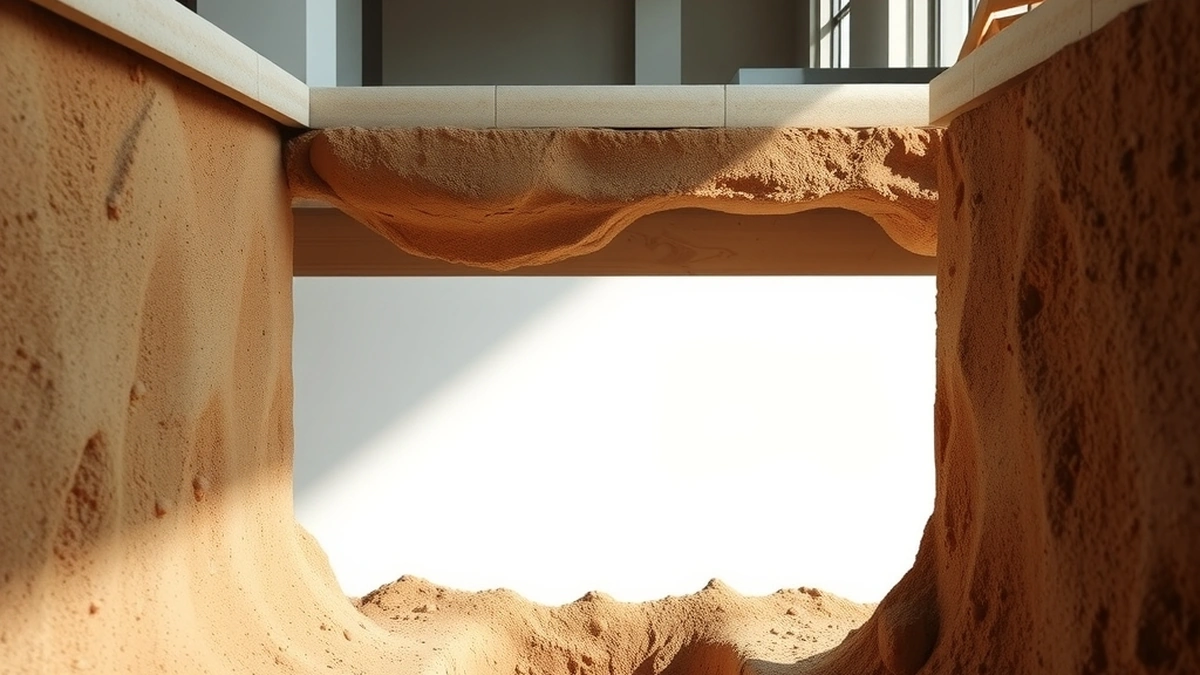
Full replacement problems fall into four groups: utility strikes during the dig, slope and settlement failures after backfill, bad connections, and paperwork failures around permits and inspections. A sag found after restoration costs $3,000 to $6,000 to reopen and correct.
- Full replacement
- $5,000 - $15,000
- Correcting a sag
- $3,000 - $6,000
- Camera inspection
- $200 - $500
- Inspection timing
- Before backfill
Some links on this page are affiliate links.If you buy through them we may earn a commission at no extra cost to you. We do not accept payment for rankings. Read the full disclosure.
Full replacement problems rarely come from the pipe. They come from the ground around it, the connections at each end, and the paperwork that is supposed to catch both. A replacement is a $5,000 to $15,000 job with four or five points where a small error becomes an expensive one, and most of those points are invisible once the trench is closed.
Where a replacement can go wrong
Full replacement removes the entire sewer line and installs a new one from the house to the municipal main. That means the job touches utilities, foundations, the municipal connection, and the surface above the route. Each is a failure point.
The problems sort into four groups: failures during excavation, failures after backfill, failures at the connections, and failures in the permit and warranty paperwork. The first group is loud and immediate. The other three are quiet and show up months later, which is what makes them costly.
Symptom to cause
| What you notice | Likely cause | How to confirm |
|---|---|---|
| Dip or soft spot in the lawn over the route | Backfill not compacted in lifts | Probe the surface, then camera the line |
| Slow drains weeks after the job | Sag or a joint offset from settlement | Camera pass, measure standing water |
| Sewage smell at the foundation | Connection at the building drain not sealed | Smoke test or camera at the connection |
| Water pooling in the trench line after rain | Groundwater, or a broken storm line crossed | Inspect during rain, camera the line |
| Crack in the driveway along the trench | Trench settlement under the slab | Photograph and compare with pre-job images |
| Backup only in one fixture | Wrong or missed connection at a branch | Camera the branch, check the wye |
| No inspection card at resale | Permit never pulled or never closed | Call the municipal sewer authority |
The last row is the one that surprises sellers. An unpermitted replacement can hold up a sale years later, and the fix is not always possible retroactively.
Problems during the dig
Utility strikes. Gas, water, electric, and fiber cross residential lots constantly. A strike is a safety event first and a schedule event second: the utility responds, the line is made safe, and the job stops. The preventable version is a crew that dug before locates were marked.
Trench collapse. Any trench deeper than 5 feet needs protection under OSHA rules, and soil conditions decide whether that is shoring, sloping, or a trench box. A collapse is a fatality risk, not a delay, and it is the reason a professional crew will refuse to send someone into an unprotected pit.
Groundwater. A trench that fills with water cannot be bedded or inspected properly. Dewatering adds pumps, time, and cost, and a crew that backfills over a wet trench is setting up settlement.
Spoil management. Excavated soil has to go somewhere. On a tight lot it goes on tarps in the street or into a truck, and either way it adds handling time that a quote may not have anticipated.
Problems after backfill
This is where most of the expensive failures live, because the evidence disappears.
Settlement and sags. New pipe laid on bedding that was not compacted settles unevenly. The result is a low spot that holds water, which is the same bellied pipe condition the old line probably had. Detecting it needs a camera pass after the job, not before.
Joint separation. A joint that was not fully seated can open as the ground moves. On a glued PVC joint this is rare; on a banded or push-fit joint in clay or cast iron it happens.
Foundation movement. Excavation close to a footing, especially in clay soil, can let the soil under the footing migrate. This is a structural problem with a structural price, and it is the reason a good contractor keeps the trench a safe distance from the wall.
Surface failure. Concrete poured over uncompacted trench cracks along the cut line within a season. The patch is cosmetic until water gets into the crack and starts undermining the slab.
Problems at the connections
Two connections decide whether the new line works: the house end and the municipal end.
At the house, the new lateral must tie into the building drain at the correct elevation with a watertight fitting. A connection that is slightly high leaves standing water at the foundation, and the first symptom is a smell in the basement.
At the main, the new line must meet the municipal wye at the right elevation and angle. A connection set too high backs up; one set too low can be rejected by the inspector. Either way it is discovered before backfill if the inspection happens when it should.
A missed branch is the third connection problem. A fixture that drained into the old line and was not tied into the new one shows up as a backup at that fixture alone, often weeks later.
Problems in the paperwork
No permit. The permit triggers the municipal inspection. Without it, there is no independent check on slope, joints, or connection.
No final inspection. Some crews backfill before the inspector arrives. Once the trench is closed, the inspection is a camera pass and a conversation, and the leverage is gone.
Warranty that does not transfer. A one-year workmanship warranty that ends at sale is worth little to a buyer, and a buyer’s inspector will ask.
Mechanic’s lien. A contractor who is not paid by a subcontractor can leave a lien on the property. Ask for lien waivers at final payment.
What a correction costs
Reopening a trench to fix a sag means excavation, new bedding, re-laying a section, inspection, and restoration a second time. On a typical residential run that is $3,000 to $6,000, on top of the $5,000 to $15,000 already spent.
A failed inspection that requires the line to come out can run higher, because the pipe and the labor are both redone. The cheapest correction is the one caught before backfill, which costs the crew an hour and costs the homeowner nothing.
How to prevent each one
- Confirm the 811 locate ticket is open and private lines are marked before any digging starts.
- Shoot photos of the open trench, the bedding, and the pipe grade before any cover goes on.
- Be present for the municipal inspection, and keep the signed card.
- Ask for the post-installation camera file and watch it before final payment.
- Hold back a retention amount until restoration is complete and the lien waiver is signed.
- Re-camera the line at 12 months, when settlement has finished, and compare with the day-one file.
The installation sequence shows where each of these checks fits in the schedule. For what the job should cost, full replacement cost has the line items, and full replacement reviews covers how to pick a crew that will not create these problems.
Frequently asked questions
Why does a new sewer line sag?
Usually because the bedding was inadequate or the backfill was not compacted in lifts, so the pipe settles unevenly after the trench closes. A sag found early can be corrected; one found after a concrete pour is expensive.
What happens if a contractor hits a utility line?
The utility is called out, the damage is repaired, and the job stops while it is made safe. The cost and delay depend on the utility and on whether locates were requested before digging.
Can a new sewer line fail inspection?
Yes. Common failures are insufficient slope, a joint that leaks under test, and a connection that does not match the municipal wye. The line has to be corrected and reinspected before backfill.
What if the contractor damages my driveway or foundation?
Document it before work starts with photographs, and confirm in writing who is responsible for restoration. Foundation damage from excavation is a separate claim and usually needs an engineer's report.
How long should I wait before paving over a new line?
Until the backfill has been compacted and inspected, and until the concrete patch has cured per the contractor's specification, commonly 24 to 72 hours. Paving over uncompacted trench is how dips form.
What is the most common complaint after a replacement?
Restoration and price changes. Reviews consistently raise yards left rough, concrete that does not match, and change orders that appeared after digging began without a written agreement.
Sources
Some links are affiliate links.If you buy through them we may earn a commission at no extra cost to you. We do not accept payment for rankings. Read the full disclosure.