Is sewer line repair worth it?
Weigh sewer repair against replacement, waiting, and selling as-is, with ten-year cost math, resale effects, and the cases where it is not worth it.

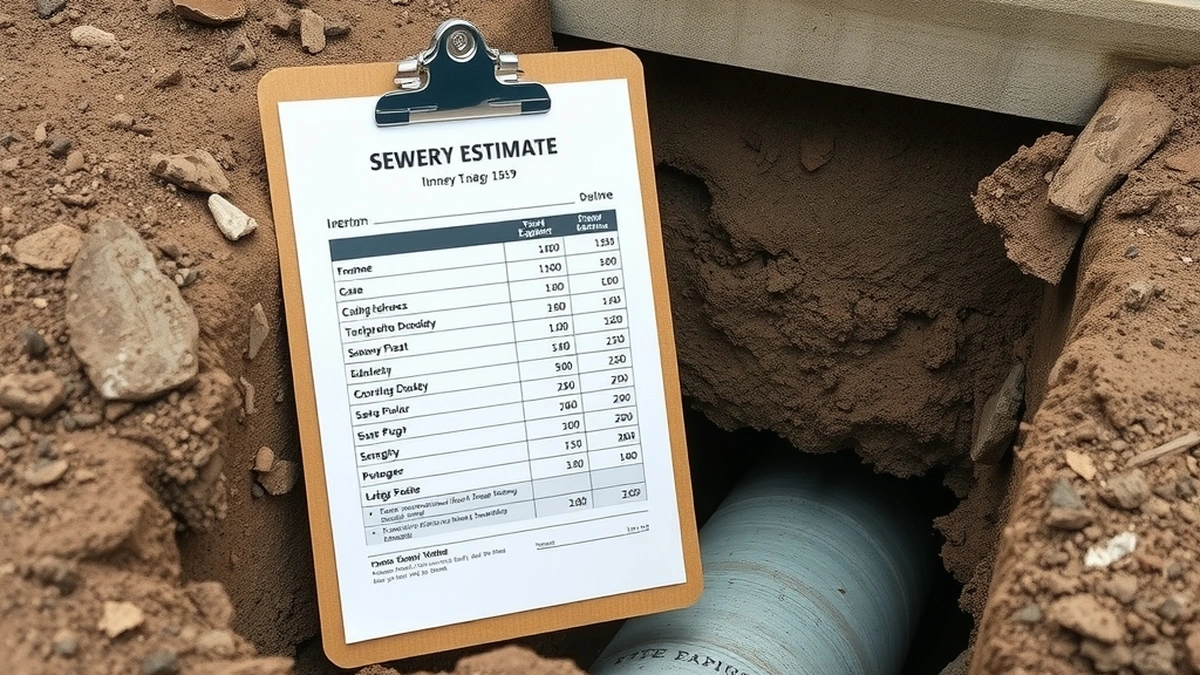
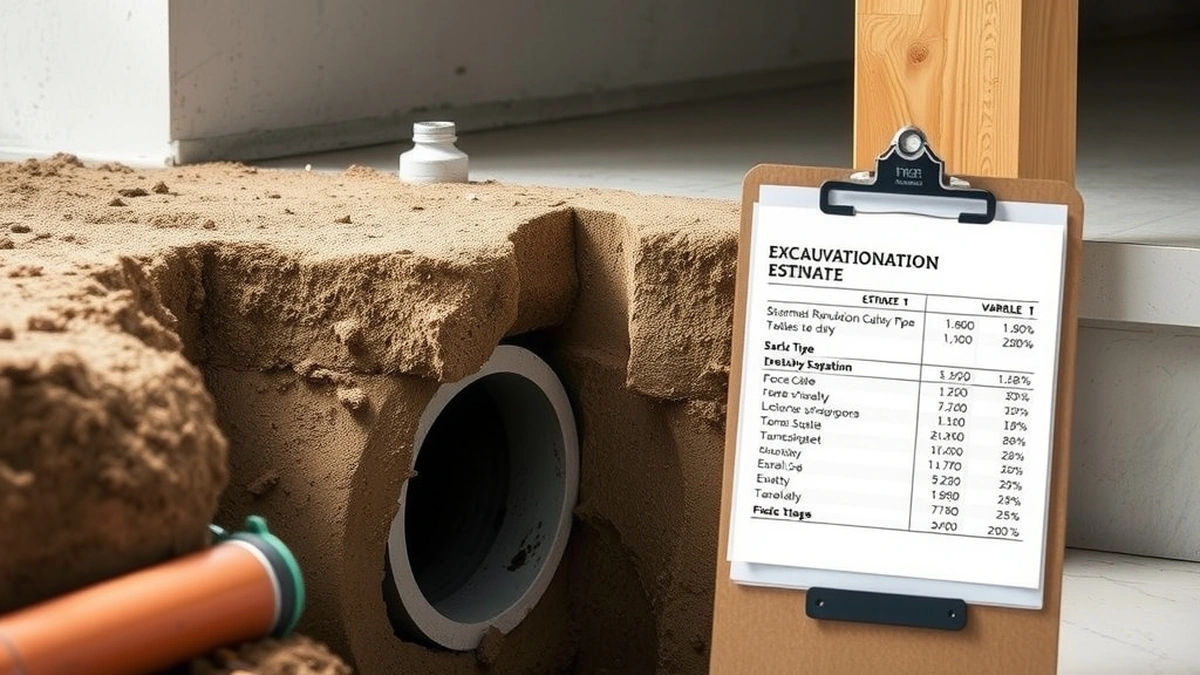
Sewer repair is worth it when the fix costs less per year of service than the alternatives. A $3,000 repair lasting 15 years costs $200 a year; a $9,000 replacement lasting 50 years costs $180 a year.
- Spot repair
- $1,500–$5,000
- Trenchless lining
- $4,000–$12,000
- Full replacement
- $5,000–$15,000
- Emergency call
- $500–$1,500
Some links on this page are affiliate links.If you buy through them we may earn a commission at no extra cost to you. We do not accept payment for rankings. Read the full disclosure.
Sewer repair is worth it when the annualized cost of fixing it is lower than the annualized cost of the alternatives, which are replacing it, ignoring it, or selling the property as-is. A $3,000 spot repair that lasts 15 years costs $200 per year. A $9,000 replacement that lasts 50 years costs $180 per year but arrives all at once. Neither number settles the question alone.
The three numbers that decide it
Sewer repair value comes down to three figures: the cost of the repair, the years it will realistically last, and the cost of the next failure. The middle number is the one homeowners underestimate, and the third is the one they ignore.
The years come from the pipe, not the invoice. A patch in sound PVC has a different future from the same patch in flaking cast iron. Our guide to how long sewer line repair lasts gives the ranges by method and material, and the honest answer usually sits in the lower half when the host pipe is old.
The cost of the next failure includes the emergency call at $500 to $1,500, the cleanup, and the risk that the second repair is a replacement because the first one disturbed the pipe.
Repair, replace, or wait
| Option | Up-front | Ten-year exposure | Main risk |
|---|---|---|---|
| Spot repair | $1,500–$5,000 | $1,500–$9,000 | Fails again if host pipe is poor |
| Trenchless lining | $4,000–$12,000 | $4,000–$13,500 | Needs an intact, round host pipe |
| Full replacement | $5,000–$15,000 | $5,000–$15,000 | Highest cost, longest life |
| Wait and watch | $0 | $1,000–$15,000 | Emergency backup, interior damage |
| Sell as-is | $0 | Price reduction at sale | Buyer discovers it and discounts more |
“Wait and watch” is a real option only when the camera shows a defect that is stable and not worsening: a minor crack with no soil loss, a shallow offset with no blockage history. It is not a real option for a belly, an offset with repeat backups, or any root intrusion at a joint.
The ten-year arithmetic
Take a 60-foot lateral with one failed joint and moderate root intrusion.
Path A: spot repair at $3,000 plus a $350 inspection. Total $3,350. If it lasts 15 years, the cost per year is $3,350 ÷ 15 = $223.
Path B: full replacement at $10,000 plus the same $350 inspection. Total $10,350. If it lasts 50 years, the cost per year is $10,350 ÷ 50 = $207.
Path C: do nothing. One emergency call at $900 plus $1,200 of basement cleanup in year two, then a replacement at $10,000 in year four because the pipe collapsed. Total $12,100, and the property spent two years with a known defect.
The difference between A and B is $16 per year, which is not a meaningful gap. That is why the decision should turn on risk and timing rather than on penny-level annualized cost. If you plan to stay 20 years, B wins. If you plan to sell in three, A wins, provided the repair is documented and warranted.
What it means at resale
A defective lateral is a disclosure item in most US transactions, and a buyer’s inspector will often scope the line. The buyer then has three choices: walk, demand a credit, or demand the repair before closing.
A seller who repairs first usually pays the market rate for the work, roughly $1,500 to $15,000 depending on method, and hands over documentation. A seller who does not repair usually faces a credit demand at or above the cost of the work, plus a negotiating discount for the inconvenience. The repair is cheaper, and it keeps the sale on schedule.
The exception is a property sold to an investor at a discount for condition. In that case the line is priced into the offer, and repairing first rarely returns the cost.
When it is not worth it
Repair is not worth it in four situations, and pretending otherwise wastes money.
The first is a pipe at end of life. Patching Orangeburg or heavily corroded cast iron buys a season, not a decade. The money belongs in replacement.
The second is a property being sold as-is to a buyer who has priced the defect in.
The third is a repair cost that approaches replacement on the same run. If a $4,800 spot repair sits next to a $6,500 short replacement, the extra $1,700 buys a new pipe.
The fourth is a condemned or vacated structure where the line will not be used.
In every other case, the repair is usually the correct spend, because the alternative is a known defect with an unknown failure date.
Who pays: insurance and warranties
Homeowners insurance generally excludes the pipe itself as a maintenance item. It may cover resulting damage, such as sewage-soaked flooring or drywall, and many carriers sell a sewer backup endorsement that pays for cleanup and sometimes for access to the line.
Before assuming you are covered, read three things: whether the policy excludes “wear and tear” and “gradual deterioration” (most do), whether a backup endorsement is attached, and what the deductible is against a $1,500 to $5,000 repair.
Service-line warranties sold by utilities and third parties are another route. They typically cost a few dollars a month and cover repairs up to a cap, with exclusions for pre-existing conditions and code upgrades. Read the exclusion list before relying on one for a known problem.
Running your own numbers
- Get a camera inspection at $200 to $500 and ask for the footage.
- Ask for the defect length in feet and the pipe material in writing.
- Get two estimates, one repair and one replacement, both itemized.
- Divide each total by the expected years of service from the lifespan table.
- Add the risk cost of waiting: one emergency call at $500 to $1,500 plus cleanup.
- Decide on time horizon, not on the lowest invoice.
For the full price breakdown, see how much sewer line repair costs. If you are unsure whether the pipe even qualifies for a repair, when a sewer repair is worth it reads the camera findings, and broken sewer line repair covers the emergency path.
Worth it is not a price. It is a comparison between paying now with a plan and paying later without one.
Frequently asked questions
Is it worth repairing a sewer line or should I replace it?
Repair is worth it when the damage is isolated and the pipe around it is sound. Replace when the pipe has multiple failures, has collapsed, or is made of Orangeburg or badly corroded cast iron.
Does sewer line repair add value to a house?
It protects value rather than adding it. A documented repair is usually cheaper than the price reduction a buyer will demand for a known defective lateral.
Is it cheaper to repair or replace a sewer line?
Repair is cheaper up front at $1,500 to $5,000 against $5,000 to $15,000 for replacement. Replacement can be cheaper per year if the repaired pipe fails again within a decade.
Will homeowners insurance pay for sewer line repair?
Usually not for the pipe itself. Policies may cover resulting damage and often sell a sewer backup endorsement that pays for cleanup and access. Read the exclusions before assuming.
Should I fix a sewer line before selling?
In most US markets, yes. A buyer's inspection will find it, and a documented repair with a transferable warranty is generally cheaper than the reduction demanded for an unrepaired line.
How long can I delay a sewer repair?
A crack with root intrusion can go a few years before collapse; a belly or offset can fail within months. Delaying costs $500 to $1,500 per emergency call and risks interior damage.
Sources
Some links are affiliate links.If you buy through them we may earn a commission at no extra cost to you. We do not accept payment for rankings. Read the full disclosure.