Collapsed pipe: repair options compared
A collapsed sewer pipe has four realistic fixes from $1,500 to $15,000. Here is what each one does, what the camera must show first, and when digging wins.
A collapsed sewer pipe is fixed by spot repair at $1,500 to $5,000, pipe bursting at $5,000 to $15,000, open-trench replacement at $5,000 to $15,000, or lining only if the pipe still holds its shape. A camera inspection at $200 to $500 decides which is possible.
- Spot repair
- $1,500 - $5,000
- Pipe bursting
- $5,000 - $15,000
- Open-trench replacement
- $5,000 - $15,000
- Camera inspection
- $200 - $500
Some links on this page are affiliate links.If you buy through them we may earn a commission at no extra cost to you. We do not accept payment for rankings. Read the full disclosure.
A collapsed sewer pipe is fixed in one of four ways: spot repair of the failed section at $1,500 to $5,000, pipe bursting at $5,000 to $15,000, open-trench replacement at $5,000 to $15,000, or lining — but only if the pipe still holds its shape. A true collapse rules lining out, because a liner needs a bore to press against. A camera inspection at $200 to $500 establishes which of the four is even possible.
What a collapse actually is
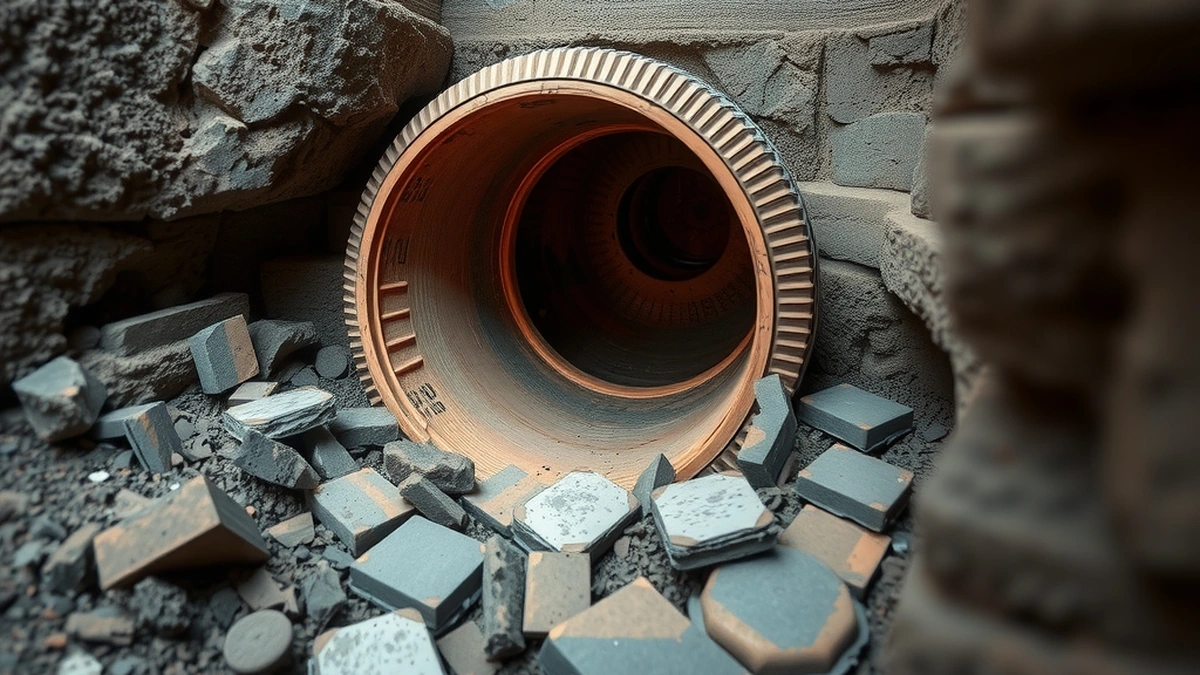
A collapsed pipe is a section of sewer line that has lost its circular shape or dropped out entirely, so the bore is blocked by the pipe material itself rather than by debris.
The usual causes:
- Clay tile that has cracked and shifted under root pressure or soil movement.
- Orangeburg, which deforms and crumbles with age and moisture.
- Cast iron that has rusted through at the crown, where gas and condensate attack it.
- Overloading, from a heavy vehicle over a shallow line or a footing that has settled onto it.
The distinction that matters for pricing: a collapse is structural. A blockage is not. A camera that shows a flattened section, a missing crown, or soil entering the pipe is describing a collapse, and no amount of cleaning will fix it.
The four repair options
| Option | Cost | Surface disturbance | Requires intact bore |
|---|---|---|---|
| Spot repair | $1,500 - $5,000 | One excavation | No, replaces the section |
| Pipe bursting | $5,000 - $15,000 | Two small pits | Partly, for pulling |
| Open-trench replacement | $5,000 - $15,000 | Full trench | No |
| Lining (CIPP) | $4,000 - $12,000 | Two pits | Yes, strictly |
The lining row is the one to read carefully. Lining is priced attractively and is often sold on collapsed lines by contractors who have not inspected them. A liner inflated inside a flattened pipe takes the flattened shape, and the flow problem remains.
Spot repair: the targeted fix
Spot repair replaces 6 to 15 feet of pipe at the failure. It is the cheapest structural option and the right one when the camera shows a single failed section with sound pipe either side.
What it involves:
- Excavating down to the pipe at the failure.
- Cutting out the damaged section.
- Installing new PVC with couplings at both ends.
- Bedding and compacting.
- Restoring the surface.
The cost is dominated by depth and surface. A collapse two feet under a lawn might be $2,200. The same collapse under a concrete driveway with a six-foot depth might be $5,000.
Pipe bursting: replacement without the trench
Pipe bursting pulls a bursting head through the old pipe, fracturing it outward, and drags a new HDPE pipe in behind. The old pipe stays in the ground as a shell around the new one.
It is the right choice when:
- The pipe is collapsed or badly deteriorated along most of its length.
- The surface above is expensive to restore — a driveway, a patio, a finished landscape.
- The line has few bends and a consistent diameter.
It is not the right choice when the line has multiple tight bends, when the diameter changes, or when there is no room for the pulling pits.
The price comparison with open trench is instructive. On a 70-foot run under a lawn, bursting at $11,000 and open trench at $10,000 are close, and open trench wins on certainty. Under a driveway, open trench adds $4,000 in sawing and repour, so bursting at $11,000 beats open trench at $14,000.
What the surface costs
Restoration is the line item that flips the decision.
| Surface | Restoration cost | Effect on method choice |
|---|---|---|
| Lawn | $200 - $800 | Open trench is viable |
| Gravel or mulch | $150 - $500 | Open trench is viable |
| Asphalt driveway | $1,500 - $3,500 | Bursting usually wins |
| Concrete patio | $2,000 - $4,500 | Bursting usually wins |
| Finished hardscape | $3,000 - $6,000 | Bursting or rerouting wins |
Add those to the base repair price before comparing quotes. A $7,000 open-trench quote plus $3,000 of concrete is $10,000, which is not cheaper than a $9,500 bursting quote.
When the pipe has lost grade
A collapse and a belly often appear together: the section that sagged is the section that cracked and flattened. If the camera shows standing water upstream of the collapse, the pipe has lost fall.
Lining and bursting both follow the existing path. Neither restores grade. Only open-trench replacement can re-lay the pipe at the correct slope, which means on a sagging line the more expensive method is the correct one.
That is a case where the cheapest quote is the wrong purchase, and it is worth asking directly: does this method restore fall, or only replace pipe?
The grading question is covered in more detail in bellied pipe repair, and the full replacement option is priced in full replacement cost.
The sequence to follow
- Stop using water at the affected fixtures if sewage is surfacing, and call a drain service at $500 to $1,500 for an emergency clear if the house is backing up.
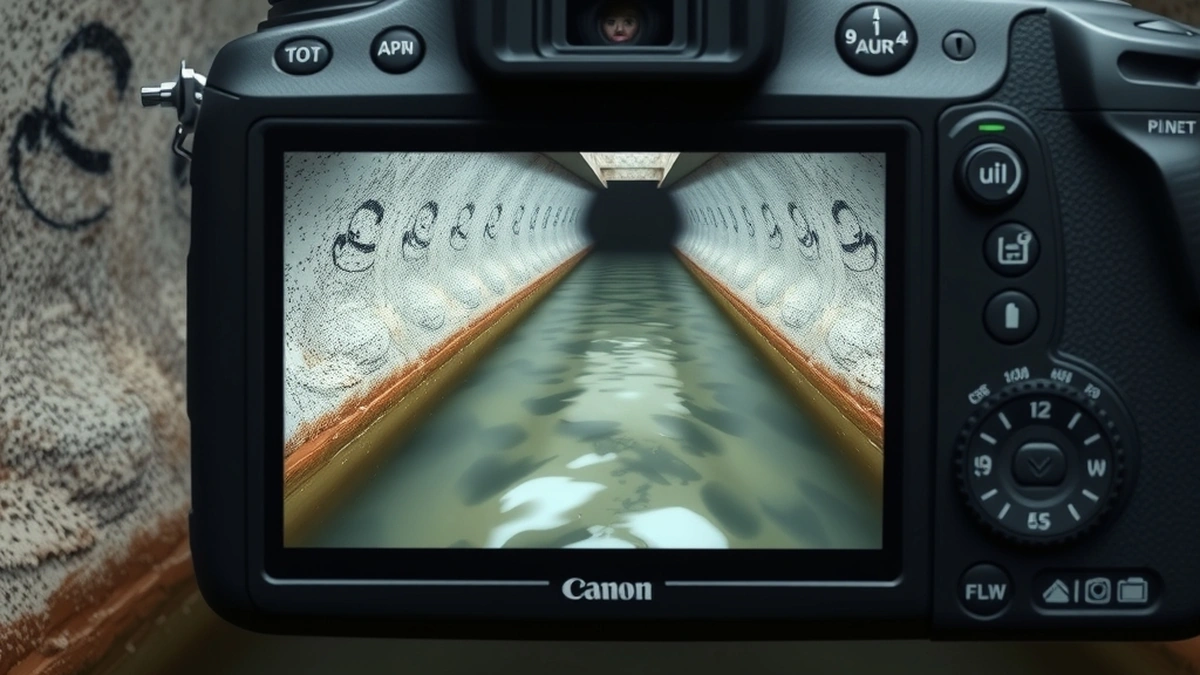
- Book a camera inspection at $200 to $500 once flow is restored, and ask for the footage of the collapse.
- Ask two questions of the recording: is the bore intact anywhere through the failure, and has the pipe lost grade?
- Get quotes for at least two methods priced on the same footage.
- Add restoration to each quote before comparing totals.
- Ask what warranty covers a return of the failure, and whether it transfers with the house.
For the costs in detail, see collapsed pipe cost and pipe bursting cost. If the failure is a sag rather than a break, start with collapsed pipe signs to check whether you are reading the symptom correctly.
Frequently asked questions
What are the options for a collapsed sewer pipe?
Spot repair of the collapsed section at $1,500 to $5,000, pipe bursting at $5,000 to $15,000, open-trench replacement at $5,000 to $15,000, or lining if the pipe still holds shape. Lining is not possible on a true collapse.
Can you line a collapsed pipe?
Usually no. A liner needs a host pipe with a continuous bore to press against. A section that has flattened or dropped out has nothing for the liner to form against, so the collapse must be excavated first.
How do I know if my pipe has collapsed?
The camera will show it. Signs include a complete blockage that will not clear, sewage surfacing in the yard, and a sinkhole over the line. A camera at $200 to $500 confirms it.
Is pipe bursting cheaper than digging?
Often, when the surface is expensive to restore. Bursting and open trench both run $5,000 to $15,000, but bursting needs only small pits, so a driveway or patio stays intact.
How long does a collapsed pipe repair take?
A spot repair is usually one day. Pipe bursting and open-trench replacement typically run one to three days including restoration, depending on length and surface.
Will insurance cover a collapsed sewer line?
Rarely. Collapse is usually treated as wear and deferred maintenance. Some policies sell a service line endorsement, and damage inside the house may be covered separately.
Sources
Some links are affiliate links.If you buy through them we may earn a commission at no extra cost to you. We do not accept payment for rankings. Read the full disclosure.