Spot repair installation: what happens on the day
Spot repair installation takes one day for a cut-and-splice or a few hours for a short liner. Here is the sequence, timing, and what to check before backfill.
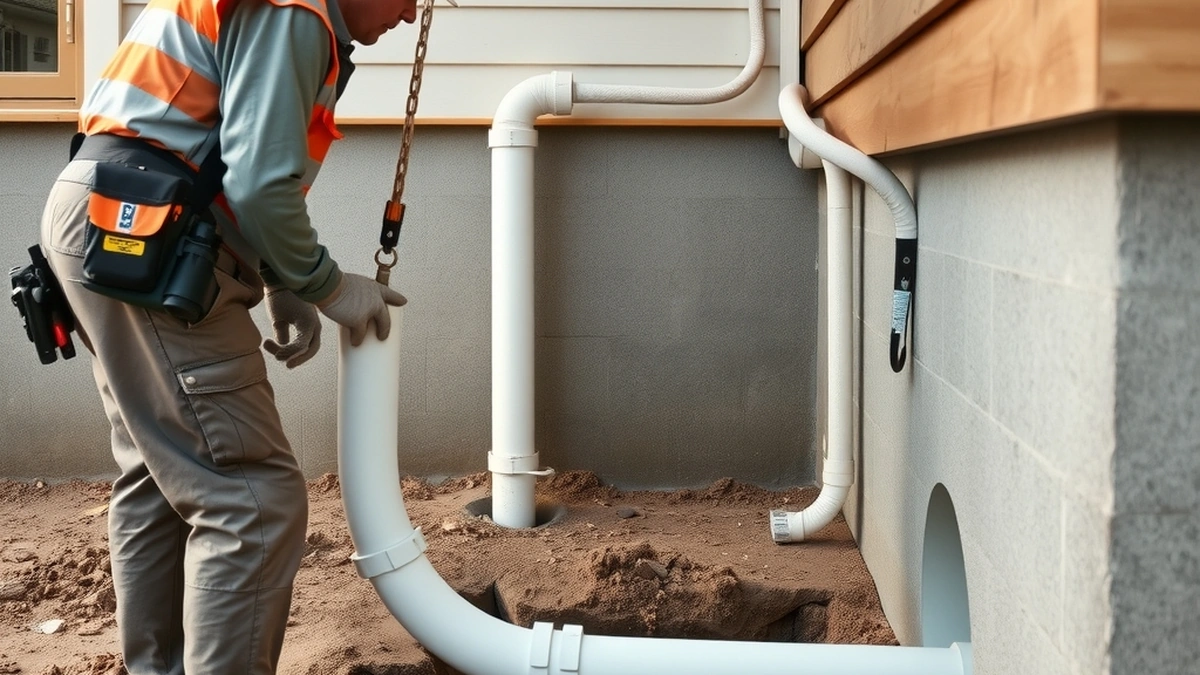
Spot repair installation is either a short open-trench splice or a cured-in-place patch set from inside the pipe. A splice takes most of a day including excavation and backfill; a spot liner takes 2 to 4 hours on site. Both end with a camera pass before the crew leaves.
- Typical duration
- 4 hours to 1 day
- Excavation, splice route
- One pit, 3 to 8 feet deep
- Spot repair cost
- $1,500 - $5,000
- Camera inspection first
- $200 - $500
Some links on this page are affiliate links.If you buy through them we may earn a commission at no extra cost to you. We do not accept payment for rankings. Read the full disclosure.
Spot repair installation is a one-day job on the splice route and a half-day job on the liner route. Both start with a camera, both end with a camera, and the work in between is either a small excavation or a short resin patch pushed through a cleanout. What separates a clean installation from a callback is what happens at those two camera passes.
What the work actually is
A spot repair is a fix to one damaged section of a sewer line, usually 2 to 6 feet, rather than a repair along the full run. Installation means getting to that section, removing or covering the damage, and proving the result holds. There are only two ways to do it in a residential line.
| Cut-and-splice | Spot liner | |
|---|---|---|
| Access | Excavation over the defect | Existing cleanout |
| Pipe removed | 2 to 6 feet | None |
| Host pipe requirement | Any condition | Round, clean, structurally sound |
| Surface restored | Yes | No |
| Crew on site | 6 to 8 hours | 2 to 4 hours |
| Cost band | $1,500 - $4,000 | $2,000 - $5,000 |
The choice is made on camera evidence, not preference. A collapsed section cannot be lined, because there is no round host for the patch to press against. A hairline crack in an otherwise sound clay line under a finished driveway is a poor candidate for digging, because the excavation and restoration cost more than the liner.
Cut-and-splice, stage by stage
This is the sequence a competent crew follows. If a step is skipped, ask why.
- Camera and mark. The line is inspected and the defect is measured from the cleanout, then marked on the surface with paint or a stake. The footage is written on the work order.
- Locate utilities. The crew calls 811 and waits for marks, or confirms private locates on the property. Nobody digs before this, regardless of schedule pressure.
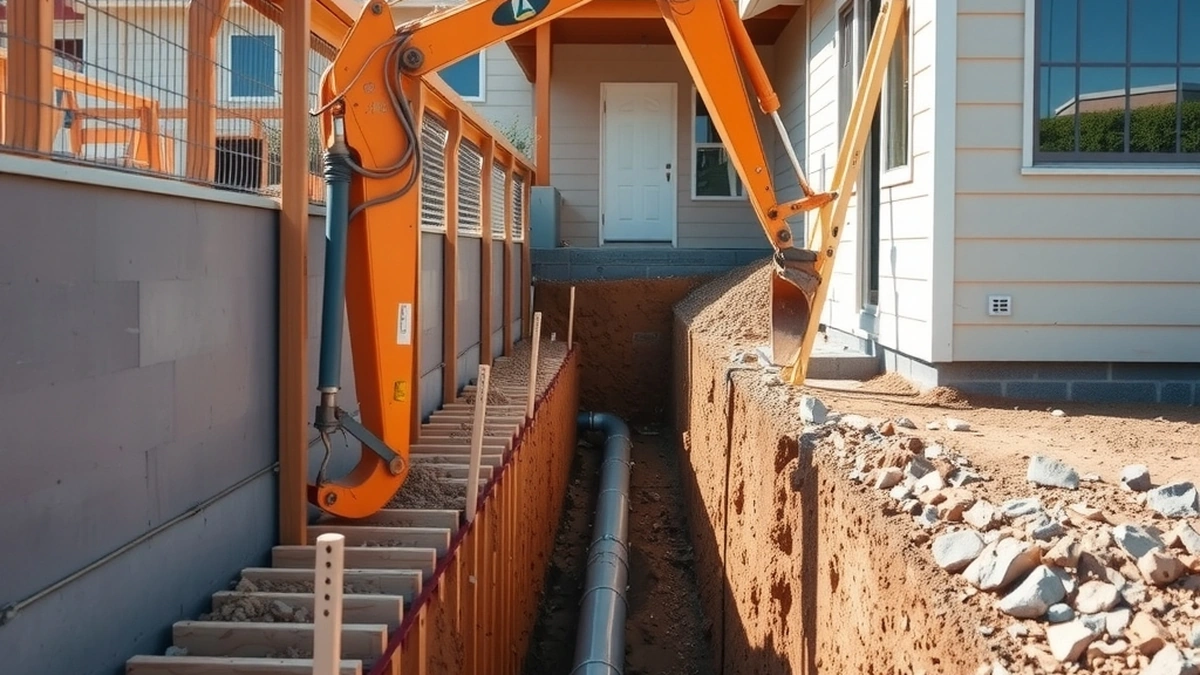
- Excavate and shore. A pit is opened over the mark, typically 3 feet wide and 3 to 8 feet deep, with shoring or sloping where the depth requires it.
- Cut out and splice. The damaged length is cut out, pipe ends are squared and chamfered, and new pipe is joined with couplings sized to the existing material. Clay to PVC transitions use a flexible rubber coupling with stainless bands.
- Test and inspect. The crew runs water through the repair and cameras it. A splice that weeps at a coupling is redone before backfill, not after.
- Backfill, compact, restore. Spoil goes back in lifts, compacted, then the surface is restored. Concrete is usually a separate return visit after curing.
The two steps that decide the outcome are 4 and 5. A coupling that is not fully seated looks fine from above and leaks silt into the line for years. The camera pass is what catches it.
The liner route, when it fits
A spot liner skips the digging entirely. The crew cleans the line, measures the defect, saturates a short felt or fiberglass tube with resin, and pulls or pushes it to position on a calibration bladder. Air pressure presses it against the host pipe while the resin cures, then the bladder is deflated and withdrawn.
The constraints are strict and worth knowing before you agree to it:
- The host pipe must be round enough for the liner to seal against. An offset joint wider than roughly a quarter inch is a problem.
- The line must be clean. Grease and roots prevent bonding, which is why the $300 to $800 jetting charge appears on nearly every liner quote.
- The cleanout must be large enough to pass the liner. A 3-inch cleanout will not take a liner sized for a 4-inch line.
- Service connections within the repaired length have to be reopened by cutter afterward, and that is a separate step the crew must plan for.
The clock on a one-day job
| Stage | Splice route | Liner route |
|---|---|---|
| Setup and camera | 45 minutes | 45 minutes |
| Cleaning | As needed | 30 to 60 minutes |
| Access work | 1 to 3 hours | 10 minutes |
| Repair itself | 1 to 2 hours | 1 hour insertion, 2 to 4 hours cure |
| Test and camera | 30 minutes | 30 minutes |
| Backfill and rough restore | 1 to 2 hours | None |
Total on site runs 6 to 8 hours for a splice and 2 to 4 hours of active work for a liner, with cure time running unattended. Concrete restoration, where needed, is a second visit 24 to 72 hours later so the patch can cure without traffic.
What changes the plan mid-dig
Three things show up often enough that a good quote anticipates them.
The defect is bigger than the camera suggested. A crack that looked like 8 inches on video can be 3 feet of crushed pipe once the soil is off it. That extends the splice length and the bill.
There is a second defect nearby. If it sits within a few feet, extending the repair is cheaper than a second mobilization. If it sits 30 feet away, the honest conversation is spot repair versus trenchless lining rather than a second patch.
The pipe material is not what the quote assumed. Cast iron that has graphitized to the thickness of a wafer cannot be coupled to with confidence, and the repair becomes a longer replacement in the same pit.
None of these should be a surprise on the invoice. A change order signed before the extra work starts is the difference between a variation and a dispute.
Verifying the repair before the crew leaves
Ask for three things while the pit is still open or the camera is still running.
First, watch the camera pass on the monitor. You are looking for a smooth bore, no visible gap at the couplings, and no debris ahead of the repair.
Second, confirm the water test. A repair that holds water at the fixture and shows no seep at the joint is doing its job.
Third, get the video file, not a promise of one. The recording is the record of the work, and it is the document a future owner or a future contractor will ask for.
What to do next
- Get the camera inspection at $200 to $500 and keep the footage before anyone quotes a method.
- Ask each contractor which route they propose and why, in writing, against the footage.
- Confirm utility locates are part of the schedule, not an afterthought on the morning of the dig.
- Put the post-repair camera pass and the warranty in the quote, not in conversation.
- Photograph the open pit and the finished repair yourself, because the pit closes and the memory does not.
For the price side of the same decision, spot repair cost works through the bands and the arithmetic. For what goes wrong after a bad installation, spot repair problems is the follow-on read.
Frequently asked questions
How long does spot repair installation take?
A cut-and-splice is usually a one-day job including excavation, repair, backfill, and compaction. A spot liner is typically 2 to 4 hours on site, plus curing time that depends on the resin.
Do I need to be home during a spot repair?
Yes for the first hour and for the final walkthrough. The crew needs access to the cleanout or the yard, water shutoff if fixtures are affected, and someone to sign off on the camera pass and restoration.
Will they dig up my yard for a spot repair?
Only on the splice route, and only over the defect. A spot liner needs no excavation at all, just a cleanout the liner can pass through, which is why it is common under driveways and patios.
How long before I can use the drains again?
A splice is usable as soon as the couplings are set and the line is tested, usually the same afternoon. A liner needs its full cure, which the crew will state, often 2 to 6 hours after insertion.
Is a camera pass included after the repair?
It should be, and it should be written into the quote. A post-repair camera pass is the only proof that the couplings are seated, the liner is tight, and no debris was left in the line.
What if the crew finds a second defect while digging?
Work stops and you get a change order before anything else is cut. A second defect within a few feet usually means the repair should extend, and that decision is yours to price before it happens.
Sources
Some links are affiliate links.If you buy through them we may earn a commission at no extra cost to you. We do not accept payment for rankings. Read the full disclosure.