Sewer Line Repair repair: when it is worth it
When repairing a damaged sewer line is worth the money, which camera findings justify a spot fix, and when replacement is the cheaper long-run choice.
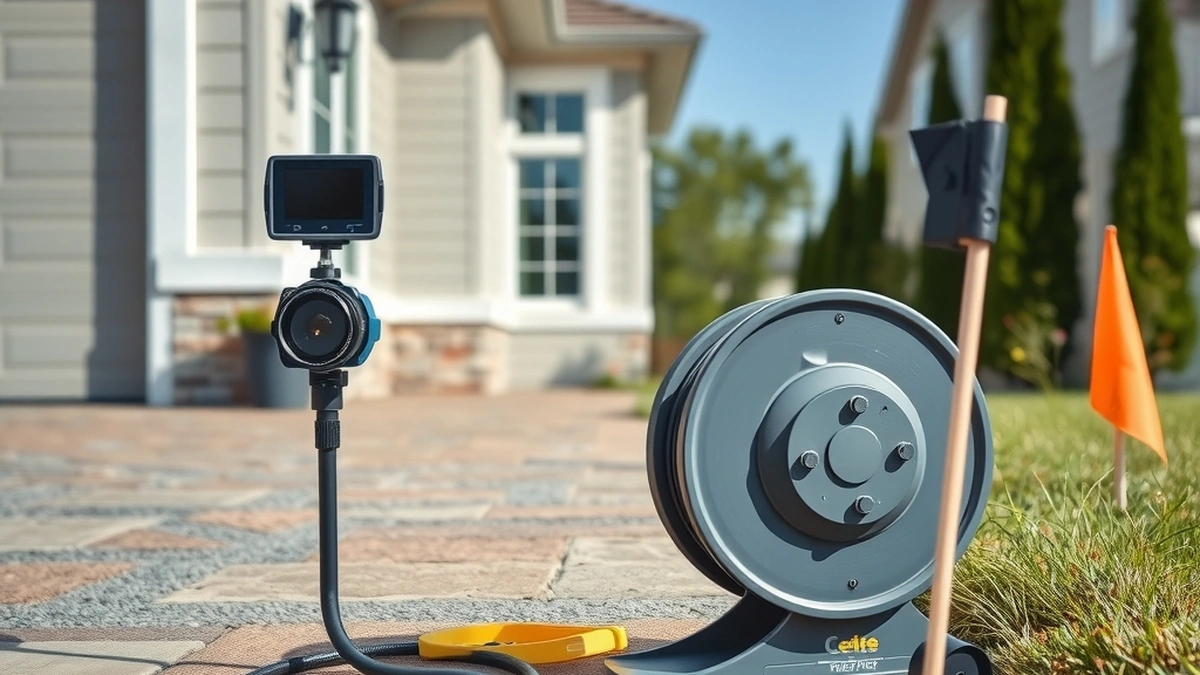
A sewer repair is worth it when the damage is local, the surrounding pipe is sound, and the fix buys another decade. If the pipe is failing along most of its length, replacement at $5,000 to $15,000 is the cheaper choice.
- Spot repair
- $1,500–$5,000
- Trenchless lining
- $4,000–$12,000
- Full replacement
- $5,000–$15,000
- Camera inspection
- $200–$500
Some links on this page are affiliate links.If you buy through them we may earn a commission at no extra cost to you. We do not accept payment for rankings. Read the full disclosure.
A sewer repair is worth it when the damage is local and the rest of the pipe is healthy. It stops being worth it when the pipe is failing along most of its length, because then you are paying $1,500 to $5,000 for a patch on a line that will need $5,000 to $15,000 of work within a few years. The camera inspection is what tells you which situation you are in.
What “worth it” means in numbers
Sewer line repair value is the cost of the fix divided by the years of service it buys, compared with the cost of the alternative over the same period. A $3,000 spot repair that lasts 15 years costs $200 per year. A $9,000 replacement that lasts 50 years costs $180 per year. Those two numbers are close, which is why the decision is not automatic in either direction.
Add the diagnosis to both sides. A $350 camera inspection is spent either way. If the repair fails in year four and triggers a replacement, the real cost of the repair path is $3,000 + $350 + $9,000 = $12,350, against $9,350 for replacing once.
The four findings that justify a repair
Camera footage is not a sales document, but it does contain a verdict. These are the conditions where a repair is usually the right call.
| Camera finding | Repair usually justified | Replacement usually justified |
|---|---|---|
| One crack or fracture | Yes, if under about 10 feet and isolated | No |
| Root intrusion at one joint | Yes, after cutting and sealing or lining | Only if roots have cracked several feet |
| One offset or separated joint | Yes, with a banded coupling or short liner | If offsets repeat along the run |
| Sagging or bellied section | Sometimes, if short and accessible | If the belly runs 20 feet or more |
| Heavy corrosion, flaking walls | No | Yes, wall loss is not patchable |
| Collapsed or flattened pipe | No | Yes, lining cannot restore shape |
| Orangeburg pipe anywhere | No | Yes, it has no structural life left |
The pattern is consistent: repair works on defects you can point to, not on pipe that is failing as a material.
When repair is throwing money away
Three situations turn a repair into a down payment on a replacement.
The first is repeat history. If the line has been rodded or jetted twice in two years, the blockage is a symptom of pipe condition, not a one-off clog. Hydro jetting at $300 to $800 per visit adds up to replacement money fast.
The second is material end-of-life. Cast iron that has lost more than roughly a third of its wall to corrosion, and any Orangeburg line, will keep generating new defects no matter how well each one is patched.
The third is depth and access. A repair 8 feet down in a driveway costs far more to redo than one 3 feet down in a lawn. When the repair itself is expensive to reach, the incremental cost of doing the whole run is smaller than it looks.
Repair against replacement over ten years
Run the ten-year view rather than the invoice view.
| Path | Up-front | Likely follow-on within 10 years | Ten-year total |
|---|---|---|---|
| Spot repair | $3,000 | $0 to $4,000 | $3,000–$7,000 |
| Trenchless lining | $8,000 | $0 to $1,500 | $8,000–$9,500 |
| Full replacement | $10,000 | $0 | $10,000 |
The repair column has the widest spread because it depends entirely on pipe condition. In a sound pipe, it wins clearly. In a failing pipe, it lands at or above replacement cost while leaving you with a patched, aging line. Our article on whether sewer line repair is worth it focuses on the money side; this one is about reading the pipe.
What waiting costs
Ignoring a known defect is not free. A crack that admits roots also admits soil, and soil loss creates a void that eventually collapses the pipe and the surface above it. A collapsed line under a driveway turns a $4,000 repair into an $11,000 replacement with concrete work.
Backups add their own bill. Emergency service runs $500 to $1,500 per call, and repeated backups damage flooring, drywall, and anything stored in a basement. Two emergency calls plus cleanup often exceeds the cost of the repair you were postponing.
Confirming the diagnosis before you commit
Do not accept a repair-or-replace verdict from a contractor who will not show you the footage. The recording is the evidence, and you are entitled to it.
- Get a camera inspection at $200 to $500 and ask for the video file, not just a verbal summary.
- Note the footage marker at each defect and the total run length so you can see how much of the pipe is affected.
- Ask what percentage of the run shows damage, and get the answer in feet rather than adjectives.
- Request a second opinion if the recommendation is replacement and the video shows one isolated defect.
- Get the warranty in writing, including whether it transfers if you sell the house.
A second inspection costs $200 to $500. A wrong $10,000 replacement costs $10,000.
Questions that separate a diagnosis from a pitch
Ask any contractor four things: what material is the pipe, how many feet are damaged, why the proposed method suits that damage, and what happens if the repair fails inside the warranty period. A crew that answers in feet and materials is diagnosing. A crew that answers in urgency is selling.
For the method comparison behind those answers, see types of sewer line repair, and for how long each option lasts, read how long sewer line repair lasts. If the defect is already a break, the signs and options in broken sewer line repair cover the emergency side.
The honest summary: repair is worth it when you can point at the damage and the pipe around it is sound. When the whole run is tired, a patch buys time you will pay for twice.
Frequently asked questions
When is a sewer repair worth doing instead of replacing the line?
When the camera shows one localized defect in a pipe that still has good wall thickness, round shape, and no repeat failures. A $1,500 to $5,000 spot repair can then add a decade or more.
How do I know if the whole line needs replacing?
Multiple breaks, a collapsed section, heavy corrosion flaking off cast iron, or a long run of Orangeburg all point to replacement. Get a camera recording with depth and footage markers before deciding.
Is repairing a sewer line cheaper than replacing it?
Usually yes up front. Spot repair runs $1,500 to $5,000, while replacement runs $5,000 to $15,000. The repair stops being cheaper if it fails and you pay for both within a few years.
Can root intrusion be repaired or does it need replacement?
Roots entering through a joint can often be cut and the joint repaired or lined. Roots that have cracked a clay pipe along several feet usually mean replacing that section, not just cutting.
How long does a sewer spot repair last?
Ten to twenty-five years is a reasonable expectation for a properly coupled repair in sound pipe. Soil movement, tree roots, and pipe material all shorten that window.
Should I repair a sewer line before selling a house?
Most buyers will require it after inspection. A documented repair with a transferable warranty is usually cheaper than a price reduction equal to full replacement.
Sources
Some links are affiliate links.If you buy through them we may earn a commission at no extra cost to you. We do not accept payment for rankings. Read the full disclosure.