Sewer Line Repair installation: what it involves
What a sewer line installation involves, from permits and locates through excavation, bedding, slope, testing, and restoration, with US cost ranges.
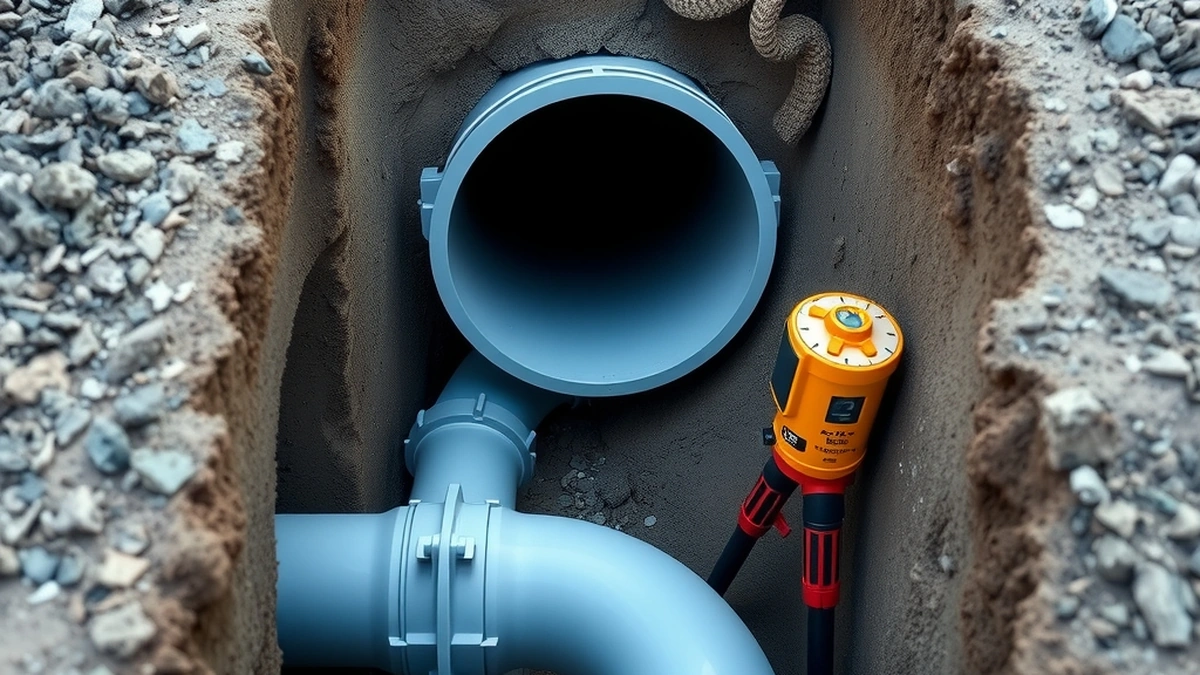
A sewer line installation replaces the pipe from the house to the municipal main, covering permits, locates, excavation or lining, bedding, slope, connection, testing, and restoration. Typical cost is $5,000 to $15,000.
- Full replacement
- $5,000–$15,000
- Trenchless lining
- $4,000–$12,000
- Typical slope
- 1/4 inch per foot
- Working days
- 1–3 days
Some links on this page are affiliate links.If you buy through them we may earn a commission at no extra cost to you. We do not accept payment for rankings. Read the full disclosure.
A sewer line installation is the job of putting a new pipe in the ground between the house and the municipal main, and it involves more steps than the trench suggests. Permits, utility locates, bedding, slope, connection, testing, and restoration all sit between the first cut and the last patch of sod. On a typical US lot the work costs $5,000 to $15,000 and takes one to three working days on site.
What the installation actually replaces
Sewer line installation is the process of laying new pipe from the building drain, through the foundation wall, across the yard, and into the municipal main or septic tank, including the fittings, bedding, and connections that make the run watertight. It is a different job from a spot repair, which cuts out a short section and splices in new pipe.
The scope depends on what the camera shows. A collapsed clay line under a mature tree may need the full run replaced. A cracked but round pipe may qualify for a liner instead. The camera inspection at $200 to $500 is what separates the two, and it should happen before anyone quotes a number.
Before the first shovel: permits and locates
Most municipalities require a plumbing or right-of-way permit for work on the lateral, and the permit triggers an inspection before backfill. The contractor usually pulls it, but the fee is often passed through, so check whether it sits inside or outside the quoted price.
Utility locates come next. Gas, electric, water, fiber, and irrigation lines cross residential yards constantly, and the free 811 service marks them within a few days. A contractor who skips the locate is gambling with a gas main.
Permit review is also the main source of schedule delay. Expect one to four weeks in a busy city and a few days in a rural county, which is why a job quoted at three days on site can still take a month from signature to sod.
The open trench sequence
When the pipe cannot be lined or burst, the work follows a predictable order:
- Saw-cut and remove the surface: sod, gravel, concrete, or pavers along the run.
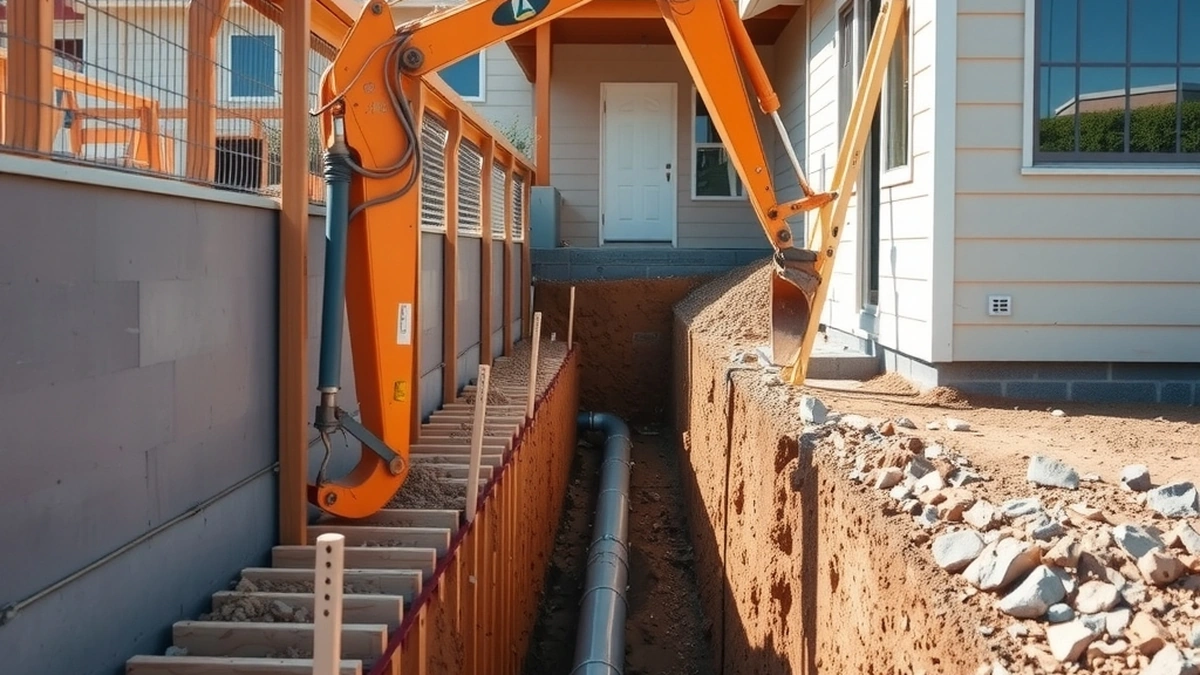
- Excavate the trench to the pipe, shoring the walls where depth or soil requires it.
- Remove the old pipe and inspect the main connection and the building connection.
- Lay new pipe on compacted bedding, checking slope at each joint.
- Connect both ends, then test before backfill.
- Backfill in lifts with compaction, then restore the surface.
Depth sets the difficulty. A line 3 feet down is routine. A line 8 feet down needs trench shoring, a larger excavator, and more backfill, and the labor share of the bill climbs accordingly. That is one reason two houses on the same street can receive quotes $4,000 apart.
Trenchless installation: lining and pipe bursting
Trenchless work replaces excavation with access pits at each end. Cured-in-place pipe lining pulls a resin-saturated felt tube through the old pipe, inflates it, and cures it into a new structural wall. Pipe bursting pulls a bursting head through the old line while dragging new high-density polyethylene behind it.
Lining costs $4,000 to $12,000 and leaves the old pipe in place as a host. Pipe bursting costs more than lining but less than open trench in many urban settings because it avoids driveway and sidewalk replacement. Neither works on a pipe that has flattened or partially collapsed, which is why the camera pass decides the method rather than the sales pitch. Our overview of types of sewer line repair compares all five common approaches.
Bedding, slope, and the numbers that matter
Slope is the specification most often fudged and most often blamed later. A common standard is one quarter inch of fall per foot of run. Over a 60-foot run that is 60 × 0.25 = 15 inches of total drop from the building drain to the main. Over 90 feet it is 90 × 0.25 = 22.5 inches.
Bedding matters as much. Pipe laid directly on rock or hard clay cracks under backfill load. The usual detail is 4 to 6 inches of compacted gravel or sand under the pipe, with select backfill around the haunches and 6 to 12 inches over the crown before native soil goes back in.
| Phase | Typical duration | What gets checked |
|---|---|---|
| Permits and locates | 3 days to 4 weeks | Approval, marked utilities |
| Excavation and removal | 4–10 hours | Depth, soil condition, old pipe material |
| Pipe laying and connection | 3–8 hours | Slope, bedding, joint alignment |
| Testing | 1–2 hours | Leak or air test, camera pass |
| Backfill and compaction | 3–6 hours | Lift thickness, density |
| Restoration | 2 hours to 3 days | Sod, concrete cure, paver reset |
Testing before backfill
The inspection that matters most happens with the trench still open. A leak test fills the new line and checks for loss, an air test pressurizes it and watches for drop, and a camera pass confirms slope, joint alignment, and that no debris was left inside. Municipal inspectors in most jurisdictions require their own look before the trench is covered.
Ask for the camera recording and the test results in writing. Once the trench is backfilled, proving a joint was misaligned means digging it up again, and that second excavation is rarely free.
Restoration and the month after
Restoration ranges from raking and seeding to pouring new concrete and resetting pavers. Fresh backfill settles, so expect a shallow depression along the trench line after the first wet season. A crew that compacted in 6-inch lifts limits that settlement; a crew that pushed spoil back in one pass does not.
Concrete needs a few days before traffic and about a week before a vehicle parks on it. Sod needs watering for two to three weeks. None of that is difficult, but it is the part homeowners forget when comparing a $7,500 quote with restoration against a $6,400 quote without it.
Reading the quote against the sequence
Compare estimates line by line: permit, excavation, pipe and fittings, bedding, testing, backfill, restoration, disposal. A complete replacement at $9,000 over 60 feet works out to $150 per foot, which is a useful benchmark when another quote comes in at $200 per foot for the same scope. For the broader price picture, see how much sewer line repair costs; for the full-project version including main connections, read main sewage line replacement.
The installation itself is not complicated. The coordination is. Permits, locates, inspection windows, and restoration are what turn a one-day dig into a three-week project, and a contractor who explains that sequence up front is usually the one who finishes it cleanly.
Frequently asked questions
What does a sewer line installation involve?
Permits, utility locates, excavation or trenchless access, pipe bedding, slope verification, connection to the main, leak testing, backfill with compaction, and restoration of the surface.
How long does a sewer line installation take?
Most residential replacements take one to three working days on site, plus permit review time that can run one to four weeks depending on the municipality.
What slope does a new sewer line need?
A common standard is one quarter inch of fall per foot of run. Over 60 feet that is 15 inches of total drop, which is why the outlet elevation is measured before any pipe is laid.
Can a sewer line be installed without digging up the yard?
Often yes. Cured-in-place lining at $4,000 to $12,000 and pipe bursting reduce excavation to small access pits, but both require a pipe that can host the method.
Who inspects the new line?
The local building authority inspects before backfill in most jurisdictions. Many contractors also run a camera pass and a leak or air test, and you should ask for the recording.
Does installation include restoring the lawn or driveway?
Not always. Restoration is sometimes a separate line item. Confirm in writing whether sod, topsoil, concrete, and pavers are included in the quoted price.
Sources
Some links are affiliate links.If you buy through them we may earn a commission at no extra cost to you. We do not accept payment for rankings. Read the full disclosure.