Spot repair vs trenchless lining: which one fits
Spot repair fixes one defect for $1,500 to $5,000; lining renews the run for $4,000 to $12,000. The camera decides, and the break-even is about three defects.
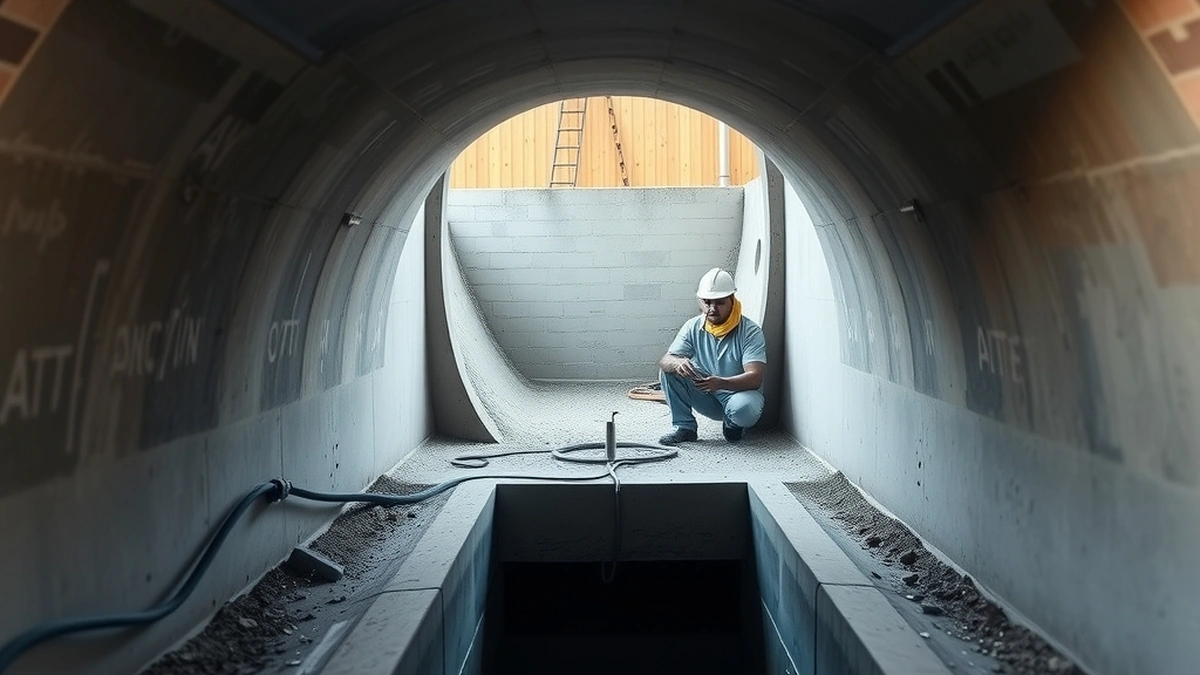
Spot repair fixes a single defect for $1,500 to $5,000. Trenchless lining renews the whole run for $4,000 to $12,000 and is the better buy once the camera shows three or more defects, a back-pitched section, or a pipe that has lost its round shape.
- Spot repair
- $1,500 - $5,000
- Trenchless lining
- $4,000 - $12,000
- Break-even
- About 3 defects
- Camera inspection
- $200 - $500
Some links on this page are affiliate links.If you buy through them we may earn a commission at no extra cost to you. We do not accept payment for rankings. Read the full disclosure.
Spot repair is the cheaper answer to a single defect, at $1,500 to $5,000 against $4,000 to $12,000 for trenchless lining. Lining is the better answer once the pipe has more than one problem, because it renews the whole run instead of buying time at one point. The camera footage is what tells you which situation you are in.
The difference in one line
A spot repair fixes one damaged section of a sewer line, usually 2 to 6 feet, either by cutting out the bad pipe or by installing a short cured-in-place patch. Trenchless lining installs a continuous resin-saturated liner through the entire run, cured against the inside wall, so the whole pipe gets a new bore.
One is a patch. The other is a new interior surface for the length of the line. That distinction explains every difference in cost, lifespan, and risk below.
Side by side
| Spot repair | Trenchless lining | |
|---|---|---|
| Scope | 2 to 6 feet | Full run, house to main |
| Cost | $1,500 - $5,000 | $4,000 - $12,000 |
| Excavation | One pit, or none for a spot liner | Access at cleanout, sometimes one pit |
| Duration | 4 hours to 1 day | 1 to 2 days plus cure |
| Pipe condition needed | Sound host around the defect | Round, structurally intact host throughout |
| Protects the rest of the run | No | Yes |
| Typical warranty | 1 to 5 years workmanship | 25 to 50 years on the liner |
| Fails when | A second defect appears elsewhere | The host pipe cannot hold the liner |
Read the warranty row carefully. The workmanship warranty on a spot repair covers the labor for a short period. The liner warranty covers the product for decades, and it applies to the whole run rather than one section.
The arithmetic that decides it
The comparison is not one repair against one lining job. It is the number of repairs you will buy over the life of the pipe against one lining job.
A mid-range spot repair, with inspection and cleaning, lands near $2,800. A mid-range lining job on a 55-foot run, with the same inspection and cleaning, lands near $7,800.
Divide $7,800 by $2,800 and you get 2.8. At three defects, the repair route has spent $8,400 and the pipe is still original everywhere except three patches. The lining route spent $7,800 and renewed all 55 feet.
Two defects close together change the answer back. If both sit within a 10-foot stretch, one longer splice at $3,400 beats lining, because the second defect is inside the same excavation.
Two defects 40 feet apart do not. That is two mobilizations, two pits, two restorations, and two warranties, and the arithmetic lands on lining.
When spot repair is the right call
Four conditions make spot repair clearly correct.
The camera shows one defect. One crack, one root-wrapped joint, one small collapse, and sound pipe on both sides.
The pipe is otherwise documented. You have footage of the full run, not just the defect, and it shows consistent diameter, no sags, and joints that are tight.
The surface above is expensive. A finished driveway or a mature planting bed makes a full-run excavation costly, and a spot liner avoids the digging entirely.
The budget is fixed and the timeline is short. A $1,500 to $5,000 repair can be scheduled and finished faster than a lining job, which matters when a family is living in the house.
When lining is the right call
Lining wins under the opposite conditions, and the list is short.
The camera shows three or more defects, or defects spread along the run. The pipe has a belly, a back-pitch, or has lost its round profile over a stretch. The pipe is old clay or cast iron with joint separation in several places. Or the house is being sold and the buyer’s inspector will camera the line.
In each case, the value of lining is not the repair of any one defect. It is that the remaining defects stop being future invoices. The lining problems page covers what can still go wrong, but the failure modes are fewer than in a pipe that keeps being patched.
When neither wins
Some pipes are past both options. A collapsed section, a run that has lost most of its shape, or a severe sag that holds water cannot host a liner, and a spot repair on such a line is money spent on a pipe that will fail again within a few years.
That is the full replacement case, at $5,000 to $15,000, done by open trench or pipe bursting. It is the most expensive line on this page and sometimes the cheapest total, because it is the only one that ends the sequence.
What the camera has to tell you
The choice is made from footage, so the footage has to be complete. A 30-second look at the defect is not enough to justify either method.
- Get a full-run camera inspection at $200 to $500 and ask for the recording file.
- Have the line jetted at $300 to $800 before the inspection, so roots and grease do not hide the pipe wall.
- Count the defects and note the distance between them, measured from the cleanout.
- Ask the contractor to state in writing whether the host pipe is a lining candidate, and what would disqualify it.
- Price both routes on the same footage, itemized the same way, and compare totals including restoration.
The spot repair cost page has the line items for the first route, and trenchless lining cost has them for the second. Comparing those two lists side by side is the whole decision.
Frequently asked questions
Is spot repair cheaper than trenchless lining?
Yes, once: $1,500 to $5,000 against $4,000 to $12,000. It stops being cheaper when the defects multiply, because two or three patches reach the lining price without renewing the rest of the pipe.
Can a spot repair be followed by lining later?
Usually yes, if the patch leaves a smooth bore and the host pipe still holds its shape. A liner can pass over a well-made splice, though the crew has to know it is there when sizing the liner.
How many defects justify lining the whole run?
Three or more defects spread along the run, or any defect plus a sagging section, generally tips the math toward lining. Two defects close together are often cheaper to repair as one longer splice.
Does lining last longer than a spot repair?
A liner typically carries a 25 to 50 year manufacturer warranty and protects the entire run. A spot repair protects one section and leaves the rest of the pipe as it was, which is the real difference.
What rules out trenchless lining?
A collapsed section, a pipe that has lost most of its round profile, a severe back-pitch, and offset joints wider than the liner can bridge. Any of those pushes the job to pipe bursting or open trench.
Which option is better for a house I plan to sell?
Lining, if the camera shows a run near the end of its life, because a buyer's inspector will find the remaining defects. A single spot repair is defensible only when the rest of the run is documented as sound.
Sources
Some links are affiliate links.If you buy through them we may earn a commission at no extra cost to you. We do not accept payment for rankings. Read the full disclosure.