Offset joints: how to prevent it
Offset sewer joints come from uneven bedding, mismatched couplings, and soil movement. The installation checks and maintenance habits that keep joints aligned.
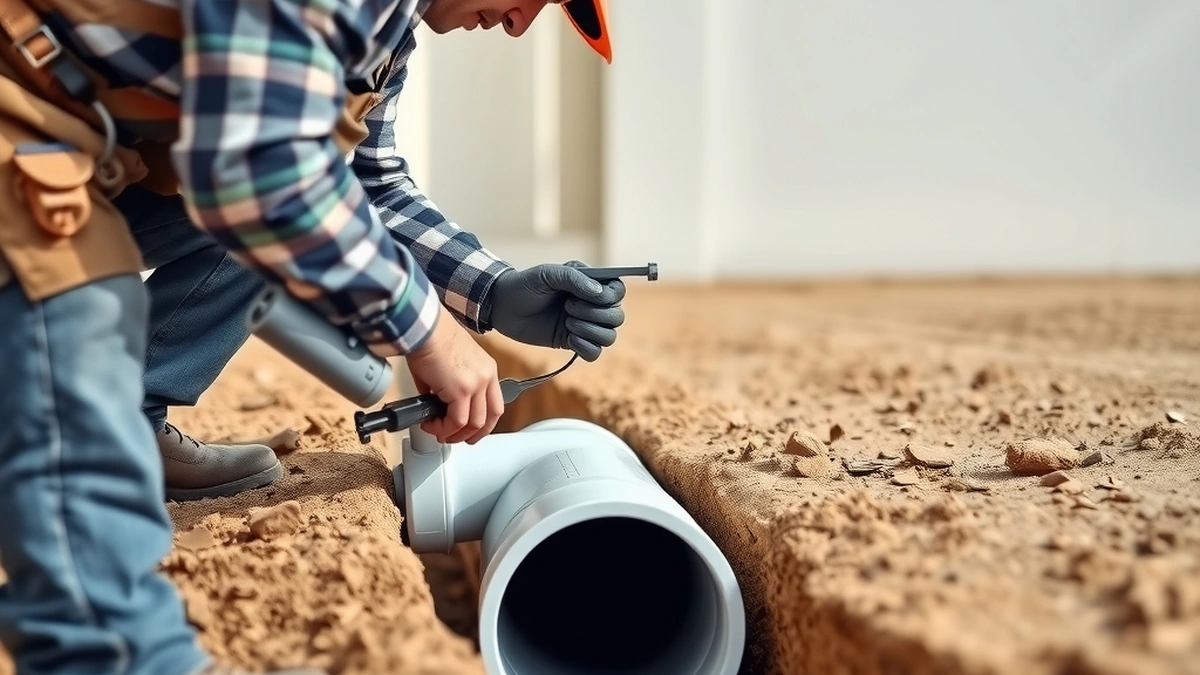
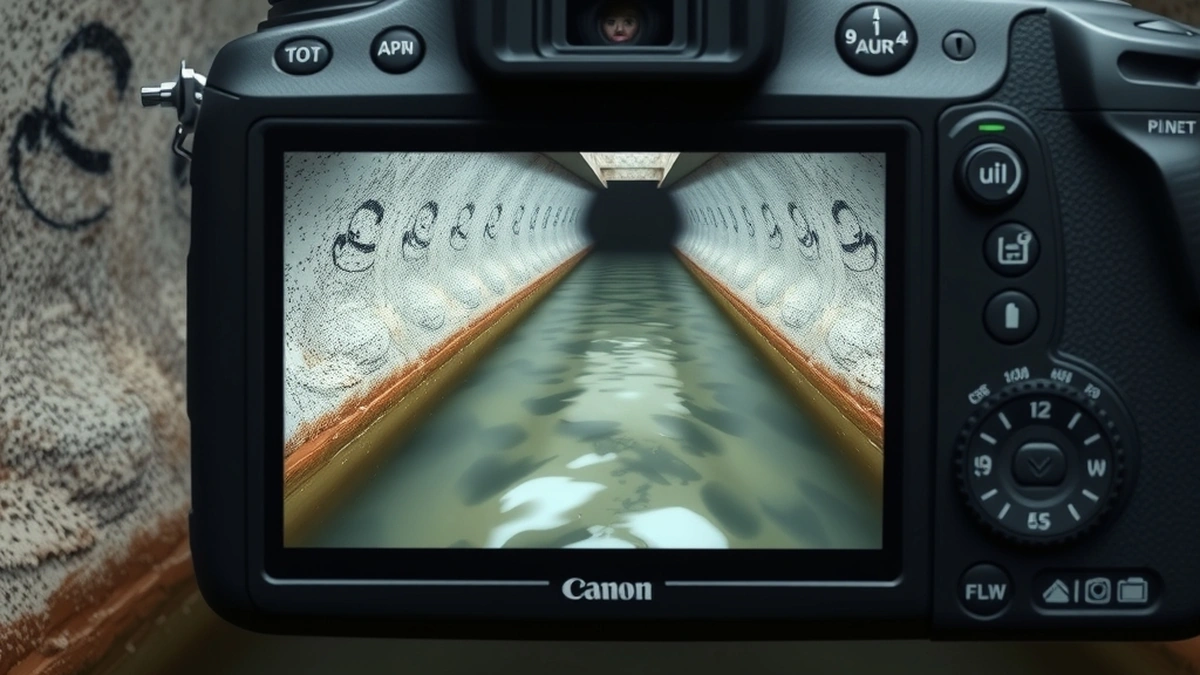
Offset joints are prevented by bedding both pipe ends on compacted gravel, using the right coupling at material changes, and compacting backfill in lifts. A $200 to $500 camera pass before backfill catches misalignment early.
- Camera inspection
- $200–$500
- Hydro jetting
- $300–$800
- Spot repair
- $1,500–$5,000
- Full replacement
- $5,000–$15,000
Some links on this page are affiliate links.If you buy through them we may earn a commission at no extra cost to you. We do not accept payment for rankings. Read the full disclosure.
Offset joints are prevented by supporting both ends of every joint on compacted gravel, using the right coupling at every material change, and compacting the backfill in shallow lifts. Most offsets are installed rather than worn in, so an inspection before the trench is closed is the single highest-value check on the whole job.
What an offset joint is
An offset joint is a joint where two pipe sections no longer line up, leaving a step or lip in the bore. The upstream pipe sits higher, lower, or to one side of the downstream pipe, and the smooth path is broken at that point.
There are two failure modes. The first is installation error: a joint made with the pipe ends not properly seated, a coupling of the wrong size, or a transition between clay and plastic with no adaptor. The second is differential settlement: one section is supported and the next is not, so they move apart over years.
Both produce the same result. The lip catches paper and grease, roots enter the gap, and water escaping at the joint carries soil out of the bedding. The joint gets worse because it leaks, and it leaks because it is offset.
The causes worth designing out
| Cause | What happens | Prevention |
|---|---|---|
| Bedding missing under the joint | Pipe ends settle unevenly | Bed the full length, not just the barrel |
| Uncompacted backfill | Soil consolidates and drops one section | Compact in 6-inch lifts |
| Wrong coupling at a material change | Joint separates under movement | Use a flexible adaptor rated for both materials |
| Root entry | Gap widens, soil washes out | Root control at $300–$800 on a cycle |
| Surface load | One section is pushed down | Keep vehicles and structures off the run |
| Ground movement | Trench line shifts after heavy rain | Grade water away from the line |
The first two are the ones that matter on new work, and both are invisible once the trench is closed. That is why the inspection happens before backfill rather than after.
What prevention costs against repair
| Measure | Typical cost | When | What it saves |
|---|---|---|---|
| Pre-backfill camera pass | $200–$500 | During installation | A $1,500–$5,000 spot repair later |
| Grade check with a level | Bundled or small extra | During installation | Offsets from a pipe laid flat |
| Root control | $300–$800 | Every 12–24 months | Joint damage on an existing line |
| Milling a small lip | $300–$800 | When a step is found early | Excavation at $1,500–$5,000 |
| Spot repair | $1,500–$5,000 | When a joint separates | A run replacement at $5,000–$15,000 |
The arithmetic is lopsided. A $400 camera pass before backfill is 8 percent of the $5,000 top end of a spot repair, and 2.7 percent of a $15,000 replacement. There is no other line item on a sewer job with that ratio.
The installation sequence to insist on
- Confirm the trench bottom is firm native soil and over-excavate any soft spot, replacing it with compacted gravel.
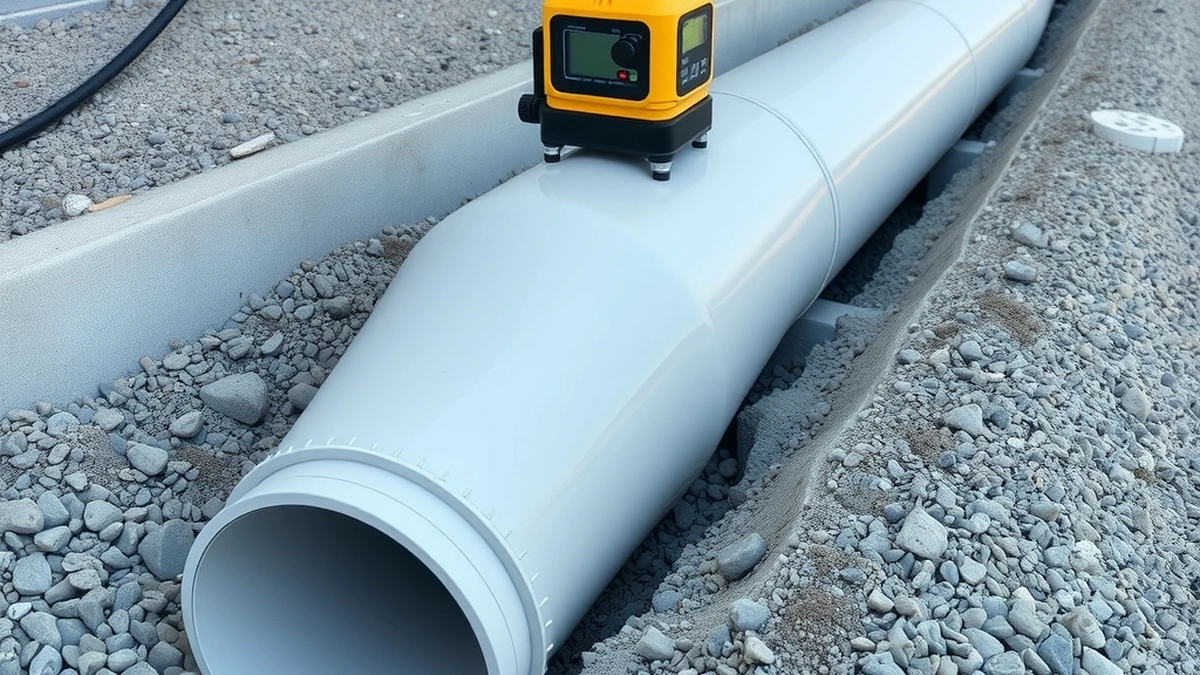
- Bed the pipe along its full length, and hand-tamp the material under each joint so neither end is unsupported.
- Seat every joint fully and check it visually before the next length goes in, rather than pulling the joint home with the machine.
- Use a flexible adaptor at every change of material, sized for both pipe outside diameters.
- Backfill in lifts of about 6 inches, compacting each lift before the next, and keep heavy compaction equipment at least a foot away from the pipe.
- Run a camera pass at $200 to $500 and a grade check before the trench is closed, and keep the recording.
Step six is the one to hold the contractor to. A joint that is a quarter inch out of line at installation will be a half inch out in ten years, and the recording is what proves the line was true on the day it was handed over.
Couplings and material changes
Most residential sewer runs are a mixture: clay from the house to the property line, then plastic, then a connection to a municipal main. Every one of those transitions is a joint between dissimilar materials, and each needs a coupling designed for it.
A clay-to-plastic transition needs a flexible rubber adaptor with stainless bands, sized to the actual outside diameters of both pipes. A fernco pushed onto a pipe of the wrong diameter will hold for a while on friction alone and then slip, and the slip shows up as an offset two years later.
Cast iron to plastic needs a similar adaptor, and lead-to-plastic joints on very old lines need a specialist transition. These parts cost tens of dollars. The repair they prevent costs $1,500 to $5,000.
Root control on an existing line
On a line that is already in the ground, prevention means slowing the two processes that widen a joint: root growth and soil loss.
Roots enter at the joint because it is the wettest point. Cutting them every 12 to 24 months at $300 to $800 keeps the mass small, and foam treatment kills the root inside the pipe without harming the tree. Neither closes the gap, so the joint still needs watching.
Soil loss is the harder one. If water is escaping at a joint, the bedding under the pipe is being eroded, and no surface treatment stops that. A camera pass at $200 to $500 shows whether the joint is merely offset or whether there is a void forming. The second is the one that becomes a belly, and a belly is a separate repair at $1,500 to $5,000.
Catching it early on an existing line
The cheapest intervention is milling, at $300 to $800 as part of a cleaning. It only works while the offset is small and the pipe ends are still together, so the value of an inspection schedule is that it finds the step in that window.
Once the joint has separated, milling is off the table and the choice is a spot repair at $1,500 to $5,000 or lining at $4,000 to $12,000 if several joints are affected. That is the same ladder described in offset joint repair options, and the price detail is in offset joints cost.
The symptoms that mean a joint has already moved are in offset joint warning signs. If the camera shows a step plus a sag, the line has both problems, and bellied pipe prevention covers the grade side. The general maintenance routine is in sewer line repair maintenance.
The short version: bed the joint, use the right coupling, compact in lifts, and film the line before it is buried. Everything else is repair.
Frequently asked questions
How do you prevent offset joints in a sewer line?
Support both ends of every joint on compacted gravel, use the right coupling for the pipe materials, compact backfill in 6-inch lifts, and inspect with a camera before the trench is closed. Most offsets are installation errors, not age.
What causes sewer pipe joints to offset?
Differential settlement. One section sits on firm soil and the next on loose fill, so the two move apart. Poor couplings, missing bedding under the joint itself, and root or load pressure all accelerate it.
Should I use flexible or rigid couplings?
Flexible couplings at repairs and at material changes, because they tolerate small movement. Rigid joints are fine within a single material run. Mixing clay and plastic without a proper adaptor is a common cause of separation.
Can I inspect a new sewer line before it is backfilled?
Yes, and you should. Ask for a camera pass at $200 to $500 and a grade check before the trench is closed. Correcting a misaligned joint at that stage costs a fraction of a $1,500 to $5,000 spot repair later.
Do tree roots cause offset joints?
Roots do not push a pipe sideways, but they enter the joint gap, widen it, and let soil wash out. That removes support under one section, and the joint offsets. Root control at $300 to $800 every 12 to 24 months limits the damage.
How often should an existing line be checked for offsets?
Every 18 to 24 months once the line passes 40 years, and after any foundation, driveway, or regrading work nearby. A camera pass at $200 to $500 finds a step while it is still small enough to mill rather than dig.
Sources
Some links are affiliate links.If you buy through them we may earn a commission at no extra cost to you. We do not accept payment for rankings. Read the full disclosure.