Spot repair vs full replacement
A spot repair costs $1,500 to $5,000 and fixes one defect; full replacement costs $5,000 to $15,000 and fixes the line. How patching compares, with numbers.
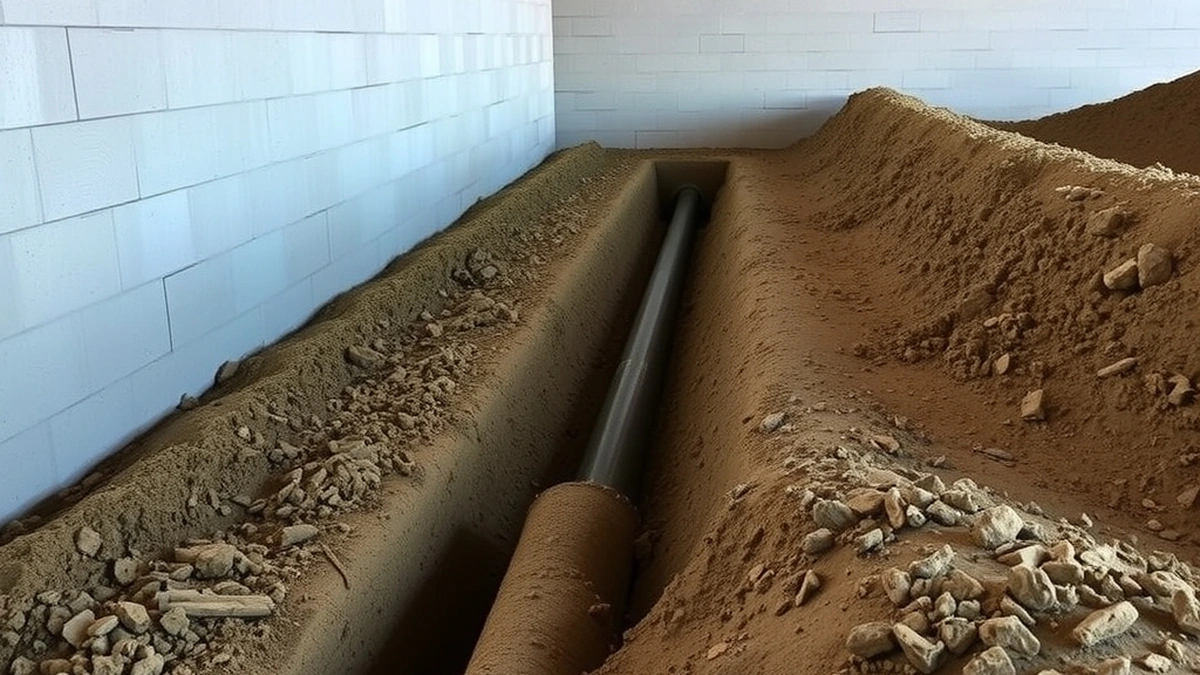
Spot repair is $1,500 to $5,000 for one section and full replacement is $5,000 to $15,000 for the run. Patching wins on a sound pipe with one defect; replacement wins once three defects appear, the pipe has lost grade, or the material is Orangeburg.
- Spot repair
- $1,500 - $5,000
- Full replacement
- $5,000 - $15,000
- Camera inspection
- $200 - $500
- Usual crossover
- 3 defects
Some links on this page are affiliate links.If you buy through them we may earn a commission at no extra cost to you. We do not accept payment for rankings. Read the full disclosure.
Spot repair costs $1,500 to $5,000 and fixes one section of pipe. Full replacement costs $5,000 to $15,000 and fixes the line. The decision is not about which is better in principle; it is about how much of the pipe is bad, whether it still holds grade, and what material it is made of. A $200 to $500 camera inspection answers all three, and it is the only thing that makes the comparison honest.
What each one is
A spot repair excavates at a single failure, cuts out 6 to 15 feet of pipe, and replaces it with new pipe and couplings. The rest of the line is untouched.
Full replacement installs new pipe along the run — by open trench or by pipe bursting — and in the open-trench case re-lays it to the correct slope.
One is a patch. One is a new line.
The comparison
| Factor | Spot repair | Full replacement |
|---|---|---|
| Cost | $1,500 - $5,000 | $5,000 - $15,000 |
| Footage | 6 - 15 feet | Full run, 40 - 100 feet |
| Excavation | One cut | Trench or two pits |
| Fixes other defects | No | Yes |
| Restores grade | At the repair only | Yes, open trench |
| Warranty | Per repair | Per run |
| Duration | 1 day | 1 - 3 days |
| Surface restored | The cut | The run or the pits |
The row homeowners underestimate is “fixes other defects.” A spot repair does exactly what it says, and the rest of the pipe keeps its original remaining life.
When a spot repair is correct
- One crack, break or root entry point
- Pipe otherwise sound on camera
- Grade intact
- Material that can be coupled to new pipe — clay, cast iron, PVC
- The defect is reachable without destroying a structure
This is the most common real situation. A 40-year-old clay line with one broken section does not need $12,000 of new pipe.
When replacement is correct
- Three or more defects on one run
- The pipe has lost grade and water stands
- Orangeburg, which cannot be reliably repaired
- Cast iron with widespread corrosion
- An undersized line for the fixtures it serves
- A collapse in more than one place
Replacement is also correct when the sum of the patches approaches the cost of a new line. That is an arithmetic question, not a philosophical one.
The arithmetic of patching
Take a 60-foot clay line with defects at 15, 32 and 50 feet.
- Three spot repairs at $2,700 each = $8,100
- Three restorations at $700 each = $2,100
- Three permits at $100 = $300
- Total: $10,500, three warranties, three mobilizations
Full replacement by bursting: $10,800 plus two pit restorations at $400 = $11,200.
The difference is $700, and replacement delivers one pipe, one warranty and no fourth excavation. At three defects, patching has already lost its price advantage.
At one defect, the same comparison looks completely different:
- One spot repair: $2,700 + $700 + $100 = $3,500
- Full replacement: $11,200
The patch saves $7,700. That is why the camera finding matters more than any general rule.
Why the crossover is around three
Every repair carries fixed costs that do not shrink with the size of the repair: mobilization, excavation setup, permit, restoration and a post-repair camera. On a typical residential job that is $1,500 to $2,000 per visit before any pipe is touched.
Three visits therefore carry $4,500 to $6,000 of fixed cost. A single replacement carries it once. That is the entire mechanism behind the three-defect rule, and it is why the rule moves to two defects under a driveway, where each restoration costs $1,500 to $3,000 instead of $700.
What replacement does not fix
Replacement is not a universal upgrade. It does not help when:
- The problem is the municipal main, not your lateral.
- The connection at the street is the failure, which may be the utility’s responsibility.
- The line is fine and only dirty, where jetting at $300 to $800 is the answer.
It also does not fix interior plumbing, which is a separate scope. A camera that shows a good lateral and a house that still backs up points to a branch or vent problem inside.
The decision, in five steps
- Book a camera inspection at $200 to $500 and ask for the recording.
- Count the defects and note their spacing.
- Ask whether the pipe holds grade. If not, replacement is the answer regardless of defect count.
- Get a spot repair quote on the worst defect, fully itemized.
- Get a replacement quote for the run, including restoration and permit.
- Compare totals and outcomes, not headline prices.
The cost detail is in spot repair cost and full replacement cost. For the trenchless route to replacement, see pipe bursting vs full replacement, and for the middle option between patching and replacing, trenchless lining vs spot repair.
Keep the permit, the camera recording before and after, and the warranty document. Those three items are what a future buyer, inspector or insurer will ask for. A repair with no paperwork is a discount at resale; a repair with a recording and a transferable warranty is an asset.
That is also the practical argument for documenting the decision: the method matters less than being able to prove what was done and why. Two houses with the same 40-year-old lateral sell differently when one has a dated recording showing a sound line and one has a story about a drain that was slow in 2019.
The method you choose matters less than the order you choose it in: inspect, count the defects, price both, then decide. Doing it in that order costs $200 to $500 and prevents the two expensive mistakes — paying for a replacement that was not needed, or paying for a patch that buys eighteen months.
Frequently asked questions
Is it better to spot repair or replace a sewer line?
Spot repair if there is one defect and the rest of the pipe is sound. Replacement if there are three or more defects, the pipe has lost grade, or the material is Orangeburg or badly deteriorated cast iron.
How much does each option cost?
A spot repair runs $1,500 to $5,000 depending on depth and surface. Full replacement runs $5,000 to $15,000. A camera inspection at $200 to $500 is normally added to either.
Can I repair part of the line now and replace the rest later?
Yes, and sometimes that is correct. But each job carries its own mobilization, permit and restoration, so two visits often cost more than one combined project.
How many spot repairs before replacement is cheaper?
About three. Each repair carries $1,500 to $2,000 of fixed cost, so three repairs typically land inside the replacement band once restoration is counted.
Does replacement always involve digging up the yard?
No. Pipe bursting replaces the run through two small pits. Open trench is used when the grade must be corrected, and that is the method that disturbs the whole line.
Which is better for resale?
A documented full replacement is the stronger disclosure, but a documented spot repair on an otherwise sound line is perfectly acceptable to buyers and inspectors.
Sources
Some links are affiliate links.If you buy through them we may earn a commission at no extra cost to you. We do not accept payment for rankings. Read the full disclosure.