Pipe bursting vs full replacement
Both replace the pipe for $5,000 to $15,000. Bursting saves the surface, open trench saves the grade. Here is how to tell which one your line needs.
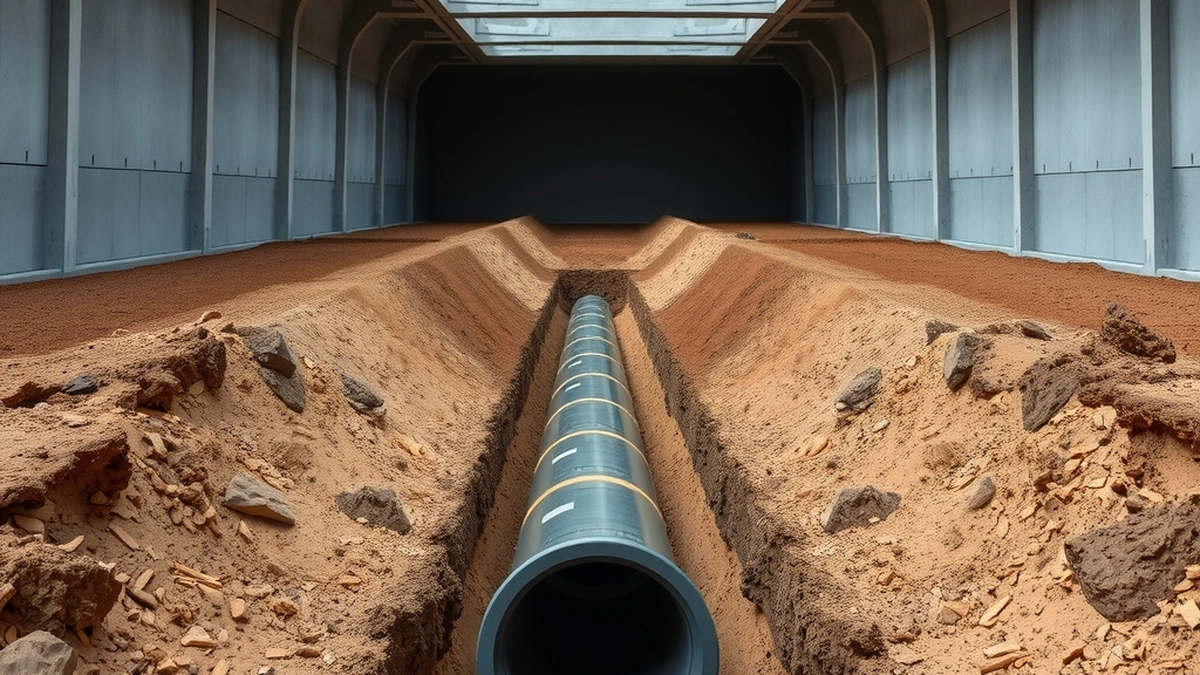
Pipe bursting and open-trench replacement both cost $5,000 to $15,000. Bursting uses two small pits and leaves driveways intact but cannot restore grade. Open trench digs the full run and can re-lay the pipe to the correct slope, which a sagging line requires.
- Pipe bursting
- $5,000 - $15,000
- Open-trench replacement
- $5,000 - $15,000
- Pits for bursting
- 2 pits
- Camera inspection
- $200 - $500
Some links on this page are affiliate links.If you buy through them we may earn a commission at no extra cost to you. We do not accept payment for rankings. Read the full disclosure.
Pipe bursting and open-trench replacement are both full replacements, and both cost $5,000 to $15,000. The difference is where the money goes. Bursting spends it on equipment and two small pits; open trench spends it on excavation and surface restoration. Bursting protects the driveway but cannot fix grade. Open trench fixes grade but digs the whole run. A $200 to $500 camera inspection tells you whether grade is the problem.
Two routes to the same outcome
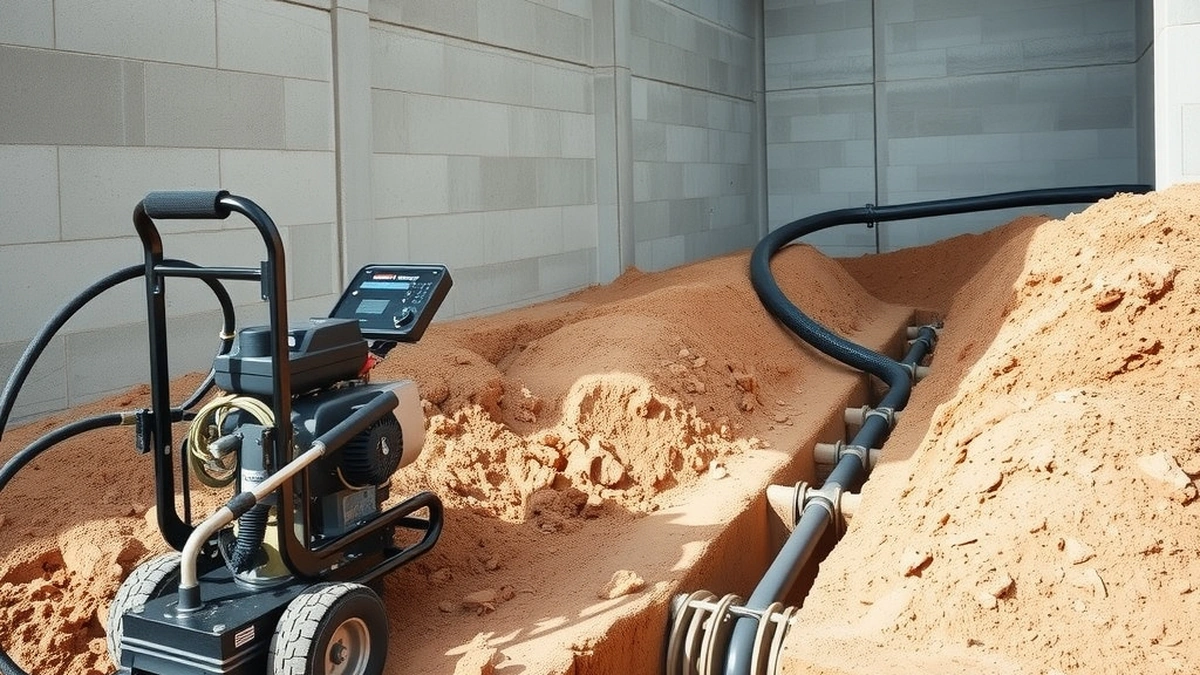
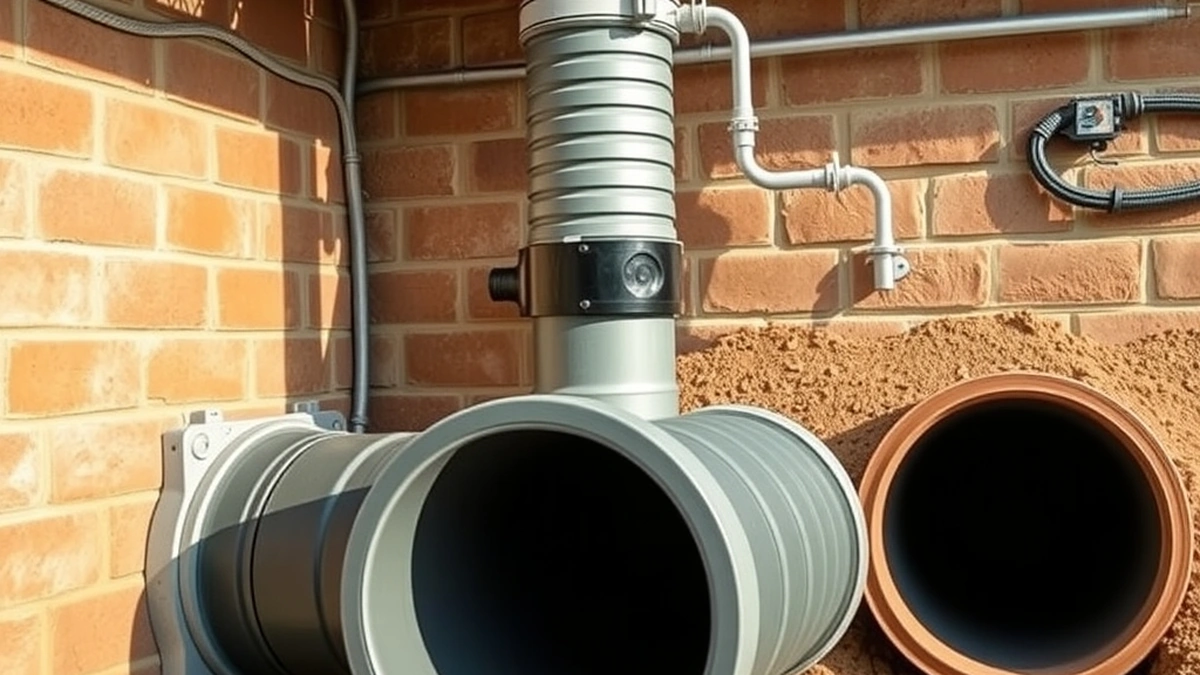
Pipe bursting pulls a conical head through the old pipe, fracturing it outward, and draws new HDPE pipe in behind. Only two pits are opened, at each end of the run.
Open-trench replacement excavates the full length of the line, removes the old pipe, lays new pipe on prepared bedding at the correct slope, and backfills.
Both leave you with a new pipe. Only one lets you change the slope.
The comparison
| Factor | Pipe bursting | Open trench |
|---|---|---|
| Base cost | $5,000 - $15,000 | $5,000 - $15,000 |
| Excavation | Two pits | Continuous trench |
| Surface restored | Pits | Whole run |
| Restores grade | No | Yes |
| Handles tight bends | Poorly | Yes |
| Handles diameter change | No | Yes |
| Tree roots affected | Minimal | Significant |
| Duration | 1 - 3 days | 1 - 3 days |
| Inspection of old pipe | Limited | Full |
The “inspection of old pipe” row is underrated. An open trench lets the contractor see the soil, the bedding and any adjacent utilities. Bursting works blind between the pits.
Where the money actually goes
At the same headline price, the split is different.
Bursting, 70-foot run under a driveway:
- Bursting equipment and crew: $7,500
- Two pits: $1,800
- New HDPE pipe: $900
- Permit: $200
- Pit restoration: $600
- Total: $11,000
Open trench, same run:
- Excavation and shoring: $4,200
- New PVC pipe and fittings: $800
- Bedding and compaction: $700
- Concrete sawing and repour: $3,000
- Permit: $200
- Total: $8,900
On this example open trench is cheaper by $2,100, because the run is short and shallow. Move the same job to a deeper line under a finished patio and the concrete restoration climbs to $5,000, putting open trench at $10,900 against bursting at $11,000 — a wash.
That is the honest version: the two methods trade places depending on surface and depth, and neither is universally cheaper.
When bursting is the right call
- Expensive surface above the line. Driveway, patio, pavers, established landscaping.
- Mature trees over the run. A trench would sever roots and may kill the tree.
- A long run with consistent diameter and few bends.
- An undersized line. Bursting can upsize by one nominal step.
- A line that is deteriorated throughout but still holds shape.
Bursting is not right when the line has multiple tight bends, when the diameter changes, or when there is no land access for the pulling pits.
When open trench is the right call
- A sagging line. Grade must be restored, and only open trench can do that.
- Multiple tight bends or diameter changes.
- Unknown underground conditions that need to be seen — rock, groundwater, conflicting utilities.
- Short runs where the pit cost is a large fraction of the total.
- A shallow line under a lawn, where restoration is cheap.
The grade case is the decisive one. If water stands in the line, bursting will reproduce the sag in new pipe. That is a $11,000 job that leaves the original problem in place.
The grading question is covered in bellied pipe repair, and the lining alternative for a pipe that is cracked but not sagging is in trenchless lining vs full replacement.
What the camera decides
Before choosing a method, the recording should answer three things:
- Is water standing anywhere? If yes, grade is the issue, and open trench is required.
- How many bends are there? Bursting needs a relatively straight path.
- Is the diameter consistent? A change in size stops a bursting head.
If the answer to all three favours bursting, it is usually the better buy because of the surface. If any answer rules it out, open trench is the method.
The decision, step by step
- Book a camera inspection at $200 to $500 and ask about standing water.
- Map the surface above the line — lawn, driveway, patio, trees.
- Ask whether grade is correct at every point on the run.
- Get quotes for both methods on the same footage.
- Add restoration to both, by area and material.
- Choose on total cost plus outcome, not headline price.
For the detailed pricing of each, see pipe bursting cost and full replacement cost. For the alternative that avoids replacement entirely on a pipe that is cracked but straight, read trenchless lining vs pipe bursting.
The one-line rule
If the pipe is the right size, the right shape and the right slope, bursting replaces it without wrecking the yard. If the slope is wrong, dig it and fix the slope, because a new pipe on the old grade is an expensive way to keep the same problem.
A note on staging either job: both methods require the house to be out of service for part of the day. Plan for a hotel night if the only bathroom drains through the line, and tell the contractor in advance if a floor drain sits below the connection — that changes the order of work and sometimes the method. Neither detail is expensive to plan and both are expensive to discover mid-trench.
Finally, ask both contractors the same question about warranty: does it cover settlement of the new pipe? A replacement that is not properly bedded and compacted can settle into a new belly within a few years, and the warranty should say whether that is covered. The bedding line on the quote is where the answer lives.
Frequently asked questions
Is pipe bursting cheaper than open-trench replacement?
The base prices are similar at $5,000 to $15,000. Bursting usually wins once surface restoration is counted, because it needs two small pits instead of a continuous trench.
Does pipe bursting restore the slope of a sewer line?
No. Bursting follows the existing path, so a sagging line still sags. Only open-trench replacement can re-lay the pipe at the correct fall.
How much does surface restoration add to open trench?
On a lawn, $200 to $800. On asphalt, $1,500 to $3,500. On concrete or finished hardscape, $2,000 to $5,000. Bursting avoids almost all of that.
Can pipe bursting increase the pipe size?
Yes, usually by one nominal size. That is useful on an older 4-inch line that is undersized for the fixtures it now serves.
How long does each method take?
Bursting is typically one to three days for a residential run. Open trench is similar or slightly longer, depending on length, depth and how much surface has to be restored.
Which is better if there are trees over the line?
Bursting. It disturbs two pits rather than a trench, so tree roots and canopy are largely unaffected. Open trench under a mature tree can damage the root system.
Sources
Some links are affiliate links.If you buy through them we may earn a commission at no extra cost to you. We do not accept payment for rankings. Read the full disclosure.