Spot repair vs hydro jetting
Jetting is $300 to $800 for a clean pipe; a spot repair is $1,500 to $5,000 for a broken one. When cleaning is enough and when it is throwing money away.
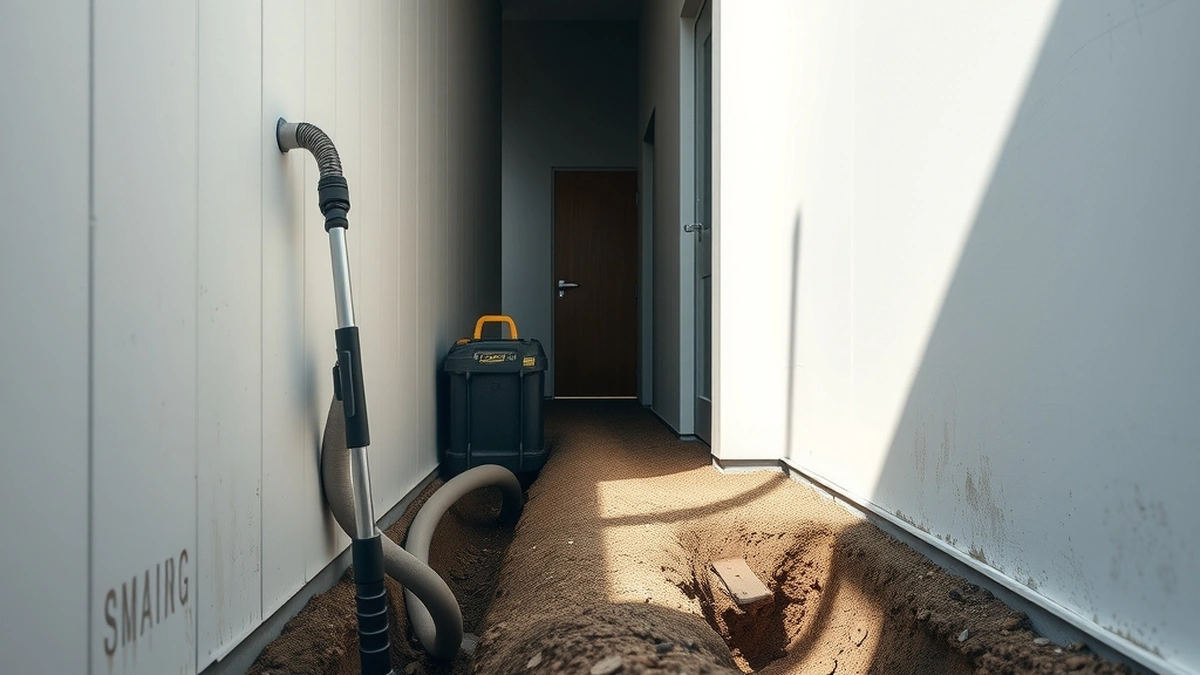
Hydro jetting cleans a sound pipe for $300 to $800 and a spot repair replaces a failed section for $1,500 to $5,000. Jetting is enough when the camera shows soft material in an intact wall; a spot repair is needed when the wall itself is cracked, offset or broken.
- Hydro jetting
- $300 - $800
- Spot repair
- $1,500 - $5,000
- Camera inspection
- $200 - $500
- Repeat interval
- 6 - 24 months
Some links on this page are affiliate links.If you buy through them we may earn a commission at no extra cost to you. We do not accept payment for rankings. Read the full disclosure.
Hydro jetting costs $300 to $800 and a spot repair costs $1,500 to $5,000, and they are not two prices for the same outcome. Jetting removes what is inside a sound pipe. A spot repair replaces a section where the wall itself has failed. The camera inspection at $200 to $500 is what tells you whether you are buying a cleaning or a repair, and without it the choice is guesswork.
Definitions, briefly
Hydro jetting is a drain cleaning method using high-pressure water at 3,000 to 4,000 psi to scour material off the pipe wall.
A spot repair is a targeted excavation that removes 6 to 15 feet of damaged pipe and replaces it with new pipe and couplings.
One is maintenance. One is construction.
The comparison
| Factor | Hydro jetting | Spot repair |
|---|---|---|
| Cost | $300 - $800 | $1,500 - $5,000 |
| Duration | 1 - 2 hours | 1 day |
| Excavation | None | One cut |
| Fixes grease and sludge | Yes | Not the issue |
| Fixes roots | Temporarily | Yes, at that point |
| Fixes a crack | No | Yes |
| Fixes a belly | No | Yes, if re-laid to grade |
| Surface restored | None | The cut |
| Repeat needed | 6 - 24 months | Not at that point |
The row that matters is “repeat needed.” Jetting is a recurring cost; a successful spot repair is a one-time cost at that location.
When jetting is the right purchase
Jetting is correct when the camera shows a sound wall with soft contents:
- Grease and sludge
- Hair-fine roots at tight joints
- Scale or mineral film
- A single blockage from wipes or paper
In these cases a spot repair would be excavation with nothing to repair. Clean it, re-inspect, and set an inspection interval of two to three years.
Jetting is also legitimate on a line that needs a repair but cannot be repaired this month. It is a stopgap, and it should be described as one.
When a spot repair is the right purchase
A spot repair is correct when the camera shows a defect in the wall:
- A crack or a break
- An offset joint
- A local collapse
- A belly that can be re-laid at that point
- Roots entering through a joint that has opened
These are not cleanable. The pipe has lost material or alignment, and no amount of water will restore either.
The arithmetic of repeating
A 55-foot clay line with roots at one joint.
- Jetting twice a year at $520 = $1,040 a year.
- Over three years: $3,120.
- Spot repair of that joint at $2,600 plus $300 camera = $2,900.
The repair is cheaper than three years of cleaning and ends the recurring bill. The reason people clean instead is that $520 is easier to approve than $2,600, and the decision is made one visit at a time rather than over three years.
The opposite case is just as instructive. A sound PVC line with a grease problem:
- Jetting at $480, then every two years at $480.
- A spot repair would cost $2,400 and fix nothing, because there is no defect.
Jetting is the correct and only sensible purchase here.
What the camera changes
Without a camera, three things are unknown, and each one changes the answer:
- Whether the wall is intact. A crack behind a blockage means jetting will be back in months.
- Where the problem is. The footage determines which repair, and the price.
- Whether there is standing water. A belly makes the cleaning temporary regardless of the wall.
The inspection costs $200 to $500 and is 5 to 15 percent of a repair bill. It is the cheapest line on either invoice.
How to sequence the decision
- Book a camera inspection at $200 to $500 and keep the recording.
- Ask what the wall looks like, not just what is blocking it.
- If the wall is sound: jet at $300 to $800 and re-inspect the same day.
- If the wall is defective: get a spot repair quote on that footage, itemized.
- If the budget is short: jet as a stopgap and schedule the repair.
- Re-inspect a year after either, and compare to the previous recording.
The costs in detail are in hydro jetting cost and spot repair cost. If the defect is extensive rather than local, the next step up is trenchless lining vs spot repair, and if the line has collapsed, collapsed pipe repair.
The short version
Jetting is what you buy when the pipe is dirty. A spot repair is what you buy when it is broken. A line can be both, in which case you buy the repair and the jetting comes with it as preparation.
The money is wasted in only one direction: paying for a repair on a pipe that was merely dirty, or paying for a third cleaning on a pipe that has a crack. The camera prevents both.
A note on what “spot repair” means in a quote. Some contractors use the phrase for a patch of the pipe wall — a repair collar or a short sleeve — rather than a cut-out and replacement. Those are different products with different warranties. Ask which one is being sold, and whether the repair restores the full diameter or leaves a slight restriction at the joint.
The same applies to jetting. “Jetted main line” on an invoice means the crew ran water through the pipe; it does not say for how long, at what pressure, or with which head. Ask for the footage and the nozzle type. Those two details distinguish a proper clean from a pass that clears the blockage and leaves the wall coated.
Frequently asked questions
Is hydro jetting enough, or do I need a spot repair?
It depends on what the camera shows. Soft material in a sound pipe needs jetting at $300 to $800. A crack, offset or break in the wall needs a spot repair at $1,500 to $5,000.
How do I know if jetting will fix the problem?
You do not, until the line is inspected. A camera pass before jetting at $200 to $500 distinguishes a blockage from a structural defect, which is the difference between the two prices.
Why does the same line keep blocking after jetting?
Because jetting removed the symptom but not the cause. Roots regrow through the same joint, a belly keeps collecting solids, and a crack keeps catching debris.
Can I jet a line with a cracked pipe?
Sometimes at reduced pressure, but it is not a fix. The crack remains and will keep admitting roots and soil. A spot repair is the correct purchase for a crack.
How much does a spot repair cost?
Typically $1,500 to $5,000, driven by depth, surface and whether a permit or concrete restoration is needed. The pipe itself is a small share of that.
How often will a jetted line need repeating?
Every 6 to 24 months if the underlying cause remains, depending on what is entering the line. A line with roots at tight joints tends toward the shorter end.
Sources
Some links are affiliate links.If you buy through them we may earn a commission at no extra cost to you. We do not accept payment for rankings. Read the full disclosure.