Pipe bursting cost: what the quote should include
Pipe bursting runs $5,000 to $15,000 on a residential line, in the full replacement band. Two pits, the pull, the new pipe, and connections, with the maths.
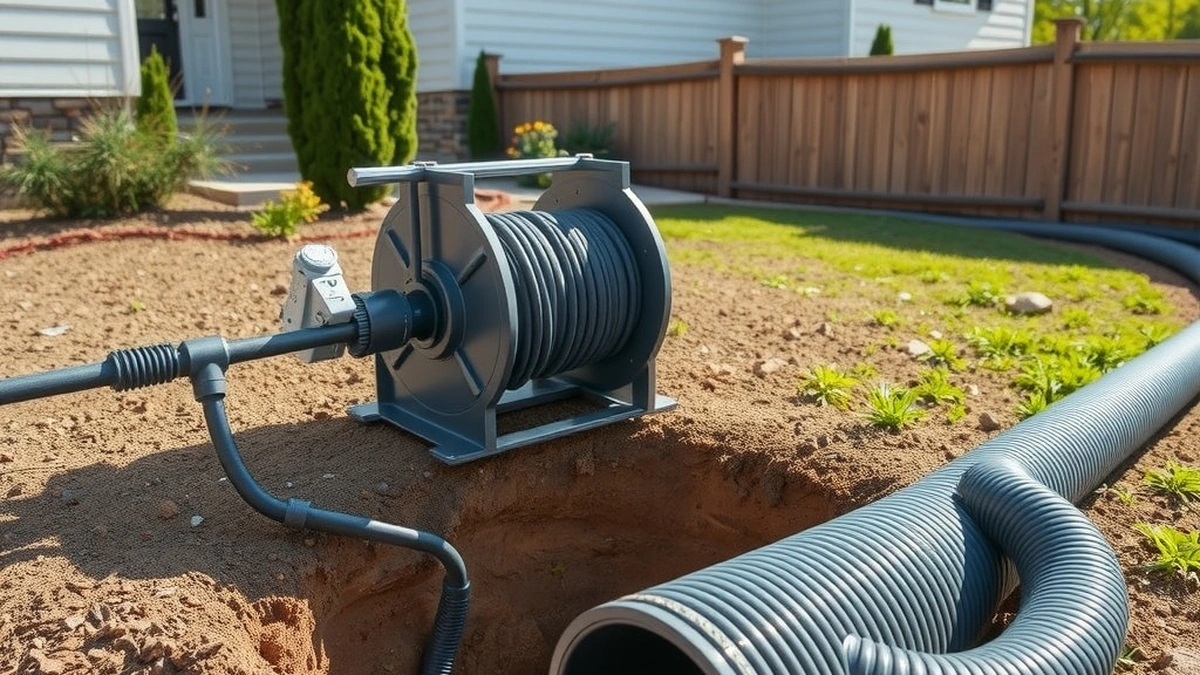
Pipe bursting costs $5,000 to $15,000 for a residential line, the same band as open-trench replacement, plus a $200 to $500 camera inspection. Pits, pulling gear, new pipe, and service connections drive it.
- Pipe bursting
- $5,000–$15,000
- Trenchless lining, for comparison
- $4,000–$12,000
- Camera inspection
- $200–$500
- Spot repair band
- $1,500–$5,000
Some links on this page are affiliate links.If you buy through them we may earn a commission at no extra cost to you. We do not accept payment for rankings. Read the full disclosure.
Pipe bursting costs $5,000 to $15,000 on a typical US residential line, which puts it in the same band as open-trench replacement rather than in the lining band. The reason is simple: bursting does not repair the old pipe, it destroys it and pulls a new one through the same path. You are buying a new sewer, with a much smaller hole in the yard.
What the money buys
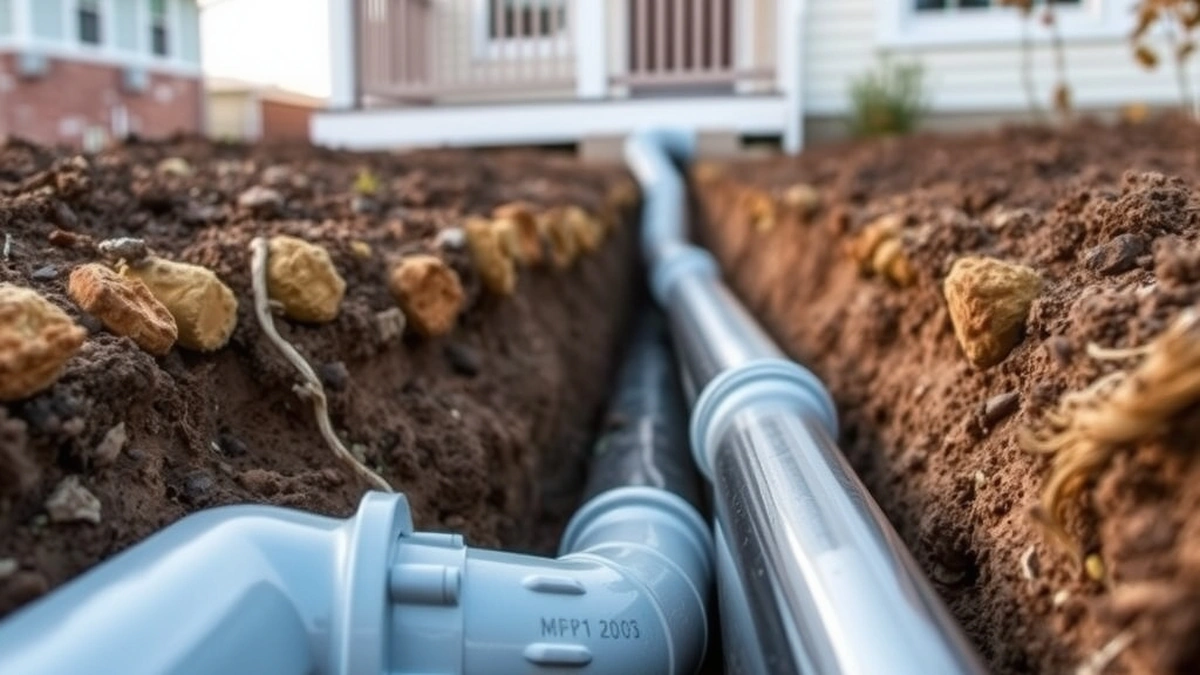
Pipe bursting is a replacement method that pulls a bursting head through the existing pipe, fracturing it outward into the surrounding soil while towing a new high-density polyethylene pipe into the void behind it. The old pipe stays in the ground as rubble. The new pipe arrives in one continuous length with fused joints.
That definition explains the price structure. There is no liner and no resin, but there is a winch, a pit at each end, a new pipe, and a crew that has to work around utilities and service connections.
| Item | Typical range | Notes |
|---|---|---|
| Camera inspection | $200–$500 | Confirms footage, depth, material, and collapse |
| Hydro jetting before inspection | $300–$800 | Sometimes required to see the line |
| Pipe bursting, all in | $5,000–$15,000 | Pits, pull, new pipe, connections, restoration |
| Trenchless lining, for comparison | $4,000–$12,000 | Repairs the existing pipe instead of replacing it |
| Spot repair, if the defect is local | $1,500–$5,000 | Cheaper when only one section has failed |
| Emergency backup call | $500–$1,500 | Before any of the above is scheduled |
Where the money goes inside the band
An $9,000 bursting job on a 60-foot line breaks down roughly like this. All figures are estimates and vary by market.
| Line | Estimate | Share of the job |
|---|---|---|
| Two access pits, shoring, and dewatering | $1,500–$2,500 | The largest single variable |
| Bursting head, rods, and winch setup | $1,200–$2,000 | Equipment and the crew trained to run it |
| New HDPE pipe, 60 feet | $600–$1,200 | Material scales with diameter and length |
| Crew, one to two days | $2,500–$3,500 | Two people minimum, often three |
| Service connections, restoration, disposal | $800–$1,500 | Reconnecting each wye and closing the pits |
Add the low end: $1,500 + $1,200 + $600 + $2,500 + $800 = $6,600. Add the high end: $2,500 + $2,000 + $1,200 + $3,500 + $1,500 = $10,700. Add the $350 inspection and the job runs $6,950 to $11,050, which sits inside the $5,000 to $15,000 band with room at the top for deep pits and concrete.
Depth is the lever that moves a job to the top of the band. A 4-foot pit in a lawn is a morning with a mini-excavator. An 8-foot pit in saturated soil needs shoring, a pump, and a slower dig, and that is before the winch is set.
The per-foot view
Divide by footage and the numbers become comparable across quotes.
- $6,000 for 50 feet is $120 per foot.
- $9,000 for 50 feet is $180 per foot.
- $12,000 for 40 feet is $300 per foot.
- $15,000 for 90 feet is $167 per foot.
A $15,000 quote on a long run can be better value than a $9,000 quote on a short one. Ask for the footage the crew measured on camera, not the distance along the sidewalk, because the pipe rarely runs straight.
Bursting versus digging, on the same lot
Take a 60-foot line under a concrete driveway. An open-trench replacement quotes at $9,500, plus $400 inspection, plus $2,600 to saw, break, and repour the driveway: $12,500. Pipe bursting on the same line quotes at $9,800, plus $400 inspection, plus $600 to seed the two pits: $10,800. Bursting wins by $1,700, and the driveway never gets touched.
Now take a 60-foot line across an open back yard with no hardscape. Open trench quotes at $8,200 plus $400 inspection: $8,600. Bursting quotes at $9,400 plus $400: $9,800. Digging wins by $1,200, because there is nothing expensive to restore and excavation is the cheaper technique when access is free.
The rule is uncomfortable but reliable: pipe bursting pays for itself where surface restoration is expensive, and loses where it is not. Our guide to trenchless lining cost applies the same logic to the cheaper alternative, and sewer line repair cost puts every band in one table.
What the quote has to itemize
A bursting quote is easy to pad, because most of the cost is invisible once the pits are closed.
- Footage measured on camera, with the recording handed over
- Pit locations, dimensions, and depth, plus shoring method
- Utility locates and who arranges them
- New pipe material, diameter, and whether the bore is being upsized
- Service connections, and how each is reconnected
- Permit fees, and who pulls the permit
- Restoration of lawn, driveway, or sidewalk, itemized
- Disposal of spoil and old pipe fragments
- Post-installation camera inspection and a pressure or flow test
- Warranty length and what voids it
The post-installation camera pass is the line that proves the new pipe is round, at grade, and open at every connection. Without it, you are paying for a pipe you have never seen.
What to do next
- Book the camera inspection at $200 to $500 and ask for the footage and the recording.
- Get a written judgment on whether the line can be lined at $4,000 to $12,000 instead.
- Ask two contractors to quote the same footage, one for bursting and one for open trench.
- Have each quote itemize pits, pipe, connections, permits, and restoration separately.
- Compare total cost including restoration, then compare warranty terms.
- Confirm the utility locates are booked before the crew breaks ground.
The method itself is described in pipe bursting installation, the downsides are in pipe bursting problems, and the head-to-head is in pipe bursting vs trenchless lining.
Frequently asked questions
How much does pipe bursting cost?
Most US homes pay $5,000 to $15,000 for pipe bursting, plus a $200 to $500 camera inspection. It sits in the same band as open-trench replacement because it replaces the whole run.
Is pipe bursting cheaper than trenchless lining?
Usually not. Lining runs $4,000 to $12,000 and bursting runs $5,000 to $15,000, so bursting costs more unless the line must be upsized or the old pipe has collapsed.
Does pipe bursting cost more per foot than open trench?
On a clear lot, open trench can be cheaper per foot. Bursting wins when the surface above the line is a driveway, a finished patio, or mature landscaping that would cost thousands to restore.
How many access pits does pipe bursting need?
Two, one at each end of the run, plus a small entry for the pulling rod. Pit depth and soil conditions are the largest variable in the price.
Can pipe bursting increase the pipe diameter?
Yes, one size up is common, for example 4-inch to 6-inch. Upsizing depends on the soil, the depth, and nearby utilities, and it is priced into the quote.
Is a permit required for pipe bursting?
Almost always, because the work connects to the municipal main. Permit fees vary by city, and the contractor should list them as a separate line rather than fold them into the total.
Sources
Some links are affiliate links.If you buy through them we may earn a commission at no extra cost to you. We do not accept payment for rankings. Read the full disclosure.