Pipe bursting vs hydro jetting
Jetting clears a pipe for $300 to $800; bursting replaces it for $5,000 to $15,000. One is maintenance, one is construction, and the camera decides.
Hydro jetting cleans a sewer line for $300 to $800 and pipe bursting replaces it for $5,000 to $15,000. Jetting suits grease, sludge and fine roots in a sound pipe; bursting suits collapse, Orangeburg, undersizing or a run too deteriorated to line.
- Hydro jetting
- $300 - $800
- Pipe bursting
- $5,000 - $15,000
- Camera inspection
- $200 - $500
- Pits for bursting
- 2 pits
Some links on this page are affiliate links.If you buy through them we may earn a commission at no extra cost to you. We do not accept payment for rankings. Read the full disclosure.
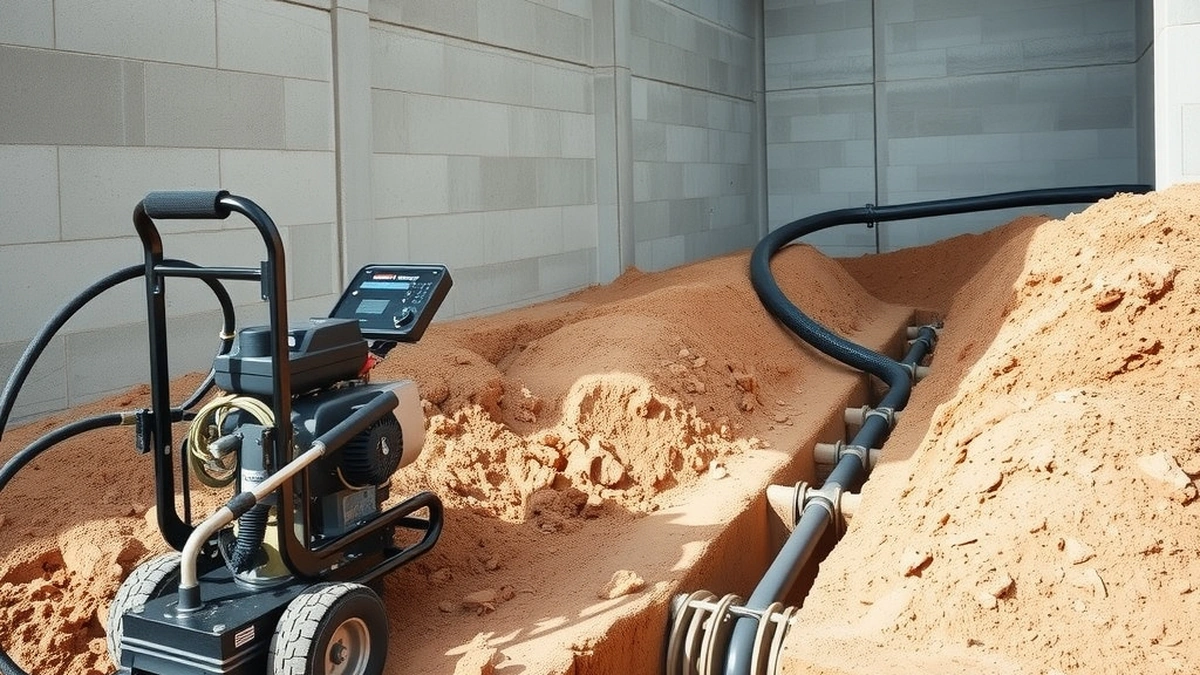
Hydro jetting cleans a sewer line for $300 to $800. Pipe bursting replaces it for $5,000 to $15,000, using two small pits and leaving the ground between them undisturbed. They are not alternative quotes for the same problem: jetting removes material from a pipe that works, and bursting replaces a pipe that does not. A camera inspection at $200 to $500 is what determines which situation you are in.
Two different jobs
Hydro jetting is a cleaning method. A pump drives water at 3,000 to 4,000 psi through a nozzle, scouring grease, sludge, scale and loose roots off the pipe wall.
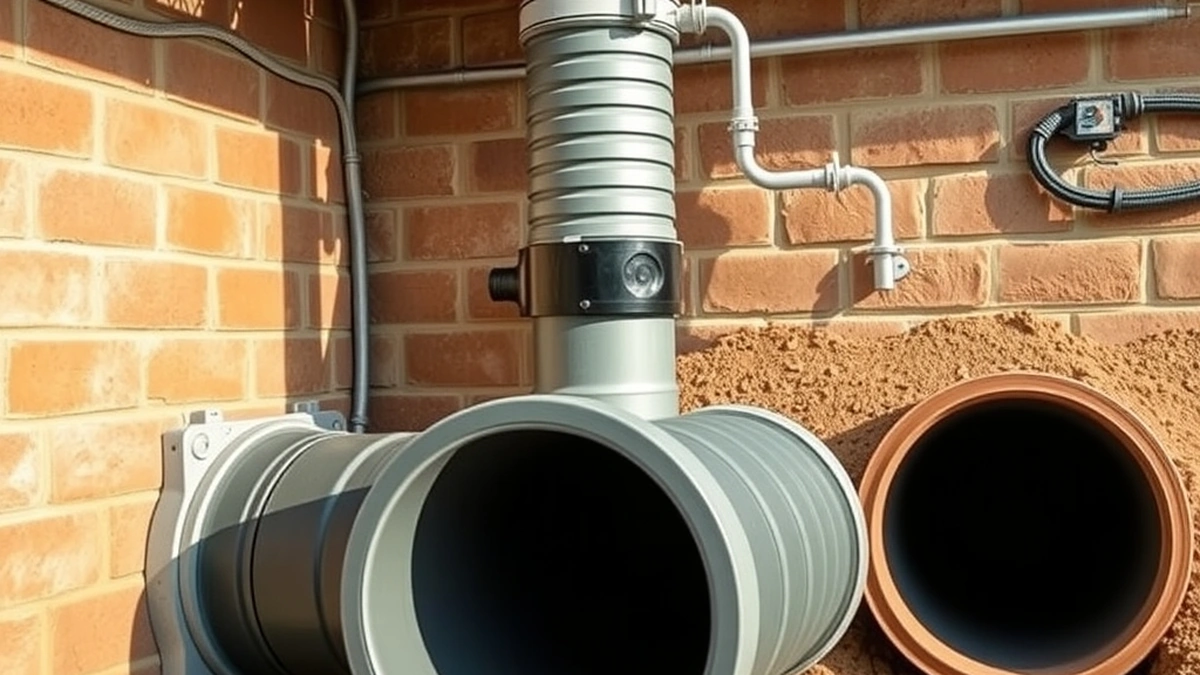
Pipe bursting is a replacement method. A conical head is pulled through the old pipe, fracturing it outward into the soil, while new high-density polyethylene pipe is drawn in behind.
One is a service visit. The other is construction. The price gap is not a markup; it is a different quantity of work.
Side by side
| Factor | Hydro jetting | Pipe bursting |
|---|---|---|
| Cost | $300 - $800 | $5,000 - $15,000 |
| Duration | 1 - 2 hours | 1 - 3 days |
| Changes the pipe | No | Yes, replaces it |
| Fixes grease and sludge | Yes | Not needed after |
| Fixes roots | Temporarily | Permanently |
| Fixes a collapse | No | Yes |
| Fixes a sag | No | No |
| Increases capacity | No | Yes, one nominal size |
| Excavation | None | Two pits |
| Life | Until it fouls again | 50 - 100 years |
Two rows decide most cases: “fixes a collapse” and “fixes a sag.” Bursting handles the first and not the second. Jetting handles neither.
When jetting is right
Jetting is the correct purchase when the camera shows a sound pipe with soft contents.
- Grease and sludge from a kitchen
- Hair-fine roots at tight joints
- Scale or mineral film
- A single soft blockage caused by wipes
In these cases bursting would be replacing a working pipe. The correct sequence is jet, re-inspect, and set a two- to three-year inspection interval.
Jetting is also the required first step of a bursting job: the old pipe has to be clear enough for the head and the new pipe to pass through.
When bursting is right
Bursting is correct when the pipe itself has failed in a way cleaning cannot address.
- Collapse. No bore to work with.
- Orangeburg. Soft, deformed, and not repairable.
- Severe corrosion in cast iron. Little wall left.
- Undersized line. Bursting can upsize; jetting cannot.
- Deterioration along most of the run. Patching repeatedly costs more.
Bursting is also the better answer when lining is impossible, which is the case on a collapsed or heavily deformed pipe.
The arithmetic of cleaning forever
Take a 65-foot clay line with roots at three joints and a slight sag that still drains.
- Jetting twice a year at $550 = $1,100 a year.
- Over eight years that is $8,800, with the pipe unchanged.
- Bursting at $10,500 = $10,500 once, with a 50-year pipe.
The crossover is roughly nine years. If you plan to stay in the house longer than that, or if the line is deteriorating rather than merely dirty, bursting is the cheaper path. If the line is sound and the roots are hair-fine, jetting is the correct purchase and bursting is $10,000 spent on a non-problem.
The third option — lining — sits between them at $4,000 to $12,000 and is covered in trenchless lining vs hydro jetting.
What the camera must show
Before either purchase:
- Is the bore continuous? A collapse rules out both jetting and lining.
- Is there standing water? A sag rules out bursting as a cure, though bursting can still be part of a job that re-lays to grade.
- What is the pipe material? Orangeburg changes the answer entirely.
- How many entry points for roots? One joint is maintenance; five is replacement.
- What is the internal diameter? An undersized line needs bursting, not cleaning.
Ask for the footage marks and keep the file. A recording is the only thing that makes a second opinion possible.
The decision, step by step
- Book a camera inspection at $200 to $500 before booking either service.
- Ask whether the pipe is structurally sound, and get the answer in terms of specific defects.
- If sound: jet at $300 to $800 and re-inspect.
- If failed: get a bursting quote that includes pits, restoration, permit and post-repair camera.
- Compare against lining and open trench on the same footage.
- Check the warranty covers the pipe, not just the labour.
For the cost detail, see pipe bursting cost and hydro jetting cost. If the failure is a collapse rather than general deterioration, collapsed pipe repair sets out the options and their limits.
The one-line rule
If the pipe is dirty, clean it. If the pipe is broken, replace it. Jetting on a broken pipe buys months. Bursting on a clean pipe buys nothing.
The camera is the only tool that tells the two apart, and at $200 to $500 it is the cheapest item in either conversation.
There is one more scenario worth pricing, because it comes up often: a line that is sound but undersized. A 3-inch clay lateral serving a house that now has three bathrooms and a laundry will block repeatedly no matter how well it is cleaned. Jetting at $500 twice a year is $1,000 annually against a replacement that fixes the capacity problem permanently. If the camera shows a clean 3-inch bore with no defects and the house still blocks under load, the pipe is not dirty. It is too small.
If the line is sound, the honest recommendation is a cleaning and a two-year inspection cycle. If it is not, the honest recommendation is a replacement quote with the footage attached. Anything in between is a sales conversation.
Frequently asked questions
When should I replace a sewer line instead of jetting it?
When the camera shows a collapse, a severe sag, Orangeburg pipe, an undersized line, or deterioration along most of the run. Jetting only removes material; it cannot restore structure or capacity.
Is pipe bursting cheaper than repeated jetting?
Over a long enough period, yes. Jetting three times a year at $500 is $1,500 annually, which exceeds a $10,000 bursting job in under seven years, with no improvement in the pipe.
Can you jet a line that needs bursting?
You can, and it may restore flow for a while. On a collapsed or Orangeburg line, high pressure can also make the damage worse, which is why a camera pass comes first.
Does bursting require the line to be cleaned first?
Yes. The old pipe must be clear enough for the bursting head and the new pipe to pass. A pre-bursting clean is normally part of the job, whether itemized or bundled.
How long does each take?
Jetting is one to two hours. Pipe bursting is typically one to three days for a residential run, including pit excavation, pulling and reinstatement.
Will bursting damage my driveway?
Only at the two pits. The run between them stays undisturbed, which is the main reason to choose bursting over open-trench replacement under a hard surface.
Sources
Some links are affiliate links.If you buy through them we may earn a commission at no extra cost to you. We do not accept payment for rankings. Read the full disclosure.