Pipe bursting vs spot repair
One costs $1,500 to $5,000 for a single fix; the other $5,000 to $15,000 for a new pipe. How to choose from the camera recording, with worked numbers.
A spot repair fixes one defect for $1,500 to $5,000 and leaves the rest of the pipe in place. Pipe bursting replaces the run for $5,000 to $15,000 with only two pits. One defect favours a spot repair; a collapsed, undersized or generally deteriorated run favours bursting.
- Spot repair
- $1,500 - $5,000
- Pipe bursting
- $5,000 - $15,000
- Access pits
- 2 pits
- Camera inspection
- $200 - $500
Some links on this page are affiliate links.If you buy through them we may earn a commission at no extra cost to you. We do not accept payment for rankings. Read the full disclosure.
A spot repair fixes one failure for $1,500 to $5,000 and leaves the rest of the pipe alone. Pipe bursting replaces the whole run for $5,000 to $15,000 using only two access pits. The choice is not about which is better in general; it is about how much of the pipe is bad. One defect favours the spot repair. A collapsed, undersized or generally deteriorated run favours bursting — and a $200 to $500 camera inspection is what separates the two.
What each method is
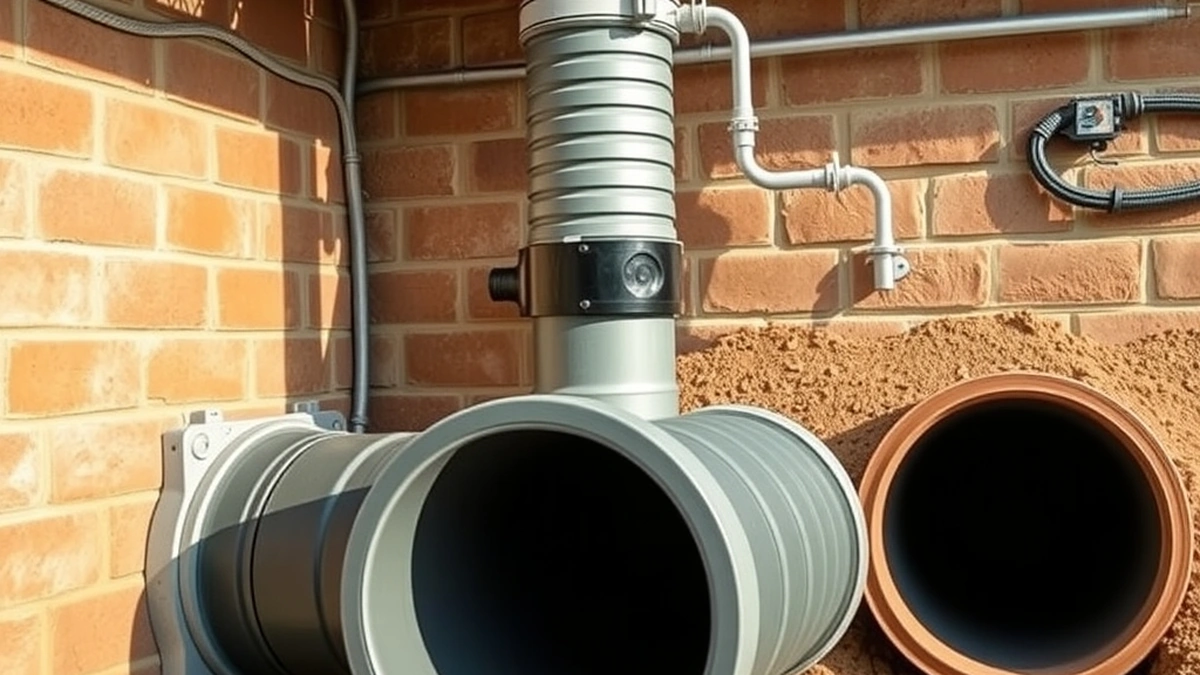
Spot repair is a targeted excavation at one failure. The damaged section, usually 6 to 15 feet, is cut out and replaced with new pipe and couplings.
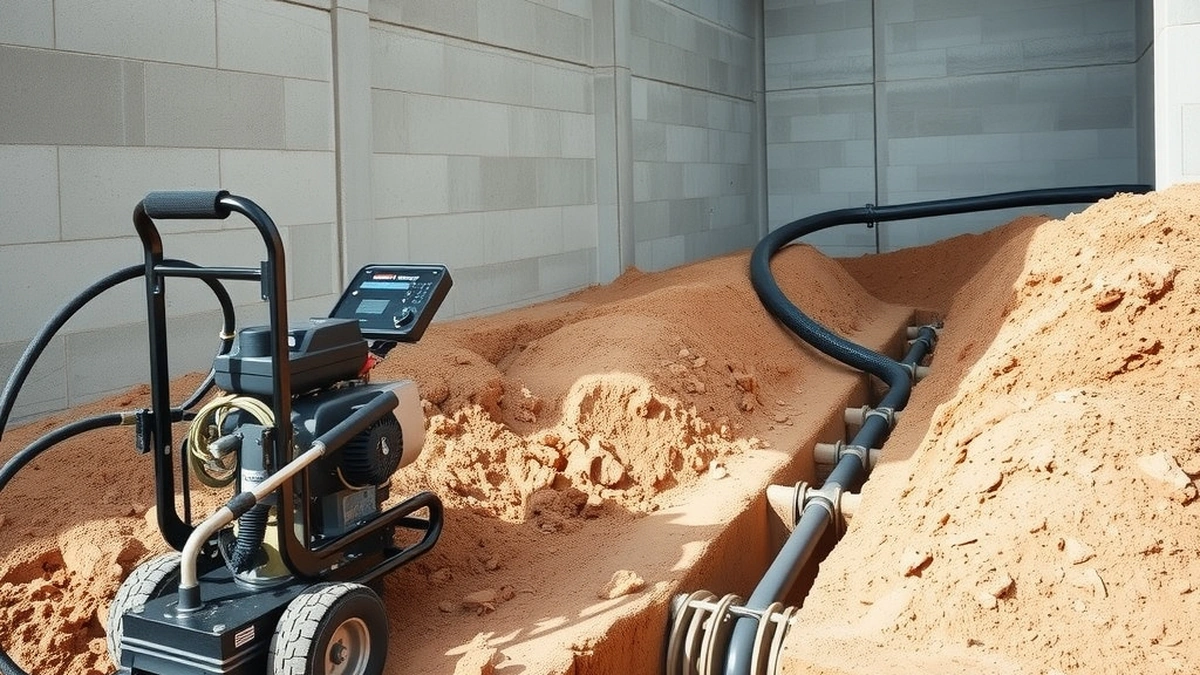
Pipe bursting is a trenchless replacement method. A conical bursting head is pulled through the old pipe, fracturing it into the surrounding soil, while new HDPE pipe is drawn in behind.
One is a patch. One is a new line.
Side by side
| Factor | Spot repair | Pipe bursting |
|---|---|---|
| Cost | $1,500 - $5,000 | $5,000 - $15,000 |
| Footage addressed | 6 - 15 feet | Full run, 40 - 100 feet |
| Excavation | One open cut | Two pits |
| Surface restored | The cut | The pits |
| Fixes other defects | No | Yes |
| Restores grade | At the repair, if re-laid | No, follows old path |
| Increases diameter | No | Yes, by one size |
| Old pipe remains | Yes, except the repair | Yes, fractured in place |
| Duration | 1 day | 1 - 3 days |
The “restores grade” row is where bursting loses. It replaces the pipe, not the slope. If the line has sagged, only open-trench replacement fixes that.
The one-defect case
A camera shows a broken section at 30 feet on a 60-foot line. Everything else is sound and the pipe holds grade.
- Camera: $350
- Spot repair of 10 feet: $2,800
- Sod and topsoil: $300
- Permit: $100
- Total: $3,550
Bursting the same run: $10,500 plus two pit restorations at $400 = $11,300.
The spot repair saves $7,750 and delivers exactly what was needed. Bursting here would be replacing 50 feet of sound pipe.
The whole-run case
Same line, but the camera shows a collapse at 30 feet, two cracked joints at 12 and 48 feet, and root infiltration at each.
- Three spot repairs at $2,800 = $8,400
- Three restorations at $700 = $2,100
- Permits at $100 each = $300
- Total: $11,150, with three warranties
Bursting: $10,500 plus two pits at $400 = $11,300.
The numbers are within $150, and bursting delivers one continuous new pipe with no joints, one warranty and no third excavation next year. At that point the bursting quote is the better purchase even though it is marginally more expensive.
Why the crossover is usually three defects
Each spot repair carries fixed costs that do not scale: mobilization, excavation, permit, restoration and a post-repair camera. On a typical job those add $1,500 to $2,000 per repair before any pipe is replaced.
Three repairs therefore carry $4,500 to $6,000 of fixed cost that a single bursting job carries once. That is why the arithmetic flips around the third defect, and why “repair it as it breaks” is an expensive strategy on a deteriorating run.
The crossover moves with surface. Under a lawn, each restoration is a few hundred dollars. Under a driveway, each is $1,500 to $3,000, which pushes the crossover to two defects.
When bursting is the wrong tool
Bursting is not universal.
- Short runs with one defect. Not economic against a spot repair.
- Lines with tight bends. The bursting head needs a relatively straight path.
- Diameter changes along the run. The head and new pipe need a consistent bore.
- Lines where grade must be corrected. Bursting follows the old path.
- Shared or party lines with no access for pits. Land access can rule it out.
If grade is the issue, open-trench replacement at $5,000 to $15,000 is the method, and the comparison is in pipe bursting vs full replacement.
What the camera must answer
Before either quote is meaningful:
- How many defects, and where?
- Is the bore intact throughout, or is there a collapse?
- Does the pipe hold grade, or is water standing?
- What is the diameter, and is it adequate for the fixtures?
- Are there bends that would stop a bursting head?
A recording with footage marks answers all five. Ask for the file, not a summary.
The decision, in five steps
- Camera inspection at $200 to $500, with the video handed over.
- Count the defects and note their spacing.
- Ask whether the pipe holds grade. If not, neither method alone is right.
- Quote a spot repair on the worst defect, itemized.
- Quote bursting on the full run, including pits and restoration.
- Compare totals, then choose based on how likely the next failure is.
The supporting costs are in pipe bursting cost and spot repair cost. If the camera shows a sag, read bellied pipe repair before committing to either, because a belly changes the answer entirely.
One final consideration that does not appear on either quote: the age of the remaining pipe. A spot repair on a 15-year-old PVC line is a permanent fix. The same repair on a 65-year-old clay line with three other tight joints is a repair plus a countdown. Ask the contractor, on camera, how many joints look like they are within five years of failing. That number, more than the headline price, decides whether the budget belongs on one section or the whole run.
One warning on bursting quotes: ask what diameter the new pipe will be and whether the service connections will be reinstated in the same size. Bursting a 4-inch line and pulling a 4-inch HDPE in behind leaves slightly less internal capacity, and if the head is upsized to compensate, the connections have to be adapted. A quote that omits the connections is not a complete price.
Frequently asked questions
Is pipe bursting cheaper than a spot repair?
No. Spot repair is $1,500 to $5,000 and bursting is $5,000 to $15,000. Bursting becomes the better value when the whole run needs replacing, not when one section has failed.
Can pipe bursting be used for one small repair?
It is not normally economic. Bursting replaces the full run between two pits, so using it for an 8-foot repair costs more than an excavation at that point.
How long does each take?
A spot repair is usually one day including restoration. Pipe bursting typically takes one to three days for a residential run, including pit excavation and reinstatement.
Does bursting damage the lawn?
Less than open trench. It needs two access pits, so most of the run stays undisturbed. The pits are typically 3 to 4 feet square and are restored afterwards.
What if the pipe has collapsed in one place only?
A spot repair may be enough if the rest of the pipe is sound and holds grade. If the collapse is a symptom of general deterioration, bursting the run is the better value.
Which option is better for resale?
A full replacement with a permit and warranty is the stronger disclosure. A spot repair is fine if it is documented and the rest of the line was inspected and found sound.
Sources
Some links are affiliate links.If you buy through them we may earn a commission at no extra cost to you. We do not accept payment for rankings. Read the full disclosure.