Trenchless lining vs trenchless lining: CIPP or spray
The real comparison in trenchless lining vs trenchless lining is cured-in-place against spray and fold-and-form systems: costs, limits, and where each one wins.
Trenchless lining vs trenchless lining compares lining systems, not lining against digging. Cured-in-place dominates residential laterals at $4,000 to $12,000; spray and fold-and-form suit specific shapes, and the host pipe decides.
- Cured-in-place lining
- $4,000–$12,000
- Spray or fold-and-form
- $4,000–$12,000
- Camera inspection
- $200–$500
- Open-trench replacement
- $5,000–$15,000
Some links on this page are affiliate links.If you buy through them we may earn a commission at no extra cost to you. We do not accept payment for rankings. Read the full disclosure.
Trenchless lining vs trenchless lining is not a trick question, it is the comparison homeowners actually face once they have decided not to dig: which lining system goes in. All of them install a new wall inside the existing pipe, all of them land in the $4,000 to $12,000 band on a normal residential run, and they are not interchangeable. The host pipe decides which ones are allowed.
Three ways to build a wall inside a pipe
Trenchless lining is a repair method that creates a new pipe wall inside an existing one without excavating the run. The systems differ in how that wall is formed.
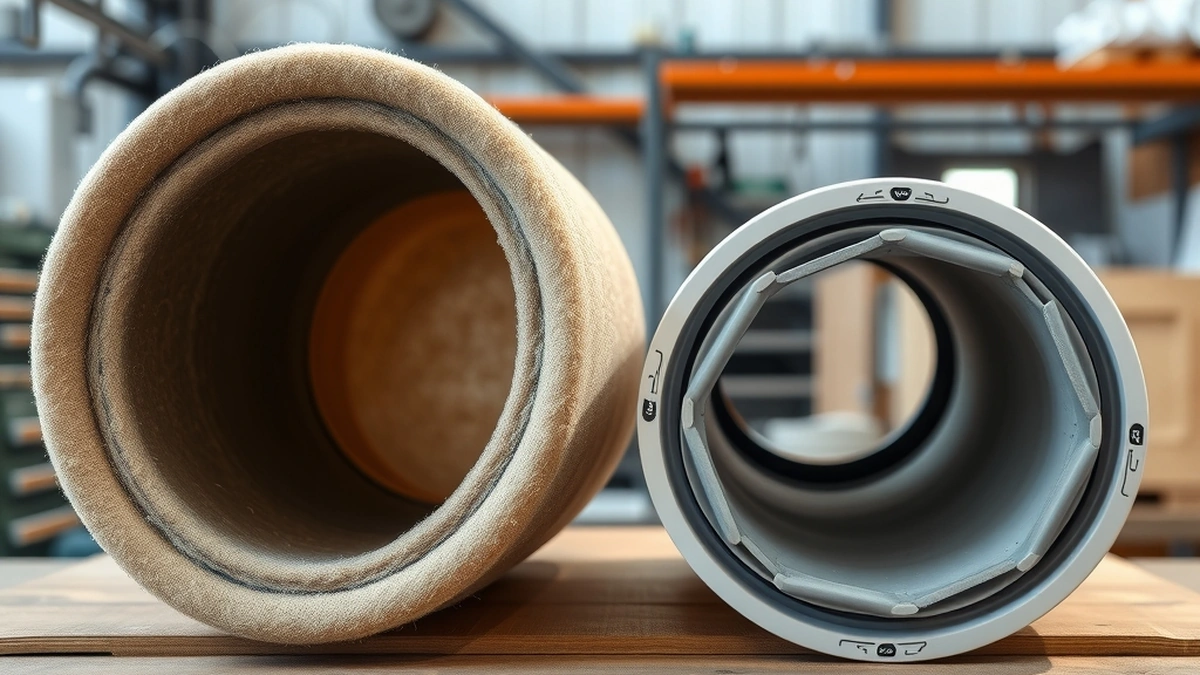
Cured-in-place pipe (CIPP) starts as a flexible felt or fiberglass tube saturated with resin. It is inverted or pulled into the pipe, held against the wall, and cured with steam, hot water, or UV light. The result is a jointless, structural liner that follows the existing bends.
Spray lining applies a coating, usually cementitious or epoxy, to a prepared pipe wall by spinning or spraying. It builds thickness in layers and depends entirely on the surface being clean and sound.
Fold-and-form lining inserts a folded PVC or HDPE profile, then reheats it with steam so it expands against the wall and holds its shape. It is a factory-made wall rather than a resin cured on site.
The comparison, side by side
| Aspect | Cured-in-place (CIPP) | Spray or fold-and-form |
|---|---|---|
| Where the wall comes from | Resin saturated on site, cured in the pipe | Coating applied in layers, or a factory-formed profile |
| Best fit | 4-inch to 6-inch laterals with bends and branches | Larger diameters, or shapes CIPP cannot follow |
| Service connections | Reopened by robotic cutter after cure | Cut or formed during installation |
| Diameter lost | Small, a fraction of an inch | Small; fold-and-form has a defined profile thickness |
| Surface preparation | Jetting at $300 to $800, then camera check | More demanding, since the coating bonds directly to the wall |
| Cure or set time | Two to six hours on a residential run | Varies by product and layer thickness |
| Warranty | Manufacturer plus installer, typically several years | Product-specific; ask for the document |
The table explains why CIPP is the default for houses. A 4-inch lateral bends, and a resin tube bends with it. A sprayed coating needs a surface it can reach evenly, which is harder on a small, curving pipe than on a straight main.
The money is nearly the same
Both families sit inside the $4,000 to $12,000 lining band. What separates two quotes is not the system name, it is the work around it.
Work one example. A 50-foot CIPP lining at $8,000 plus a $350 inspection plus $450 of jetting is $8,800. A fold-and-form lining on the same run at $8,400 plus the same $350 and $450 is $9,200. The $400 difference is smaller than the difference between a driveway access and a lawn access on the same street.
Now compare against the option that is not lining at all. An open-trench replacement at $11,000 plus $400 inspection plus $2,400 of driveway restoration is $13,800. Both lining systems come in $4,600 to $5,000 below that, which is why the lining-versus-lining question is usually about fit rather than price.
Where each one wins
CIPP wins on residential laterals with bends, multiple service connections, and limited access. It is also the system most local crews actually install, so the labor pool and the warranty support are close to home.
Spray lining wins where the pipe is large enough for a person or a spinning tool to work inside, and where the failure is surface deterioration rather than structural loss. It is common on municipal mains and on pipes where a liner cannot be sized.
Fold-and-form wins where a factory-made wall is preferred and the pipe has a consistent internal profile. It is less tolerant of irregular shapes and offsets, because the profile has to press flat against the wall.
All three lose to open trench or pipe bursting when the host pipe has collapsed, when the line is back-pitched, or when the bore is already too small for the demand. A liner inside a failing pipe inherits the failure.
The choice is made on camera
You do not pick a lining system from a website. You pick it from a camera inspection at $200 to $500 that establishes diameter, material, roundness, and defect pattern. A pipe that is oval cannot take a fold-and-form profile. A pipe with heavy scale cannot take a spray coating without aggressive preparation. A pipe with a collapsed section cannot take any of them.
Ask each contractor to state, in writing, which systems the pipe qualifies for and why the others were ruled out. A quote that names one method without naming the alternatives has skipped the diagnosis, and that is the same failure pattern described in trenchless lining problems.
What to do next
- Get the camera inspection at $200 to $500 and keep the recording.
- Ask which lining systems the pipe qualifies for and which it does not.
- Have the line jetted at $300 to $800 before any system is priced.
- Get two quotes for different systems where both are viable, itemized line by line.
- Compare total cost including permits and restoration, not the headline number.
- Confirm the warranty names the product and the property before signing.
For the installation itself, see trenchless lining installation. For the price detail behind every figure here, see trenchless lining cost and pipe bursting cost.
Frequently asked questions
What does trenchless lining vs trenchless lining actually compare?
It compares lining systems with each other: cured-in-place liners, sprayed linings, and fold-and-form PVC liners. All three avoid excavation, and they differ in how the new wall is formed.
Which lining method is best for a residential sewer line?
Cured-in-place is the default for 4-inch and 6-inch laterals because it handles bends and service connections well. Spray and fold-and-form systems are used where diameter, shape, or access rules them in.
Do all lining methods cost the same?
They land in the same $4,000 to $12,000 band on a typical residential run. Access, footage, and preparation move the price more than the choice of system does.
Does a sprayed lining last as long as a cured liner?
Service life depends on surface preparation and the product specified, and manufacturers publish their own figures. Ask for the product name and the warranty in years rather than a general claim.
Can any of these methods increase pipe diameter?
No. Every lining method puts the new wall inside the old one and gives up a small amount of bore. Increasing diameter requires pipe bursting or open-trench replacement at $5,000 to $15,000.
How do I choose between lining methods?
You do not choose directly. The camera inspection at $200 to $500 establishes diameter, shape, and defect pattern, and that determines which systems the pipe can accept.
Sources
Some links are affiliate links.If you buy through them we may earn a commission at no extra cost to you. We do not accept payment for rankings. Read the full disclosure.